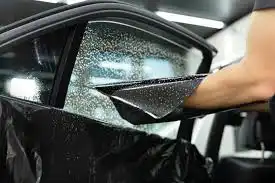
Why Do We Close Car Windows in Hot Weather in Kerala?

If you've ever parked your car in the hot sun in Kerala, you know how hard it is to get in. It feels like you're walking into an oven. Especially in places like Kodungallur, Irinjalakuda, Chalakudy, Thrissur, Mala, and Chavakkad, where the heat and humidity can be very bad.

People often ask us at Menora We 2 Auto Detailing, "Why do we close car windows when it's hot?" and "Which window film does the best job of keeping the heat out?" Let's break these questions down and talk about how to stay calm while driving in Kerala's tropical climate.

Why do we roll up the windows in our cars when it's hot?

1. Stops hot air from moving around

It may seem strange, but leaving your windows open doesn't really cool down your car. Instead, hot, humid air flows in all the time, keeping warm moisture inside. You get a sauna effect instead of a fresh breeze.

2. Lessens Dust and Pollution

Road dust, construction debris, and pollution are common in areas around Kodungallur and Chalakudy. When you open the windows, all this dirt gets inside the car. This not only makes your car dirty, but it can also hurt your lungs over time.

3. Keeps Interior Materials Safe

The strong sun in Kerala damages dashboards, leather seats, and plastic trim by causing cracks, fading, peeling, and changing color. Closed windows keep the inside of your car in better shape for longer by limiting direct exposure.

4. Makes AC work better

Your air conditioner cools the cabin faster and with less work when the windows are closed. Open windows make this process harder, forcing your AC to work harder without really helping. That means that your system will use more fuel and wear out faster.

5. Safety and Protection

It's not just about heat when you leave windows cracked open; it can also let in water during Kerala's sudden monsoon showers or invite theft. Closing your windows protects both your things and the inside of your car.

So, why does the car still get so hot?

Even when the windows are tightly closed, heat can still get in through the glass and roof panels. This is the classic greenhouse effect: sunlight comes in, but heat stays in, making the cabin temperature dangerously high.

This is where window films, also known as sun control films, come in.

Different kinds of car window films

We help our customers at Menora We 2 Auto Detailing find the best option for their needs and budgets. Here's a quick summary:

1. Colored Window Film (Cheap Option)

Best for: Basic privacy and low cost
Lessens glare and makes things look better
Not very good at getting rid of heat; gets worse over time
This is a good place to start, but it won't be enough to protect you from Kerala's strong sun.

2. Window Film with Metal

Best for: lasting power and reflecting heat
Bounces heat away well
Could mess with GPS and cell phone signals

3. Film for Windows Made of Carbon

Best for: Style and keeping heat out
Blocks heat from infrared rays
A matte finish gives things a smooth look.
No interference with the signal
Drivers in Thrissur and Irinjalakuda like it a lot.

4. Ceramic Window Film (the Best Choice)

Best for: Maximum protection from heat and UV rays
Can block more than 90% of heat
See clearly
No signals are blocked
Very good for Kerala's hot and humid weather

5. Nano-Ceramic Film (New Technology)

Best for: high-end cars and top-notch performance
Most heat rejection
Great clarity and long-lasting quality
Why You Need Window Film in Kerala

In places like Kodungallur, Chalakudy, and Chavakkad, car interiors can get hotter than 60°C. The AC alone can't keep up, and UV rays constantly hurt the inside of the car. High-quality window films are a useful and effective answer that:
Make your cabin cooler and more comfortable.
Keep expensive interiors from fading and cracking.
Make driving safer and more comfortable

Why do we do Menora We 2 Auto Detailing?

We are experts at installing products that have been thoroughly tested for Kerala's weather. We serve Kodungallur, Irinjalakuda, Chalakudy, Thrissur, Mala, and Chavakkad, so you can get high-quality care close to home.

Last Thoughts

You need to do more than just close your car windows when it's hot and humid in Kerala. A smart choice of window film is necessary to really win the fight against heat. Window tinting isn't a luxury; it's a must-have if you want your AC to cool faster, your interiors to last longer, or just a more comfortable ride.

Are you ready to improve your car experience? Stop by Menora We 2 Auto Detailing and see how a professional touch can change your drives from hot to cool.

Stay calm, drive safely, and we'll see you on the road!

Car Window Film in Thrissur — Types, Benefits & Price Guide for Kerala Roads

Park your car at Sakthan market on a June afternoon and step back in after an hour. The steering wheel is scalding, the dashboard is soft to the touch, and the AC needs five minutes just to make it bearable. If you drive in Thrissur — or anywhere in Kerala — you already know this feeling. Window film isn't a luxury add-on. For this climate, it's closer to a necessity.

What is car window film?

Car window film — also called window tinting — is a thin polyester-based laminate applied to the interior surface of a vehicle's glass. It works by selectively blocking, absorbing, or reflecting solar energy before it enters the cabin.

Citable fact: High-performance ceramic window films can reject up to 99% of UV radiation and block more than 60% of total solar energy (TSE), reducing cabin temperatures by 8–12°C compared to untreated glass.

Modern films are engineered in multiple layers: a scratch-resistant outer coat, a dye or metallic/ceramic layer that handles the actual filtering, an adhesive layer, and a release liner. The quality of these layers — particularly the filtering layer — determines heat rejection, optical clarity, and long-term durability.

Why cars in Thrissur need window film
Kerala sits between 8° and 12° north latitude — close enough to the equator that UV index regularly hits 11–12 (extreme) from February through June. Thrissur's flat inland terrain means very little shade cover for parked cars, and the pre-monsoon months push ambient temperatures above 38°C consistently.

Then the monsoon arrives. Humidity locks in at 90%+, and that combination of moisture and heat accelerates interior ageing — dashboard cracking, leather fading, and plastic degradation all speed up significantly without UV filtering. Hard water from the Chalakudy river region also leaves mineral deposits on glass that make poorly-fitted films bubble and lift prematurely.

Car window film in Thrissur isn't just about comfort. Customers arriving at our studio from Chalakudy, Kodungalloor, and Kunnamkulam frequently mention dashboard cracking and persistent heat as their first complaint. Over in Irinjalakuda, the denser traffic and narrower roads mean cars spend more time idling in direct sun with engines running — a situation where cabin heat builds fast.

Citable fact: Prolonged UV exposure degrades automotive interior polymers at a rate 3–5× faster in tropical climates (UV index 9+) than in temperate regions, accelerating dashboard chalking and seat discolouration within 18–24 months on unprotected vehicles.

Why cars in Thrissur need window film
Kerala sits between 8° and 12° north latitude — close enough to the equator that UV index regularly hits 11–12 (extreme) from February through June. Thrissur's flat inland terrain means very little shade cover for parked cars, and the pre-monsoon months push ambient temperatures above 38°C consistently.

Then the monsoon arrives. Humidity locks in at 90%+, and that combination of moisture and heat accelerates interior ageing — dashboard cracking, leather fading, and plastic degradation all speed up significantly without UV filtering. Hard water from the Chalakudy river region also leaves mineral deposits on glass that make poorly-fitted films bubble and lift prematurely.

Car window film in Thrissur isn't just about comfort. Customers arriving at our studio from Chalakudy, Kodungalloor, and Kunnamkulam frequently mention dashboard cracking and persistent heat as their first complaint. Over in Irinjalakuda, the denser traffic and narrower roads mean cars spend more time idling in direct sun with engines running — a situation where cabin heat builds fast.

Citable fact: Prolonged UV exposure degrades automotive interior polymers at a rate 3–5× faster in tropical climates (UV index 9+) than in temperate regions, accelerating dashboard chalking and seat discolouration within 18–24 months on unprotected vehicles.

Benefits of car window film — what you actually gain
Heat rejection that makes a measurable difference.
A quality ceramic film can bring cabin temperature down by 8–12°C on a parked car in direct sun. For daily drivers commuting on NH-544 or the Thrissur–Guruvayoor road, that translates directly into less AC load, better fuel economy, and a car that's actually comfortable when you get in.

UV protection for you and your interior.
Window film blocks 99% of UV-A and UV-B radiation — the same type that causes skin damage and interior fading. If you're on the road for long stretches between Thrissur and Wadakkanchery or up to Chavakkad, this is passive protection working every kilometre.

Glare reduction for safer driving.
Low-angle morning sun on the Thrissur–Kodungalloor road is a real visibility hazard. A moderate visible light transmission (VLT) film — say 35–50% — cuts glare significantly while staying within Kerala's legal limits for front windows.

Privacy without compromising visibility.
Rear and rear quarter windows can legally take a darker film (20% VLT or lower). This matters for families, for those who park in urban areas, and for any car carrying valuables. It also reduces the "greenhouse effect" on rear passengers who often have no direct AC vents.

Glass safety in the event of an accident.
Quality window film holds shattered glass together on impact. It won't prevent breakage, but it significantly reduces the risk of glass shards entering the cabin — a rarely discussed but very real safety benefit, especially relevant given Kerala's road conditions.


How long does car window film last?
A professionally installed ceramic film lasts 8–12 years in Kerala conditions. Carbon film typically holds 5–7 years. Dyed film — the cheapest option — often starts fading and purpling within 2–3 years in tropical UV exposure.

Longevity depends on three things: film quality, installation quality, and aftercare. Poor installation — bubbles, edge lifting, moisture contamination — shortens any film's life regardless of brand. Kerala's combination of intense UV in summer and high humidity in monsoon is harder on films than temperate climates.

Citable fact: Window film installed with a residual moisture gap of more than 5mm at edges is 4× more likely to delaminate within 24 months in high-humidity climates, making controlled-environment installation critical in coastal and inland Kerala.

For aftercare: avoid rolling windows down for 3–5 days after installation to allow the adhesive to fully cure. Clean with a soft microfibre and ammonia-free glass cleaner — ammonia degrades the film's dye and ceramic layers over time.

How much does car window film cost in Thrissur?
In Thrissur and the wider central Kerala market, expect to pay roughly:

Dyed/basic film: ₹2,500–₹5,000 for a full car. Carbon film: ₹6,000–₹14,000 depending on vehicle size and brand. Ceramic film: ₹12,000–₹30,000 for a full install on a sedan or SUV.

Three factors move the price: film brand and grade (imported ceramic vs local carbon), the number of glass panels (sedans vs MUVs vs large SUVs differ significantly), and whether the rear windshield requires a single-piece or multi-piece application.

The right frame for this cost: a ₹20,000 ceramic film install on a ₹20-lakh car is a 1% spend that protects ₹2–4 lakh worth of interior materials and adds 8–12 years of thermal comfort. Compared to replacing a faded dashboard or cracked leather, it pays for itself in the first three years.

Why Menora We2 Auto Detailing for your window film?
Menora We2 Auto Detailing Studio operates dedicated, climate-controlled studios in Thrissur and Irinjalakuda — not a roadside setup where dust and wind contaminate the adhesive during installation. Window film application requires a clean, stable environment to cure correctly, and our dust-controlled bays eliminate the primary cause of bubbling and delamination.

We offer a 5-year warranty on film installations, a free consultation to match the right film grade to your car and use case, and a team that has worked on everything from daily commuters to high-end luxury vehicles. We work with screened film brands and won't upsell you on a grade you don't need.

Whether you're in Thrissur, coming from Irinjalakuda, or driving up from Chalakudy — a free consultation takes 15 minutes and gives you a clear picture of what's right for your car before you commit to anything. Read on below for answers to the questions customers ask us most.

Frequently asked questions
Q: Is car window film worth it for a daily driver in Kerala?

A: Yes — arguably more so than for occasional drivers. Daily commuters accumulate the most UV and heat exposure, and the comfort, fuel efficiency (reduced AC load), and interior protection benefits compound over time. A ceramic film on a daily driver typically pays back its cost within 2–3 years in reduced interior ageing alone.

Q: Can window film be applied to a brand-new car?

A: Yes, and it's actually the ideal time. New interiors have no existing UV damage, and applying film before sun exposure prevents any deterioration from day one. There's no need to wait — fresh glass without existing adhesive residue or scratches is easier to work with and produces a cleaner bond.

Q: What does window film NOT protect against?

A: Window film does not provide scratch protection for the glass itself, nor does it protect against stone chips or physical impact damage. It also won't protect paint or exterior surfaces — for that, PPF (paint protection film) is the relevant product. INTERNAL LINK: PPF service page

Q: How do I maintain car window film after installation?

A: For the first 3–5 days, keep windows closed to let the adhesive cure fully. After that, use a soft microfibre cloth and an ammonia-free glass cleaner — standard household glass sprays contain ammonia, which degrades the film over repeated use. Avoid abrasive pads or squeegees on the film surface.

Q: Can I visit the Irinjalakuda studio for a window film consultation?

A: Yes. Menora We2's Irinjalakuda studio handles the full range of window film installations — from basic carbon film to premium ceramic grades — with the same climate-controlled bay setup as the Thrissur studio. Walk-ins are welcome, or you can call ahead to schedule a free consultation slot.


Car window film in Thrissur done right means the correct film for your climate, your car, and your budget — installed in conditions that guarantee it lasts. Demand for quality ceramic installations picks up sharply before summer; booking a consultation now means you're not waiting through the worst months without protection.

Book a free consultation at Menora We2 Auto Detailing Studio — available at our studios in Thrissur and Irinjalakuda. Call or visit us to discuss what's right for your car.

Copyright © 2024 All rights reserved by Menora We2.

Whatsapp