What is the Difference Between a Car Wash and a Car Detailing?

When it comes to maintaining the appearance and condition of your vehicle, there are two common services to consider, a car wash and car detailing. While both may seem similar at first, they actually involve different levels of care and attention to detail. Understanding the
differences between these two services can help you make an informed decision about which option is best for your vehicle. In this blog post, we will explore the difference between a car wash and a car detailing , highlighting their unique benefits and purposes.
Car detailing is more than just a superficial cleaning; it involves a comprehensive approach to reviving your vehicle’s aesthetics. Through proper cleaning, polishing, and waxing, car detailers can maintain the original shine of your car’s paintwork, making it look as good as
new. Moreover, car detailing goes beyond surface-level improvements. It involves deep cleaning and rejuvenation of both the exterior and interior, which helps to preserve the condition of your car and extend its lifespan. When it comes to preserving your vehicle’s appearance, ceramic coating steals the spotlight. Thrissur, a city known for its automotive enthusiasts, offers top-notch ceramic coating services. With the help of a thin layer of ceramic coating on your car can create a protective layer against UV rays, oxidation, dirt, and other contaminants. This shields your car from premature fading, corrosion, and scratches, ensuring it retains its showroom-worthy finish for years to come. You can get deep detail from the article ceramic nanoparticle

A car wash is a quick and convenient way to clean the exterior of your vehicle. Typically, car washes are automated or manual facilities that use high-pressure water jets and brushes to remove dirt, grime, and debris from the surface of your car. The primary goal of a car wash is to provide a basic level of cleanliness and enhance the vehicle’s visual appeal.

While car washes are efficient and time-saving, they have limitations in terms of throughness. Since they primarily focus on the exterior, car washes often neglect the interior and other detailed areas of your vehicle. Additionally, car washes may use harsh chemicals or brushes that can potentially cause minor scratches or swirl marks on the paint surface.

The Car Detailing

Car detailing, on the other hand, is a more comprehensive and meticulous process aimed at rejuvenating and protecting your vehicle’s overall condition. It involves both interior and exterior cleaning, along with restorative procedures to enhance the car’s appearance.

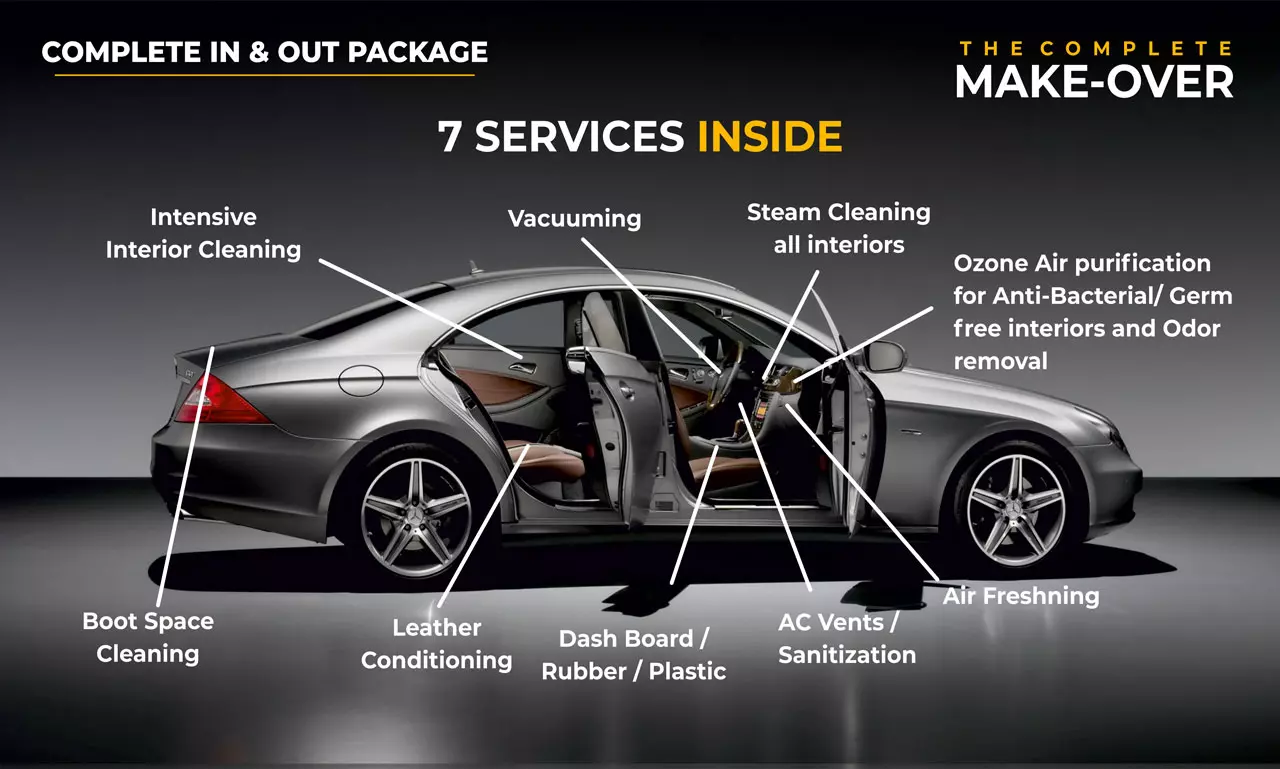
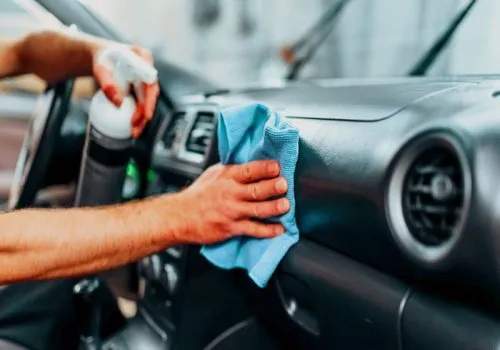
Interior detailing covers tasks like vacuuming, steam cleaning, and conditioning to remove dust, stains, and odors. Detailers pay attention to every nook and cranny, ensuring that even the hard-to-reach areas are thoroughly cleaned. They may also treat leather surfaces, polish
plastics, and restore the luster of the dashboard.

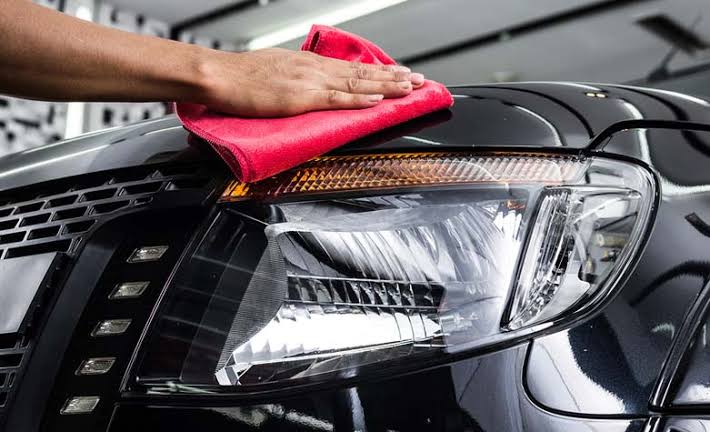
Exterior detailing includes a multi-step process that goes beyond a regular car wash. It typically involves hand washing, drying, claying, polishing, and waxing the paintwork to remove contaminants and restore the shine. Detailers may also clean and dress the tires, polish the wheels, and clean the windows to achieve a pristine finish.

Choosing the Right Service

The choice between a car wash and a car detailing largely depends on your needs and the level of care your vehicle requires. If you want a quick and superficial cleaning to maintain a clean appearance, a car wash can be a suitable choice. However, for those looking to restore their vehicle’s condition, address interior cleanliness, and protect the paintwork, a car detailing service is the better option.

By investing in car detailing, you benefit from a thorough cleaning, protection against damage, and a revitalized vehicle. Detailing can also increase your car’s resale value by preserving its aesthetic appeal and overall condition.

Conclusion

While a car wash and a car detailing may seem similar, the disparities in their scope and level of care are significant. A car wash offers a basic cleaning, mainly focusing on the exterior, while a car detailing involves a comprehensive restoration process for both the interior and exterior. By understanding these distinctions, you can make an informed decision and ensure your vehicle receives the proper care it deserves. Read Advantages of car detailing and cleaning.

Car Detailing for Different Seasons: Summer vs. Winter months Auto Care

Car Detailing for Different Seasons — Summer vs. Monsoon Auto Care in Kerala
Your car's paint faces two entirely different enemies depending on the time of year — and most car owners treat both exactly the same way, which means they're protecting against neither. In Thrissur and across central Kerala, the gap between a March heatwave and a June downpour isn't just a weather difference. It's two distinct chemical and physical attack modes on your car's surface, interior, and underbody. Understanding which season does what damage — and when to act — is the difference between a car that holds its value and one that quietly deteriorates year by year.

What Does "Seasonal Car Detailing" Actually Mean?
Seasonal car detailing means adjusting your protection and maintenance routine to match the specific damage conditions each part of the year brings. It's not about washing your car more frequently — it's about applying the right protective layer before each season arrives, so your car isn't absorbing damage while you're reacting to it.
The citable technical fact: Kerala's summer UV index regularly reaches 11–12 (extreme), which is the threshold at which unprotected automotive clear coat begins measurable photodegradation within a single season. Monsoon rain in industrial and traffic-heavy corridors has a recorded pH of 5.0–5.6 — acidic enough to etch automotive paint if left on the surface for 48–72 hours without a sealed protective layer.
A properly timed detailing cycle — one session before summer peaks in March, one before monsoon arrives in June — gives your car chemical and UV protection that works continuously rather than treating damage after it has already occurred.

Why Kerala's Climate Makes Seasonal Care Non-Negotiable
Most car care advice online is written for temperate climates. Kerala is not a temperate climate.
In Thrissur, peak summer runs from late February through May, with temperatures hitting 36–39°C, direct sun exposure that raises bonnet surface temperatures to 60–70°C, and UV radiation at extreme levels for six to eight hours a day. That combination doesn't just fade paint — it bakes contamination like bird droppings, tree sap, and tar into the clear coat, where normal washing cannot remove them.
Then, between June and September, the dynamic reverses entirely. Humidity climbs above 80%, road surfaces become slurries of mud, rubber particles, and pollutants, and acid rain — especially along the Thrissur–Irinjalakuda and Thrissur–Chalakudy corridors where traffic is heavy — deposits corrosive compounds on every exposed surface.
Vehicles in Chavakkad and Kodungalloor face additional salt air exposure. Cars regularly parked near paddy fields in Kunnamkulam and Wadakkanchery collect organic matter that holds moisture against paint edges. Guruvayoor's high-traffic religious tourism zone means constant dust, exhaust particulate, and proximity to road debris. Every microclimate in this region creates a specific version of the same seasonal challenge.

Summer Car Care — What Your Car Actually Needs (March to May)
UV and oxidation protection come first.
Before summer peaks, your paint needs a sealed protective layer. A quality ceramic coating blocks over 99% of UV radiation and creates a hydrophobic surface that prevents bird droppings and sap from bonding directly to your clear coat. For cars without existing paint protection, this is the most high-impact thing you can do in February or March. For cars already coated, a maintenance top-up or inspection is enough.
Paint decontamination before you seal.
Applying a protective coating over contaminated paint is one of the most common detailing mistakes. Iron fallout from brake dust, tar spots, and embedded road grit sit in the paint surface even when the car looks clean. A proper summer prep involves an iron decontamination treatment, clay bar, and light machine polish before any sealant or coating is applied — sealing over contamination accelerates deterioration rather than preventing it.
Interior needs summer attention too.
At 60°C+ dashboard temperatures, untreated leather cracks, PVC trims fade and go brittle, and plastics off-gas faster. Summer interior care means conditioning leather, applying a UV-blocking dressing to trims and the dashboard, and considering sun control window film if not already installed. Sun control film can reduce cabin temperature by 8–12°C and cut UV transmission by over 99% — a relevant comfort and protection measure for daily drivers in Thrissur spending significant time in traffic.

Monsoon Car Care — What Changes When the Rain Arrives (June to September)
Pre-monsoon sealing is your most important window.
The two to three weeks before the monsoon arrives in Kerala — typically late May to early June — are the ideal time to apply or refresh your paint protection. Once the rain begins, the combination of wet surfaces, variable temperatures, and constant contamination makes high-quality detailing work harder to execute correctly. Getting ahead of the season means your paint enters the monsoon already sealed.
Underbody and chassis protection.
Road flooding — common across low-lying areas between Thrissur and Irinjalakuda — exposes underbody components to prolonged water contact. Underbody wax coating or rubberised undercoating applied before monsoon significantly slows rust propagation on the chassis, brake components, and suspension arms. Most owners don't think about underbody protection until rust is already visible. By then, it's remediation, not prevention.
Interior mould is a real problem.
High cabin humidity creates ideal conditions for mould in carpet fibres, AC evaporator coils, and door seal channels. Post-monsoon mould is harder and more expensive to treat than preventing it with a pre-monsoon interior deep clean, fabric protectant, and an AC sanitisation service. A clean, sealed interior going into June is much easier to maintain than a damp one coming out of September.


Summer vs. Monsoon — Comparison

Summer (Mar – May)
Peak UV · 36–39°C · Low humidity

* Main threats
. UV oxidation fades paint and yellows clear coat
. Heat-baked bird droppings etch into clear coat in under 24 hrs
.Tar and sap bond aggressively to hot paint surfaces
. Interior plastics crack, leather dries and fades

Monsoon (Jun – Sep)
*Acid rain · 80%+ humidity · Flooding risk

Main threats

.Acid rain etches unprotected paint within 48–72 hrs
.Mud and road film trap moisture against bare metal
.Waterlogging accelerates underbody rust and brake corrosion
.Mould growth in cabin — carpets, AC vents, door seals

The critical insight here is timing: both seasons require preparation before they arrive, not reactive treatment after damage has begun.

How Long Does Seasonal Protection Last?
A ceramic coating applied before summer provides active protection for 2 to 5 years, depending on the product grade — meaning one well-timed application covers multiple full seasonal cycles, not just a single year. High-grade coatings from brands like Gyeon, Gtechniq, or CarPro maintain their UV-blocking and hydrophobic properties through repeated monsoon and summer exposure without needing annual replacement.
PPF, applied once, provides 5 to 10 years of physical impact protection regardless of season — it does not degrade from UV or rain the way lesser protective layers might.
Annual maintenance between seasons — a decontamination wash, light ceramic top-coat refresh, and interior conditioning — keeps the base protection performing at its original level. In Kerala's climate, skipping annual maintenance for 2–3 consecutive years is where most of the long-term paint deterioration actually happens.
How Much Does Seasonal Car Detailing Cost in Thrissur?
A full seasonal prep package — decontamination, machine polish, ceramic coating application, and interior protection — typically ranges from ₹8,000 to ₹25,000 in Thrissur depending on the coating grade and vehicle size.
Pre-monsoon service (paint seal refresh, underbody coating, interior deep clean) runs approximately ₹5,000 to ₹12,000 as a maintenance cycle, significantly less than a first-time full correction and coating.
The useful comparison is: one full detailing cycle costs roughly the same as a single repaint of a bumper or bonnet after acid rain damage or oxidation sets in — and the detailing result lasts years while the repaint needs the same protection to avoid repeating the same damage. The protection is cheaper than the repair, and that arithmetic holds true at every price point.

Why Menora We2 for Seasonal Auto Detailing?
Menora We2 Auto Detailing Studio operates a controlled, dust-free studio environment — which matters specifically for pre-season protection work. Applying ceramic coatings or paint sealants in an open bay during Kerala's dusty summer or humid pre-monsoon weeks introduces contamination under the protective layer, reducing bonding quality and long-term durability. Studio-controlled conditions ensure the coating cures correctly and adheres cleanly.
The studio offers the full range of branded protection films and coatings — including Cosmo Films, Garware Films, and Avery Dennison Films — with all work backed by a 5-year warranty and an honest free consultation before you commit to anything. The team in Thrissur and Irinjalakuda will assess your car's current condition, identify what your specific situation actually needs, and recommend the most practical seasonal plan — without upselling services your car doesn't require.

Frequently Asked Questions
Q: Should I detail my car before summer or before monsoon in Kerala? A: Ideally both, timed correctly. February to early March is the window for summer prep — UV protection and ceramic coating before peak heat. Late May to early June is the window for monsoon prep — paint sealing, underbody protection, and interior deep clean before the rain arrives. Missing either window means your car absorbs a full season of damage unprotected.
Q: Is ceramic coating enough for monsoon protection, or do I need something extra? A: A good ceramic coating handles acid rain, water spotting, and chemical contamination well during monsoon. For full protection, add an underbody coating (which ceramic cannot address) and a pre-monsoon interior treatment. For maximum paint protection through both seasons, stacking PPF under ceramic coating is the most comprehensive approach.
Q: Does seasonal detailing damage existing car paint? A: No — professional seasonal detailing protects paint rather than harming it. A machine polish during decontamination removes only the contaminated outer microns of clear coat; it doesn't thin the paint structurally. The risk of detailing damage comes from aggressive compounding done incorrectly, not from a properly executed seasonal prep.
Q: How do I maintain my car between seasonal detailing appointments? A: Use a pH-neutral car shampoo for all washes. In summer, wash weekly and remove bird droppings within 24 hours — heat-baked droppings etch through most coatings within a day. In monsoon, rinse road film off twice a week, especially from wheel arches and underbody. Avoid automated tunnel washes with abrasive brushes on a freshly coated car — touchless or hand wash only.
Q: I'm based near Irinjalakuda — where is the nearest Menora We2 studio? A: Menora We2 serves customers directly from its Irinjalakuda location, so there's no need to travel to Thrissur. You can book a free consultation at the studio closest to you — the team covers the full central Kerala belt including both locations.
________________________________________
Protecting your car seasonally isn't extra effort — it's the correct sequence that keeps everything else from becoming expensive. The window before each season is short, and the damage that accumulates in an unprotected car across Kerala's summer and monsoon cycle is real and compounding. Book a free consultation at Menora We2 Auto Detailing Studio and get a precise, honest seasonal plan for your car — no guesswork, no package padding. Find us in Thrissur and Irinjalakuda, serving customers across Chalakudy, Chavakkad, Guruvayoor, Kodungalloor, Kunnamkulam, and Wadakkanchery. Get in touch and we'll take it from there.


The Real Reason Car Washing Costs More at a Detailing Studio (And Why It’s Worth It)

Have you ever found yourself asking, "Why on earth is this car wash ₹1,000, when the place down the street only charges ₹150?" It's a question every single one of our clients has asked at some point. At first glance, it can seem like a huge price jump.

But here’s the key difference: one is simply washing your car. The other is protecting one of your most valuable investments.

Let's pull back the curtain on professional car detailing and show you exactly what you’re paying for – and why a "cheap" wash could be costing you thousands in the long run.

1. We Use Premium, Paint-Safe Chemicals
A local car wash might use simple, inexpensive products like dish soap or even washing powder. These are harsh detergents. Sure, they might get the dirt off, but they are also stripping away your car’s wax and clear coat. Over time, this makes your paint look dull and faded.

At a professional auto detailing studio like ours, the chemistry matters. We invest in:

pH-Neutral Car Shampoos: These are specifically designed to clean effectively without reacting chemically with your clear coat.

Paint-Safe Snow Foams: Our thick foam lifts and encapsulates dirt before we even touch the car with a wash mitt.

Imported, Specialty Chemicals: Whether it’s an iron remover for your wheels or a delicate cleaner for your leather interior, we use the right tool for every single surface.

This isn’t just about cleaning; it’s about preserving your car's value.

[Suggested Image: A high-quality photo of a luxury car completely covered in a thick layer of snow foam from a foam cannon.]

2. Our Wash is "Scratch-Free" (Literally!)
Did you know that most "swirl marks" and micro-scratches are caused during a car wash?

At a typical roadside wash, they use one bucket, one sponge, and one towel to wash the entire car. All the dirt they wash off the wheels and bottom panels gets trapped in that one sponge and then gets ground right back into your paint.

Professional detailers are obsessed with preventing this. We use:

The Two-Bucket Method: One bucket is filled with shampoo; the other is for rinsing. The wash mitt is thoroughly rinsed after every panel to prevent dirt from touching the car again.

Grit Guards: These specialized grates at the bottom of our buckets trap all the grit and dirt, making sure it never goes back into the wash mitt.

It’s a slower process, but it’s the only way to get a perfectly clean car without damaging the finish.

[Suggested Image: A split photo. One side shows an old, dirty car wash sponge. The other side shows a clean, high-end microfiber wash mitt in a bucket with a grit guard.]

3. We Invest in Advanced Equipment and Technology
Our tools aren’t from a local hardware store. A detailing studio is an investment in technology designed for efficiency and safety. We use:

Foam Cannons: To apply that dense, dirt-lifting foam.

Industrial High-Pressure Washers: For deep, effective cleaning without getting too close and damaging delicate surfaces.

No-Touch Air Blow Drying Systems: The safest way to dry a car! By using powerful filtered air, we remove all water from the surfaces, panel gaps, and crevices, which completely eliminates the risk of towels creating micro-scratches. It also prevents those annoying water spots that can etch into your paint.

[Suggested Image: A shot from behind a detailer using a powerful air-drying blower to safely dry a gleaming wet car.]

4. Work is Done by Skilled, Trained Professionals
This is a big one. You are not just paying for a "wash"; you’re paying for expert labor and training.

A detailing wash is not just a quick scrub. Our trained technicians know:

The precise and separate cleaning techniques for different surfaces (wheels, paint, plastics, and various types of interior fabrics).

How to safely handle delicate materials like leather, carbon fiber, and infotainment screens.

The proper way to identify different types of contaminants and use the correct products to safely remove them.

This specialized knowledge greatly reduces the risk of expensive, accidental damage to your vehicle.

[Suggested Image: A detailer in a professional uniform, carefully applying a product to the intricate details of a car's wheel with a small brush.]

5. It's More Than a Wash – It's Protection
A professional detailing wash doesn't just leave your car clean. Every service includes some level of protection that you simply don’t get with a regular wash.

This could include:

Exterior Shine Enhancement: Using techniques that bring out a richer, deeper gloss.

Optional Wax or Ceramic Protection: We can apply specialized products that create a sacrificial layer of protection on your paint, helping it repel dirt and water for weeks.

Deep Interior Cleaning and Sanitization: We don't just vacuum; we steam-clean, sanitize, and condition, leaving your car's interior looking, feeling, and smelling brand new.

This all results in a longer-lasting shine, reduced dust accumulation, and ultimately, a better resale value when you're ready to sell.

6. Designed for Kerala's Harsh Climate
Let’s be honest: caring for a car in Kerala is tough. The harsh sun, high humidity, and intense monsoon seasons create a perfect storm of challenges for your vehicle’s finish.

A professional detailing wash is designed to tackle these specific issues. We can:

Safely and Effectively Remove Heavy Mud and Road Grime that has baked onto the lower panels.

Provide Paint Protection against Environmental Damage like tree sap, bird droppings, and the aggressive acidic rain from the monsoons.

It's about having the right plan for the right environment.

[Suggested Image: A dramatic, action-filled photo of a pristine car with perfect water-beading during a heavy rainstorm, illustrating the power of the protection applied.]

Cheap Wash vs. Professional Detailing: A Real Comparison
Let's summarize. Saving ₹200–₹300 today with a cheap wash might seem like a smart move.

But what happens when that "cheap" wash has worn your clear coat down and created thousands of micro-scratches? Now you are looking at ₹20,000 to ₹50,000 for a full paint correction service to restore that lost shine.

It's a simple choice:
A cheap wash is short-term savings. Professional detailing is a long-term investment.
Final Verdict: Is It Worth It?
Ultimately, the choice is yours. If your car is a simple utility vehicle and you aren’t concerned about its long-term appearance, a cheap wash might be all you need.

But if your car is a point of pride, an investment, or a vehicle you want to keep looking new for years to come, a professional detailing wash is not just an option—it's a necessity.

Protect Your Investment with [Your Studio Name]
Ready to give your car the professional care it deserves? At We2 Auto Detailing Studio, we offer:

Professional Car Washing

Ceramic Coating

Paint Protection Film (PPF)

Visit us at one of our Kerala locations today:
???? Thrissur | ???? Irinjalakuda | ???? Menora

Let us show you what a true professional car care service can do.

Copyright © 2024 All rights reserved by Menora We2.

Whatsapp