Graphene Coating in Thrissur — Is It Worth It for Kerala Roads?
You wash your car on a Saturday. By Monday evening, after the Thrissur ring road and one decent Kerala downpour, it looks like you never bothered. The paint collects water spots, dust sticks to the surface after drying, and that subtle swirl pattern under direct sunlight quietly drives you mad. If that sounds familiar, your car isn't just dirty — it's unprotected.
Graphene coating is the upgrade that changes that equation, and more car owners in Thrissur and Irinjalakuda are switching to it from conventional ceramic.
What Is Graphene Coating?
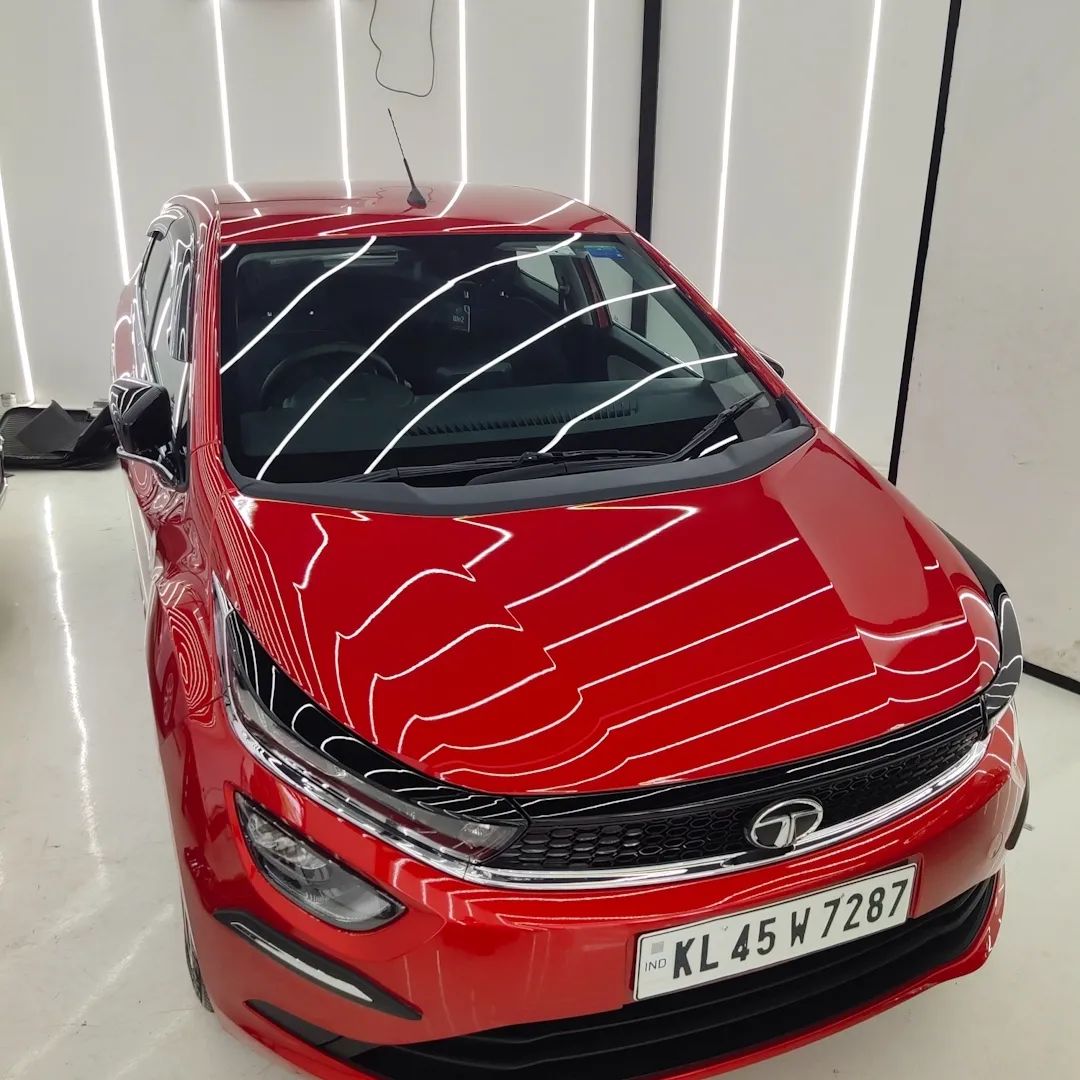
Graphene coating is a next-generation liquid polymer protection applied to a vehicle's painted surfaces. It bonds at a molecular level, forming a semi-permanent hydrophobic layer that repels water, resists UV degradation, and reduces surface temperature under direct sunlight.
What sets it apart from ceramic is the material itself — graphene is a single layer of carbon atoms arranged in a hexagonal lattice, making it one of the strongest known materials by weight. When suspended in a carrier and applied to paint, graphene coating achieves a surface hardness of 10H on the pencil hardness scale and a water contact angle above 110 degrees, meaning water sheets off the surface rather than sitting and forming spots.
Critically, graphene's thermal conductivity helps dissipate heat from the surface faster than ceramic coatings, which can retain warmth and cause water spots to bake in under Kerala's afternoon sun. This makes graphene coating particularly well-suited to cars parked outdoors in high-UV, high-humidity environments.
Why Thrissur and Irinjalakuda Cars Need Graphene Coating
Kerala doesn't treat car paint gently. Thrissur sits in a zone that records among the highest UV index levels in India during pre-monsoon months — typically April through May — followed immediately by four to five months of intense monsoon rainfall. That cycle of extreme UV exposure followed by constant moisture is precisely the combination that degrades unprotected paint fastest.
In Irinjalakuda, vehicles on the NH-544 corridor face daily construction dust, sand from nearby quarry routes, and hard water from overhead washing points that leave calcium deposits on paint. Hard water spots are chemically alkaline and, left untreated, permanently etch into clear coat within weeks.
Graphene coating in Thrissur addresses both problems simultaneously: the hydrophobic surface repels hard water before it can dry and deposit minerals, while the UV resistance prevents oxidation during summer months.
Drivers in Chalakudy and Kodungalloor dealing with riverside humidity, owners in Guruvayoor and Kunnamkulam where temple festival dust is a seasonal reality, and commuters from Chavakkad and Wadakkanchery who cover significant highway distance daily — all see the same pattern of paint degradation that graphene protection specifically addresses.n against damage, and a revitalized vehicle. Detailing can also increase your car’s resale value by preserving its aesthetic appeal and overall condition.
To keep a car’s ceramic layer in good shape, you need to clean it the right way and touch it up every so often. Dirt, dust, and other pollutants can stick to the layer and make it look less shiny if you don’t wash it often enough. To keep the layer from getting damaged, it’s important to use cleaning products with a pH balance and no abrasives.
Benefits of Graphene Coating — What You Actually Gain
Superior water repellency with fewer water spots. Graphene's contact angle above 110 degrees means water beads tightly and rolls off with minimal lateral pressure. For a daily driver parked outdoors in Kerala, this eliminates the primary cause of surface etching — water sitting on paint under direct sunlight.
Lower surface temperature in Kerala's heat. Graphene's thermal conductivity actively dissipates heat rather than retaining it. In a country where car bonnets routinely exceed 60°C under afternoon sun, this measurably reduces the chance of heat-induced water spot etching and helps maintain coating integrity over time.
Scratch and swirl resistance for daily use. The 10H surface hardness provides a meaningful buffer against the fine scratches from improper washing, dust wiping, and the occasional careless hand in parking lots. For luxury car owners in Thrissur who wince every time valet parking is unavoidable, this matters.
Long-term gloss that doesn't dull. Unlike wax or sealants that oxidise within weeks under Kerala UV, graphene maintains a deep, wet-look gloss for years. Your car looks freshly detailed even six months after application — without repeat visits.
Easier maintenance between washes. Dust and grime don't bond to graphene-coated surfaces the way they do to bare clear coat. A rinse removes most contamination, significantly reducing the time and effort of weekly washing.
Graphene Coating vs. Ceramic Coating
Ceramic coating remains a strong, proven option and is excellent value for budget-conscious owners. However, in Kerala's specific climate — where high heat is followed by hard water rain and intense humidity — graphene's thermal properties and superior hydrophobicity give it a clear edge for long-term protection with lower maintenance effort.
How Long Does Graphene Coating Last?
Applied correctly, graphene coating lasts between four and seven years. That's the direct answer — but the actual lifespan on your car depends on three variables.
First, application quality. Graphene coating must be applied in a clean, temperature-controlled environment. Contamination during application — dust, humidity, skin oils — compromises the bond and shortens longevity significantly. This is why studio environment matters far more than the coating product alone.
Second, maintenance routine. Graphene-coated cars should be washed with pH-neutral shampoo and never cleaned with alkaline or acidic products. Using regular petrol station foam wash strips the coating gradually over months.
Third, Kerala's climate itself. Coastal and riverside zones — like parts of Thrissur and Irinjalakuda — introduce higher ambient humidity and harder water, which means annual inspection and a maintenance coating application every 12–18 months is advisable to keep performance at its peak.
Realistically, a well-maintained graphene coat applied in a professional studio will look and perform better in year three than an improperly applied coat in year one.
How Much Does Graphene Coating Cost in Thrissur?
Graphene coating in Thrissur typically ranges from ₹8,000 to ₹25,000 depending on the vehicle and service tier. Three main factors drive the variation.
Vehicle size is the most obvious — a hatchback requires significantly less product and time than an SUV or MUV. Panel condition affects cost too: cars with existing swirl marks, minor scratches, or oxidation need paint correction before coating, which adds preparation time. Product grade also varies — entry-level graphene blends differ from professional-grade formulations in graphene concentration and durability.
The long-term maths tend to favour the investment. A quality graphene coating that protects paint for five years costs less than five years of wax treatments, repeated paint correction sessions, or a partial respray caused by oxidation or hard water etching. For a new car owner in Irinjalakuda, applying graphene coating in the first month of ownership is the most cost-effective decision they can make for long-term resale value.
Why Menora We2 Auto Detailing for Graphene Coating?
At Menora We2 Auto Detailing, graphene coating is not a service we hand to a junior technician after a 30-minute training. Every application is done in our controlled studio environment — closed to dust, humidity-managed, and with dedicated curing time built into every booking. The difference this makes to coating adhesion and longevity is not marginal; it's the single largest factor separating a five-year coating from a two-year one.
Our Thrissur and Irinjalakuda studios both follow the same multi-step preparation process: decontamination wash, clay bar treatment, and panel inspection before a single drop of graphene product touches your car. We offer a free consultation to assess your car's current condition honestly and recommend the right protection tier — whether that's graphene alone or a combination with PPF for high-impact zones.
We're proud to serve car owners across Thrissur, Irinjalakuda, and our Angamaly studio as well, covering Central Kerala with consistent studio standards at each location.
Have questions about what graphene coating can realistically do for your specific car and how you use it? The FAQ section below covers the most common ones.
Frequently Asked Questions
Q: Is graphene coating worth it for a daily driver, or is it only for luxury cars?
A: It's genuinely well-suited to daily drivers — arguably more so than luxury cars that spend time in garages. A daily driver in Kerala faces maximum exposure to UV, rain, dust, and hard water. Graphene coating's self-cleaning hydrophobic surface reduces the time spent maintaining the car weekly and protects the paint from the cumulative damage that drops resale value over time.
Q: Can graphene coating be applied to a brand new car?
A: Yes, and ideally it should be. New cars arrive from the showroom with no paint protection and are often exposed to transport scratches, dust, and UV before you take delivery. Applying graphene coating within the first month seals the factory paint at its best condition, before any swirl marks or oxidation can develop.
Q: What does graphene coating NOT protect against?
A: Graphene coating is not a substitute for Paint Protection Film (PPF) when it comes to stone chips, deep scratches, or physical impact. It will not prevent a stone from chipping your bumper or a car door from dinging your panel. For those threat types, PPF on high-impact zones is the appropriate solution — and many owners combine both for full coverage. [INTERNAL LINK: PPF service page]
Q: What maintenance does a graphene-coated car need?
A: Use only pH-neutral car shampoo for regular washing — never foam shampoos from petrol stations or alkaline cleaners. Avoid machine polishing the coated surface without professional advice, as this can strip the coating. An annual inspection at our studio, and a maintenance coat every 12–18 months, will keep the hydrophobic performance strong across the coating's full lifespan.
Q: I'm based in Irinjalakuda — do I need to travel to Thrissur for graphene coating?
A: No. Our Irinjalakuda studio offers the same full graphene coating service as our Thrissur location, with the same preparation standards and studio environment. You can book directly at the Irinjalakuda branch for a free consultation and assessment.
Conclusion / Final Thoughts
Graphene coating gives your car paint the best available defence against Kerala's specific climate demands — UV, monsoon hard water, humidity, and daily road contamination. Good application quality lasts for years and saves you more in maintenance and paint repair than it costs upfront. Slots for studio detailing do fill up, especially after the monsoon season when many owners bring in their cars together
Call to Action
so booking early gives you the best scheduling flexibility. Book a free consultation with Menora We2 Auto Detailing at our Thrissur, Irinjalakuda, or Angamaly studios and let us assess your car honestly before recommending anything.