Keeping Your Car Healthy Through Kerala's Rainy Season
A customer from Chalakudy drove into our Irinjalakuda studio last July with a six-month-old SUV. The car had barely five thousand kilometres on it, but the bonnet was covered in dull white patches and the cabin smelled like a damp cupboard. Nothing was wrong with the car itself. It had simply gone through one Kerala monsoon without any real care, and the rain had done the rest.
We see versions of this story every year between June and September. The monsoon in Thrissur district is beautiful to watch and hard on vehicles. Continuous rain, waterlogged roads, mud, high humidity and long stretches where the car never fully dries out — all of it works against your paint, your interiors and your electricals at the same time. The good news is that most monsoon damage is preventable, and none of it requires anything complicated. Here is what actually helps, based on what we deal with every rainy season at Menora We2 Auto Detailing Studio.
Why Rainwater Is Not as Harmless as It Looks
Many drivers assume rain gives the car a free wash. In reality, rainwater picks up dust, pollutants and minerals as it falls and as it flows over the body. When those droplets dry on the paint, they leave behind mineral deposits — the chalky water spots you see on bonnets and roofs across Thrissur every monsoon. Left alone for weeks, these deposits etch into the clear coat and will not come off with a normal wash.
Road water is worse. Puddles on the Thrissur–Irinjalakuda stretch or the bypass near Mannuthy carry mud, oil residue and sometimes drainage overflow. This mixture sticks to the lower panels, wheel arches and underbody, where it holds moisture against bare metal for days. That is how rust quietly begins, usually in places you never look.
Wash the Car More Often, Not Less
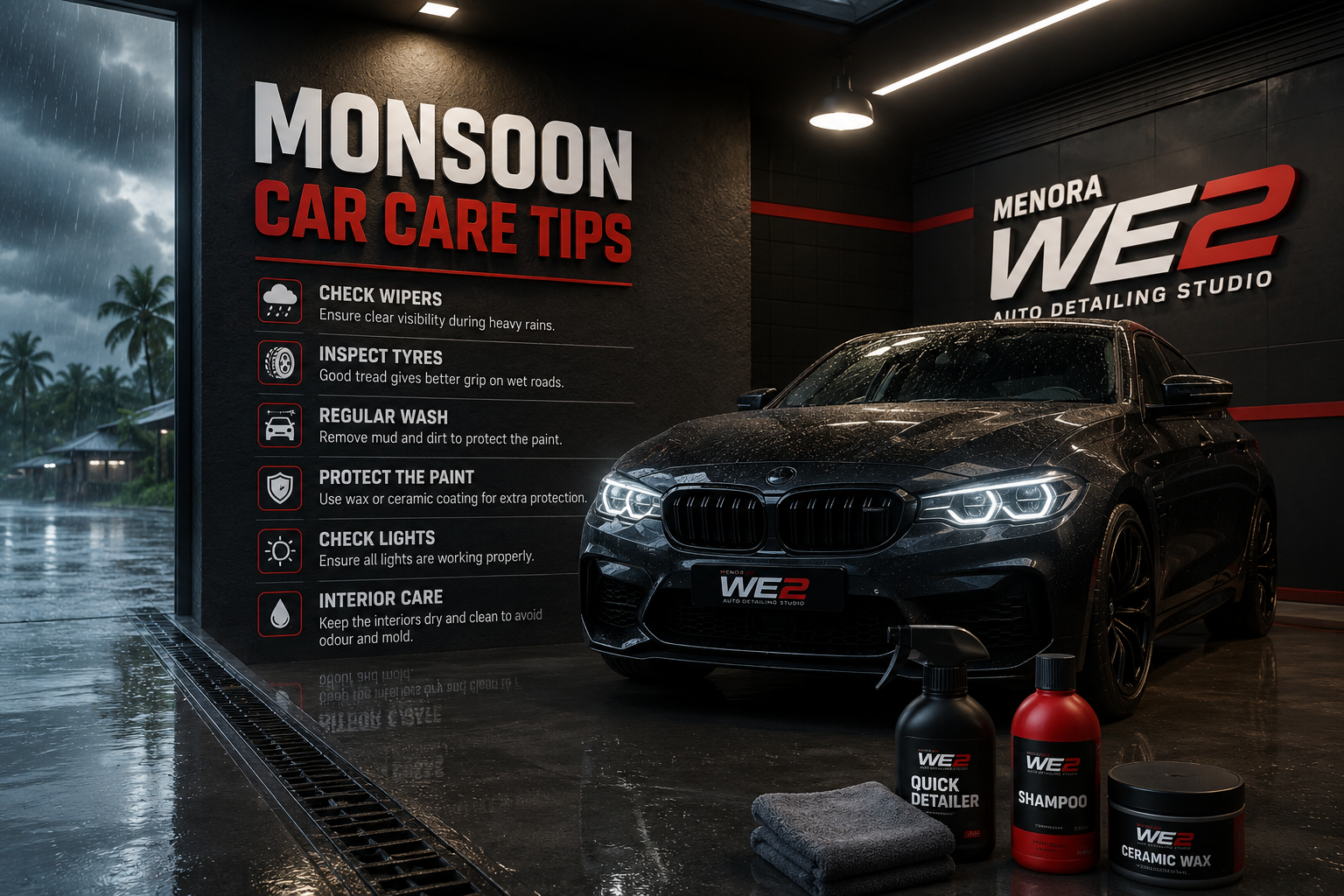
It feels counterintuitive to wash a car during the rains, but this is when regular washing matters most. A proper wash removes the mineral film and road grime before it bonds with the paint. If you are washing at home, avoid wiping a wet, dirty car with a dry cloth — the grit acts like sandpaper and leaves fine swirl marks. Rinse thoroughly first, use a car shampoo rather than household detergent, and dry the car with a clean microfibre towel instead of letting it air-dry.
If home washing is not practical during heavy rain weeks, a professional car wash every ten to fifteen days keeps things under control. We handle a steady stream of monsoon washes at both our studios, including customers who drive down from Guruvayoor and Chavakkad specifically to get the underbody and wheel arches cleaned properly — the two areas a bucket wash at home almost never reaches.
Give the Paint Something to Fight Back With
Paint damage is visible. Interior damage creeps up on you. During the monsoon, wet shoes, dripping umbrellas and humid air push cabin moisture levels up, and a closed, parked car becomes a warm, damp box — ideal conditions for fungus. It usually starts on seat belts, door pads and the underside of fabric seats, and by the time you smell it, it has spread.
A few habits make a real difference. Switch from fabric floor mats to rubber or all-weather mats before the season; they trap water on the surface instead of soaking it in. Shake out and dry the mats every few days. Keep a small towel in the car for wet seats and dashboards. Do not leave damp umbrellas or raincoats inside overnight — the boot with a plastic tray is a better place for them. And whenever there is a dry, sunny break in the rain, park with the windows slightly open for an hour to let the cabin breathe.
Run the air conditioner regularly even on cool days, because the AC dehumidifies the cabin as it cools. If the vents have started giving off a musty smell, the evaporator has likely developed fungal growth and needs a proper AC disinfection rather than a perfume spray, which only masks it. Deep interior cleaning once during and once after the monsoon — seats, carpets, roof lining and AC vents — resets the cabin completely. This is one of our most requested services between July and October, including from customers around Kunnamkulam dealing with persistent cabin odour.
Wipers, Lights and the Things You Only Notice at Night
Wiper blades in Kerala rarely last more than a year. Heat hardens the rubber through summer, and the first heavy rains reveal the damage — streaking, shuddering and patches the blade skips entirely. Replace the blades at the start of the monsoon rather than waiting for them to fail on a dark, flooded road. Top up the washer fluid with a proper screen wash, since plain water does little against the oily film that builds up on windscreens in traffic.
Check every light on the car, and look honestly at your headlights. Yellowed, hazy headlight lenses cut light output badly, and in monsoon conditions — heavy rain, mist near the ghats, and early darkness — that lost visibility matters. Headlight restoration polishes the lens back to clarity and costs a fraction of replacement units. It is a small job that makes night driving through rain noticeably safer.
Underbody, Tyres and Brakes
The underbody takes the worst of the monsoon and gets the least attention. Every waterlogged stretch coats it in mud that stays wet for days. Ask for an underbody wash whenever you get the car cleaned, and if the vehicle is more than a few years old, an anti-rust underbody coating before the season is worthwhile insurance.
Tyres need tread to displace water; worn tyres aquaplane, and no amount of careful driving fixes that. Check tread depth before the rains and maintain the recommended pressure. Brakes that have been through deep water should be dried by light application over a short distance — and if you hear grinding or feel reduced bite afterwards, have them inspected rather than hoping it settles.
After the Monsoon: Do Not Skip the Reset
When the rains taper off around October, the car deserves a thorough once-over. This is the right time for a full detail — a deep wash, clay treatment or paint correction if water spots have etched in, a complete interior clean, and a fresh layer of protection before the dry season's dust and UV take over. Cars that get this post-monsoon reset every year age visibly slower than cars that go straight from rain to summer without one.
Frequently Asked Questions
How often should I wash my car during the monsoon in Kerala?
Every ten to fifteen days is a sensible rhythm. The goal is to remove mineral deposits and road grime before they bond with the paint. Include an underbody rinse whenever possible, especially if you regularly drive through waterlogged roads.
Does ceramic coating actually help during the rainy season?
Yes. A ceramic coating makes the paint hydrophobic, so rainwater beads and rolls off instead of drying into mineral spots. It also makes monsoon grime much easier to wash away. It does not make the car maintenance-free, but it significantly reduces the damage rain can do.
Why does my car smell musty during the monsoon and how do I fix it?
The smell almost always comes from fungal growth caused by trapped humidity — in carpets, seat fabric or the AC evaporator. Air fresheners only mask it. A deep interior cleaning combined with AC disinfection removes the source, and rubber mats plus regular AC use keep it from returning.
Is it worth applying PPF before the monsoon?
For drivers who cover long highway distances in the rain, yes. Wet roads increase stone chips on the front bumper and bonnet, and paint protection film absorbs those impacts. For city-only driving, a ceramic or graphene coating usually offers sufficient protection.
How often should I wash my car during the monsoon in Kerala? Every ten to fifteen days is a sensible
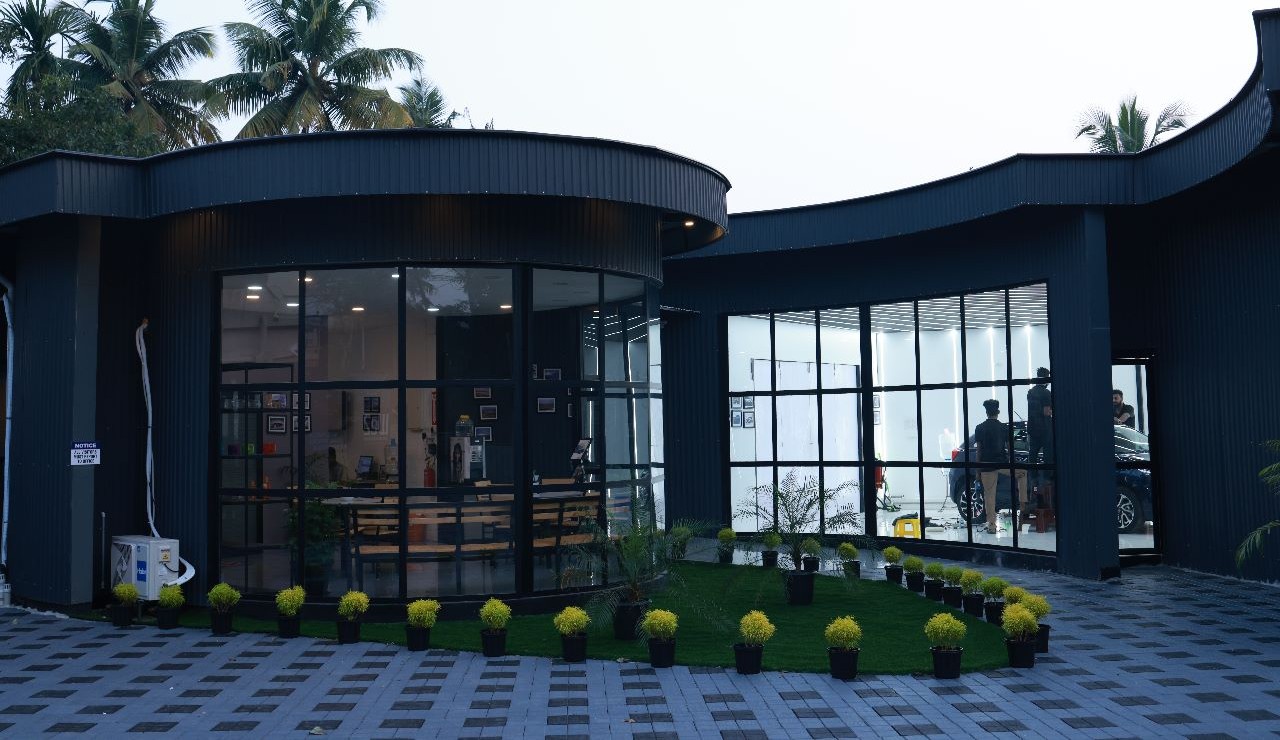
Menora We2 Auto Detailing Studio operates two locations — one on Thekkekkara Road, Irinjalakuda, and one on Bypass Road, Mannuthy, Thrissur. Both studios handle monsoon washing, interior deep cleaning, ceramic and graphene coating, PPF installation and headlight restoration for customers across Thrissur district.
Bring the Monsoon to Us Before It Gets to Your Car
Every tip above works better as prevention than as repair. If your car is heading into the rains unprotected, or has already come out of a few downpours looking worse for it, drop in at either of our studios. Call +91 83048 02244 for Irinjalakuda or +91 94465 70800 for Thrissur, and we will tell you honestly what your car needs — and just as importantly, what it does not.