
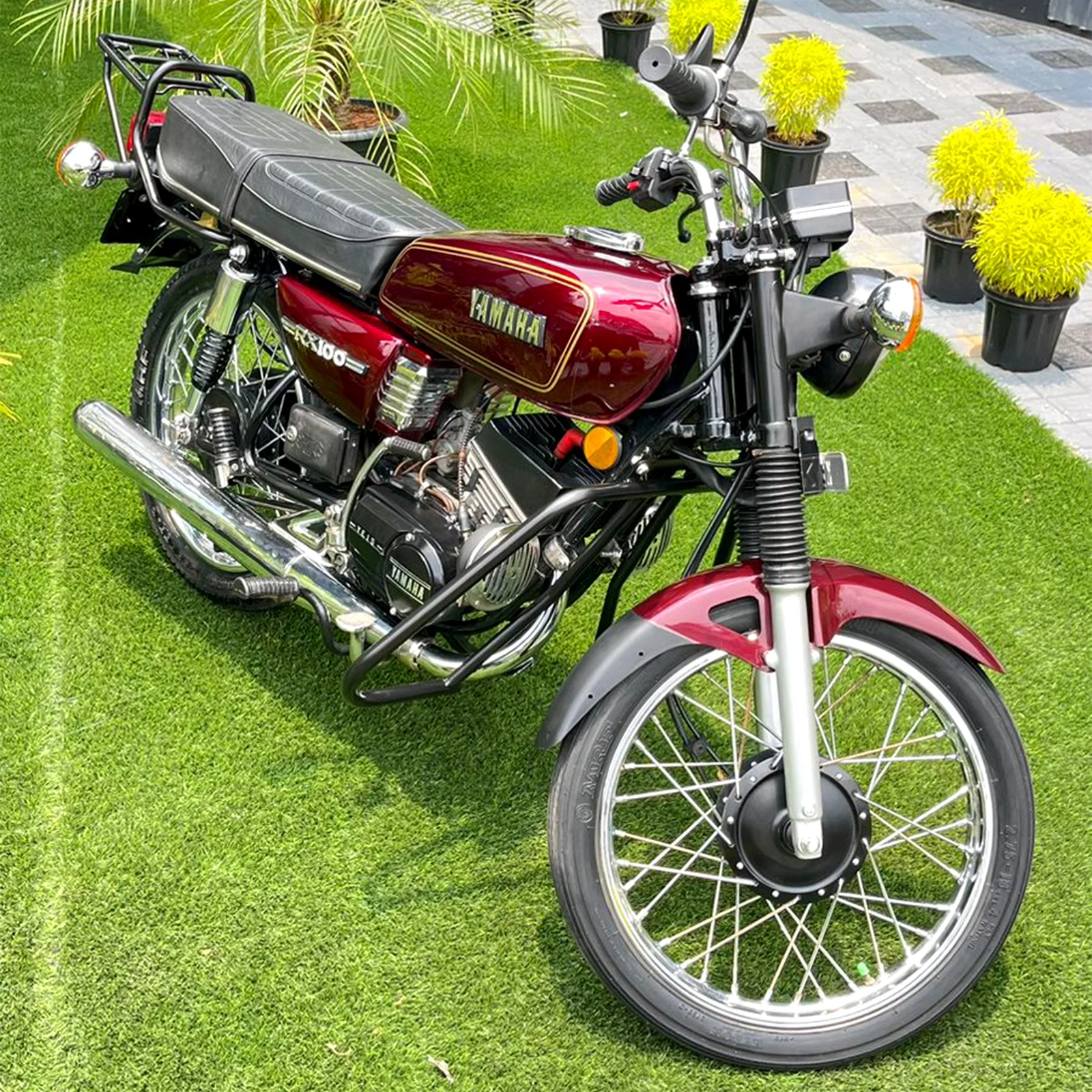
Your bike doesn't have the luxury of a car's body panels absorbing the first hit — every knock, chip, and scratch lands directly on paint that's fully exposed with nothing between it and the road. If you've ever watched a new tank pick up its first scuff within weeks of riding through Thrissur traffic, you already understand why bike owners are increasingly asking about PPF instead of just accepting the wear.
What Is PPF Coating for Bikes?
PPF, or paint protection film, is a clear, self-healing polyurethane (TPU) film applied to a motorcycle's painted panels — typically the tank, fenders, and fairings — to absorb the impact of stone chips, road debris, and everyday contact before it reaches the factory paint. Quality bike PPF includes a top-coat that allows light scratches to soften or disappear when heated above roughly 40°C, the same self-healing property used in car PPF.
Bikes expose far more of their bodywork to direct contact than cars do — there's no bumper or fender absorbing the first hit on a fuel tank, and riders' gear, belt buckles, and keys regularly brush against panels that a car's design would keep protected. That's why PPF coverage on bikes tends to focus heavily on the tank, where scratches from riding gear and fueling mishaps are most common, alongside fenders and any curved panel exposed to road spray.
Why Thrissur and Irinjalakuda Bikes Need PPF
Kerala's riding conditions are tougher on exposed bike paint than most owners realise until the damage shows up. The monsoon brings months of wet-road riding where fine laterite dust mixes with rainwater and gets flung directly onto tanks and fenders, and that gritty spray etches into unprotected clear coat faster on a bike than it would on a car, simply because there's no wheel arch or bumper deflecting it.
PPF coating for bikes in Thrissur matters most for riders doing regular NH544 or NH66 stretches, where stone chip exposure at speed is constant and unavoidable. Riders commuting between Irinjalakuda, Chalakudy, and Kunnamkulam accumulate this wear daily, while intense pre-monsoon UV across the district fades and dulls unprotected paint faster than in shadier, cooler climates. Bikes parked outdoors in Guruvayoor or Kodungallur's coastal humidity see an added layer of oxidation risk on top of the usual chip and scratch exposure.
Benefits of PPF for Bikes — What You Actually Gain
Real protection where it matters most. The tank takes the brunt of gear contact, key scratches, and fueling spills, and PPF absorbs that wear instead of your factory paint, keeping the most visible panel on the bike looking new far longer.
Self-healing surface. Minor scuffs from riding gear or careless parking soften under heat exposure, so the tank doesn't accumulate the fine scratching that builds up over a year or two of regular riding.
Stone chip and road debris protection. Highway riding on NH544 or NH66 means constant low-level impact from gravel and debris, and PPF on fenders and lower fairings absorbs that impact before it reaches the paint underneath.
UV fade resistance. Bikes parked outdoors all day, whether at work or during long temple-town errands near Guruvayoor, face more direct UV exposure than a car's body typically does, and PPF slows the fading that comes with it.
Easier cleaning after monsoon rides. Grit and road spray wipe off a protected surface more easily than they lift out of bare, worn clear coat, which matters after a wet commute through Kerala's monsoon months.
Preserved resale value. A bike with a tank and fenders still reading as original paint, without visible scratches or fading, consistently shows and sells better than one with the usual wear untreated bikes accumulate.
PPF vs. Ceramic Coating for Bikes: Which Should You Choose?
| Feature | PPF | Ceramic Coating |
|---|---|---|
| Protects against stone chips & scratches | Yes — physical barrier | No — cosmetic layer only |
| Self-healing for light scuffs | Yes | No |
| Adds gloss & hydrophobic finish | Some improvement | Yes — primary benefit |
| Typical lifespan | 5–7 years | 2–4 years |
| Best suited for | Tank, fenders, fairings | Full bodywork gloss & easier washing |
| Texture/finish feel | Slightly thicker film feel | Smoother, closer to bare paint |
Neither replaces the other, and many bike owners in Thrissur run both — PPF on the tank and fenders where impact risk is highest, ceramic coating over the rest of the bodywork for gloss and easier washing. If you had to choose one, a daily rider on highway stretches gets more practical value from PPF, while a bike that's mostly city-ridden and garaged sees more visible benefit from ceramic coating's finish.
How Long Does PPF Last on a Bike?
Quality bike PPF typically lasts 5 to 7 years, somewhat shorter than the 5 to 15 year range seen on cars, largely because bike panels are more exposed and see more direct contact and flex than a car's body. Longevity depends heavily on film quality, riding conditions, and how the bike is maintained.
In Kerala's climate specifically, monsoon exposure and intense pre-monsoon UV push wear toward the lower end of that range for bikes ridden daily and parked outdoors, while bikes that are garaged and ridden less frequently tend to reach the upper end. As with car PPF, avoiding automated brush washes and using pH-neutral products extends film life meaningfully.
How Much Does PPF Coating Cost for Bikes in Thrissur?
Pricing for bike PPF depends on coverage — full-tank and fender protection costs less than a full-body wrap, and film brand and grade both move the price further. Rather than quote a fixed number here, [INSERT CURRENT VERIFIED PRICE RANGE — e.g. tank-only vs full-coverage bike PPF tiers], since brand (Cosmo, Avery Dennison, Garware, Ultraguard, ALP, or Rodim) and bike size both affect the final cost.
The more useful way to think about it is against the cost of repainting a scratched tank or fender, which typically costs more than the PPF that would have prevented the damage — and a bike with visible touch-up patches or mismatched paint loses more at resale than the protection cost upfront.
Why Menora We2 Auto Detailing for Bike PPF?
Bike PPF at Menora We2 is applied in the same controlled, dust-free studio environment used for car PPF — curved tank and fender surfaces need precise measuring and cutting to avoid visible seams, and that level of precision depends on a clean, controlled workspace rather than an open bay. We work with established film brands including Cosmo, Avery Dennison, Garware, Ultraguard, ALP, and Rodim, sized appropriately for Bike PPF coverage on tanks, fenders, and fairings.
A free consultation before booking helps figure out whether tank-and-fender coverage or fuller protection makes sense for how you actually ride, available at both our Thrissur bypass studio and our Irinjalakuda studio on Thekkekkara Road, with riders regularly coming in from Chalakudy, Guruvayoor, and Kunnamkulam. The FAQ below covers what riders ask us most before deciding.
Frequently Asked Questions
Q: Is PPF worth it for a daily-ridden bike? A: Yes, for daily riders in Kerala, PPF on the tank and fenders is usually worth it given the constant stone chip and road debris exposure from regular highway and monsoon riding. The tank especially benefits, since it takes the most contact from gear and fueling over daily use.
Q: Can PPF be applied to a brand-new bike? A: Yes, and it's often the ideal time — applying PPF to factory-fresh paint means there's no existing scratches to work around, and the paint hasn't yet faced a single monsoon or summer UV season.
Q: What does bike PPF not protect against? A: PPF doesn't prevent deep gouges from a crash or deliberate damage, and it doesn't stop general chain lube or fuel stains from needing regular cleaning — it protects against everyday scratches, chips, and fading, not major impact damage.
Q: How do I maintain a bike after PPF installation? A: Hand-wash with a pH-neutral shampoo rather than high-pressure automated washes, and avoid harsh degreasers directly on film near the tank, since these can affect the film's clarity and adhesive over time.
Q: Where can I get bike PPF done near Thrissur? A: Menora We2 Auto Detailing Studio offers bike PPF at both its Thrissur bypass studio near Plakkat Tyres and its Irinjalakuda studio on Thekkekkara Road, near Metro Health Care Hospital.
A bike's paint takes more direct hits than a car's ever will, and PPF is the most practical way to keep a tank and fenders looking factory-new through years of Kerala riding. If your bike's paint has already picked up its first few scratches, that's usually the sign it's time to protect what's left before it gets worse. Book a free consultation at Menora We2 Auto Detailing Studio in Thrissur or Irinjalakuda — also serving Chalakudy, Chavakkad, Guruvayoor, Kodungallur, Kunnamkulam, and Wadakkanchery — through our contact page or by visiting either studio directly.