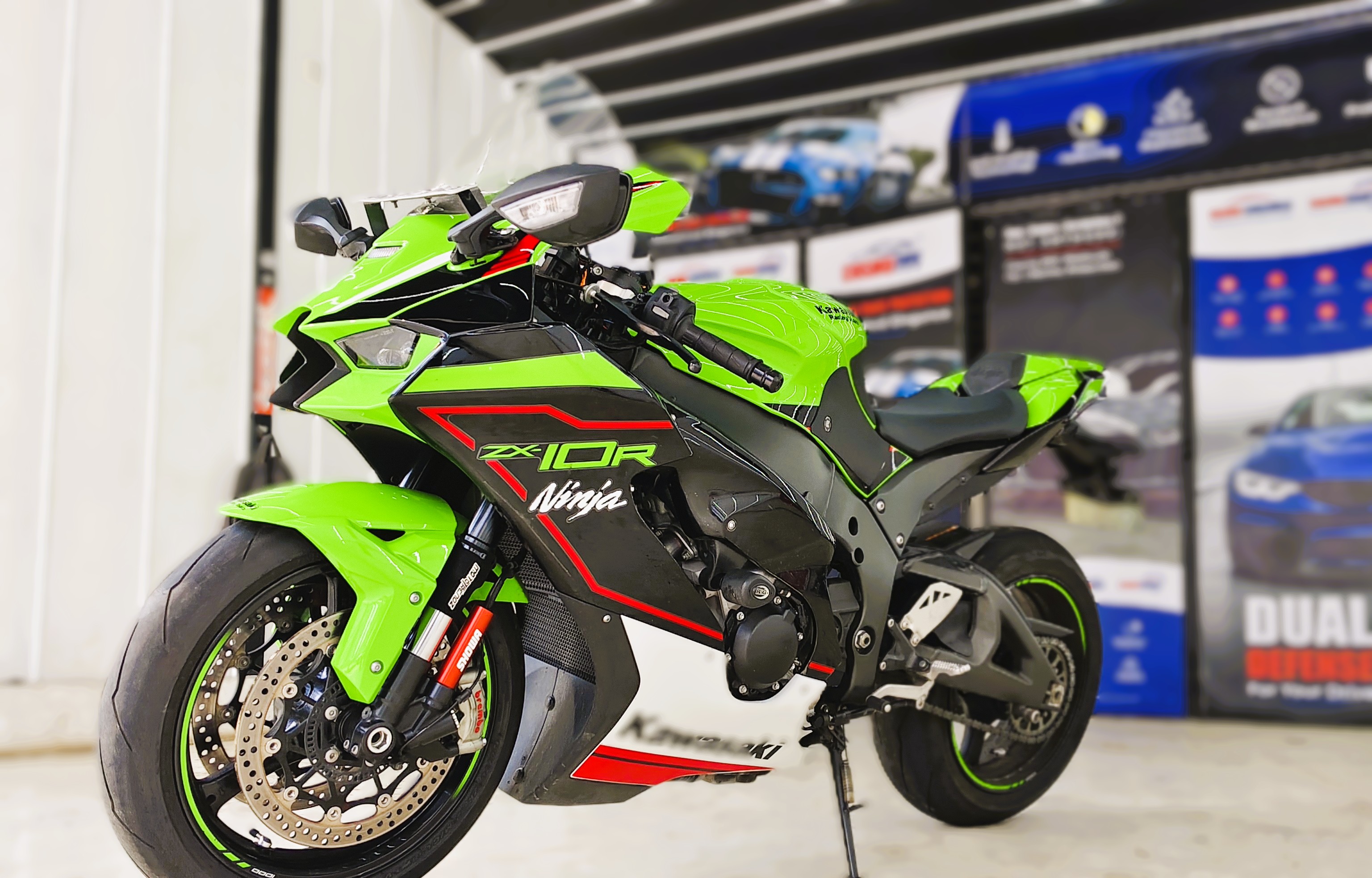
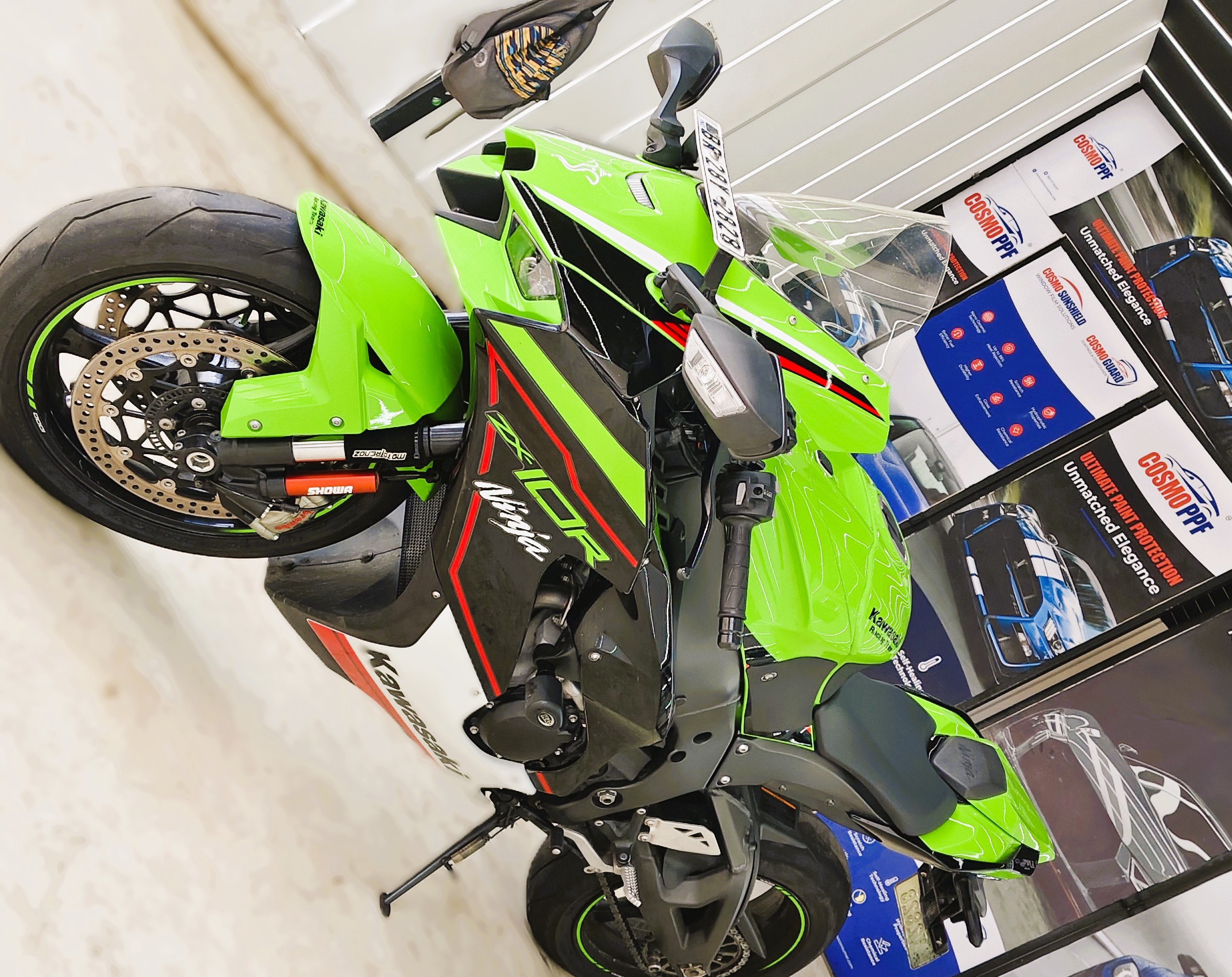
Bike PPF (paint protection film) is a clear, thermoplastic polyurethane film applied directly over a motorcycle's painted panels — most commonly the fuel tank, front fairing, side fairings, and mudguard, since these take the most road-related impact. Like PPF for cars, it's a physical layer, not a chemical treatment — it absorbs stone chips, scuffs, and minor abrasion before they reach the paint underneath.
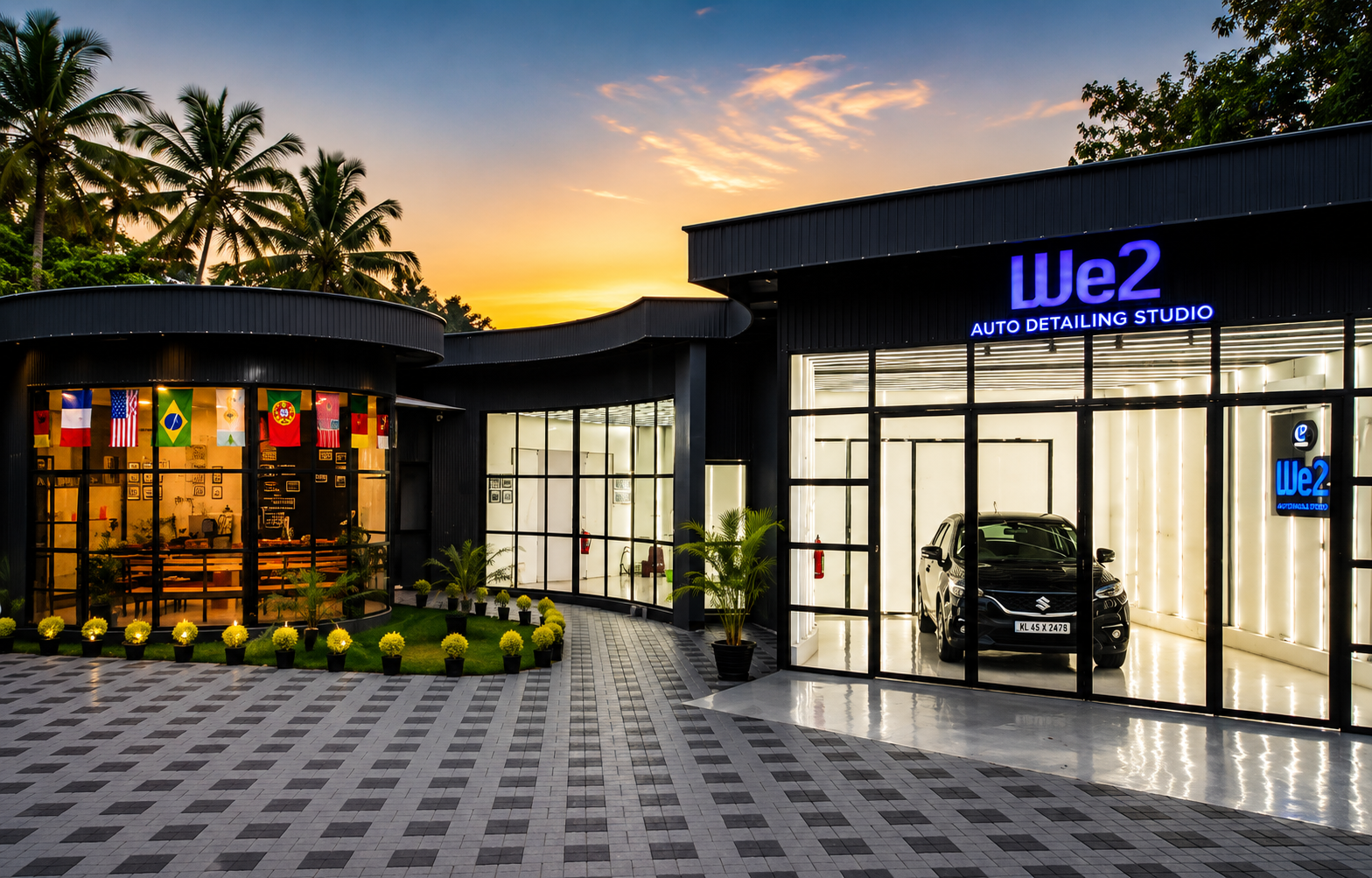
Menora We2 installs bike PPF at both studios, Irinjalakuda and Thrissur, and provides a free paint inspection before recommending which panels genuinely need coverage. It's a natural add-on for riders who already use the studio's ceramic coating service on their car and want comparable protection for the bike, and riders bringing in both vehicles often pair it with a full car detailing visit.
What Is Bike PPF and How Does It Work?
The film is optically clear and doesn't change the bike's colour or finish — it's custom-cut to each panel's contours, worked into position with a slip solution, then set at the edges and curves with a heat gun so it sits flush rather than as a visible layer. Self-healing PPF options are available depending on the selected film. On films with a self-healing topcoat, fine surface marks from cloths or minor contact can soften with heat, whether from direct sunlight or warm water.
Why Bike PPF Matters on Thrissur District Roads
Motorcycles take road damage differently than cars, and worse in some ways. Sitting lower to the ground, a bike takes more direct hits from stone and gravel kicked up by the tyres of vehicles ahead — construction debris on routes like the Thrissur–Irinjalakuda highway and the Chalakudy bypass regularly causes multiple fresh chip marks on the tank and fairing in a single ride. Tight manoeuvring near compound gates and congested parking in busier areas like Guruvayoor and Kunnamkulam adds a steady accumulation of paint transfer and scuffing from close-quarters contact that builds up over months rather than happening all at once. Monsoon season adds a third factor specific to two-wheelers: lower panels and fairings take a direct spray of water, laterite mud, and road chemicals that a car's higher ground clearance mostly avoids.
For more on protecting a vehicle through Kerala's seasons, see protecting your car through Kerala's seasons.
What Bike PPF Can't Do
PPF absorbs a meaningful amount of impact, but it isn't invincible — a hard enough stone strike or a real scrape can still mark or cut through the film, and in some cases transfer damage to the paint underneath. It doesn't make a bike damage-proof, scratch-proof, accident-proof, or dent-proof, and it isn't a substitute for careful riding and parking. It's also a physical layer only — for UV resistance, gloss, and easier washing, that's what ceramic coating or graphene coating adds, protection some riders combine with PPF the same way car owners do.
Our Bike PPF Installation Process
Every installation starts with a panel inspection under studio lighting — we identify any existing damage that would stay visible under the film, correct it with machine polishing and decontamination where needed, then prep the surface with an IPA solution so the film has a clean surface to bond to.
From there, film sections are custom-cut to match each panel's geometry. Technicians work the material around contours and edges using a slip solution for positioning, then progressively squeegee it into final adhesion. A heat gun locks the adhesive at curves and borders, and the bike gets a final multi-angle inspection under proper lighting before handover.
Avoid washing the bike for 48 hours after installation, while the film fully cures.
Use a pH-neutral shampoo and a soft cloth; avoid aiming high-pressure water jets directly at the film's edges.
Remove bird droppings and tree sap promptly — left too long, they can still mark the film surface.
On self-healing films, direct sunlight or a warm water rinse will help soften fine surface marks.
We provide a free, no-obligation paint inspection at both the Irinjalakuda and Thrissur studios. This helps us work out the bike's existing paint condition, which panels are most exposed to stone chips and scuffs, whether paint correction is needed first, what PPF coverage genuinely suits the bike, and what's realistic to expect from the film before any installation begins. The right PPF coverage depends on the bike's panel design, current paint condition, riding conditions and which areas need the most protection — full-bike coverage isn't assumed by default, and many riders choose to protect just the panels that take the most impact.
Why Choose Menora We2 Auto Detailing Studio
Our technicians work on both cars and motorcycles at both studios, and are used to the tighter curves and contoured panels that make bike PPF a different fitting job than car PPF. Paint correction is carried out where the existing paint condition requires it before installation, and where applicable, manufacturer warranty documentation is provided with the film.
FAQs
What is bike PPF? A clear, thermoplastic polyurethane film applied over a motorcycle's paint — usually the tank, front fairing, side fairings, and mudguard — to absorb stone chips and scuffs before they reach the paint underneath.
Is bike PPF worth it in Thrissur District? For the panels that take the most impact — tank, fairings, mudguard — yes, particularly given highway construction debris and tight-parking scrapes in busier areas. The free inspection helps decide which panels are actually worth covering for how you ride and park.
Which bike panels benefit most from PPF? The fuel tank, front fairing, side fairings, and mudguard — these take the most direct impact from stone chips, road debris, and close-quarters parking contact.
Does bike PPF work like car PPF? The underlying film technology is similar, but fitting a bike is a different job — motorcycle panels have tighter curves and more contoured shapes than a car's flatter panels, so the cutting and fitting process is adapted accordingly.
Does bike PPF self-heal? Some PPF films have a self-healing topcoat that can soften fine surface marks with heat from direct sunlight or warm water. Deeper cuts or heavy damage will not self-heal.
Does PPF affect the bike's factory paint? No — it sits over the original paint rather than altering it, and doesn't change the colour or finish.
Can bike PPF be combined with ceramic coating? Yes — PPF handles physical impact protection on high-risk panels, while ceramic coating adds UV resistance, gloss, and easier washing. The two are often combined rather than treated as alternatives.
Can bike PPF be combined with graphene coating? Yes — the same principle applies with graphene coating: PPF on the high-impact panels, graphene coating over the rest of the bike for chemical and UV protection.
Is paint correction required before installation? Only where the existing paint condition needs it — if there are swirl marks or contamination, we address that first so it isn't sealed in under the film. We check this during the free inspection.
If you want a clear read on which panels actually need protection before deciding on coverage, bring your bike in for a free inspection at either studio.
Irinjalakuda: Thekkekkara Road, near Metro Health Care Hospital, Irinjalakuda, Kerala 680121 — +91 83048 02244 Thrissur: Bypass Road, near Plakkat Tyres, Indira Nagar, Mannuthy, Thrissur, Kerala 680751 — +91 94465 70800
Open Monday to Saturday, 9:30 AM–6:30 PM. Closed on Sundays.
Request a free bike PPF inspection or see our studios in Irinjalakuda and Thrissur for more contact options. You can also read more about Menora We2 Auto Detailing Studio.