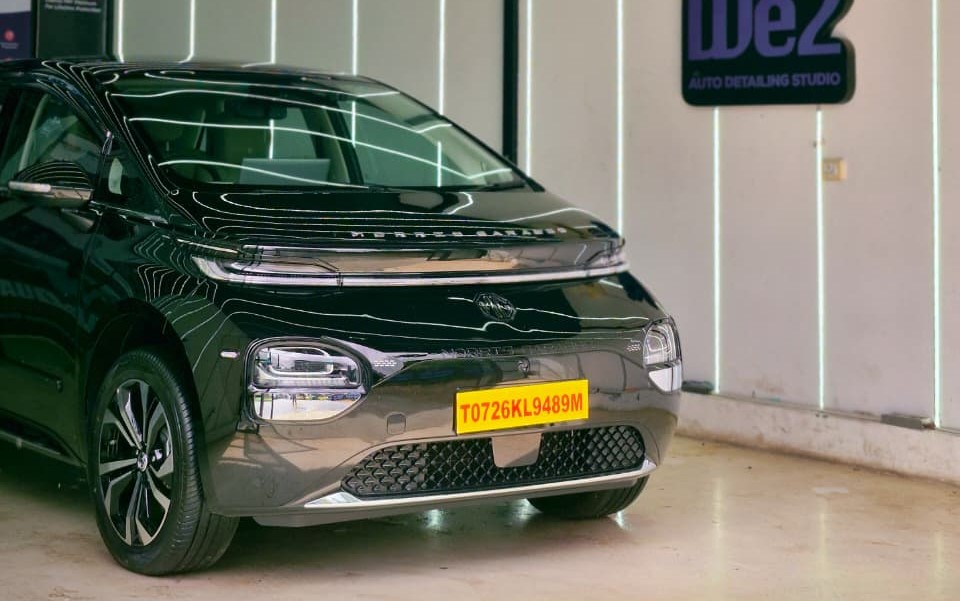
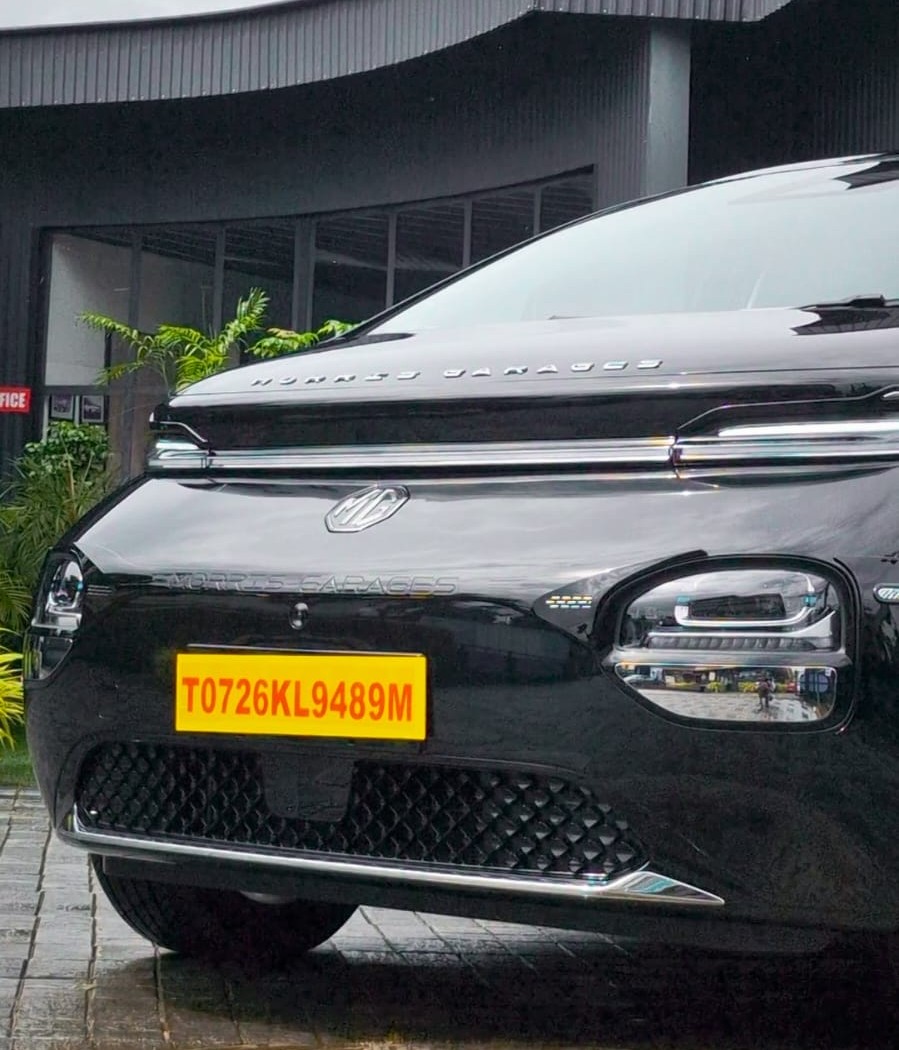
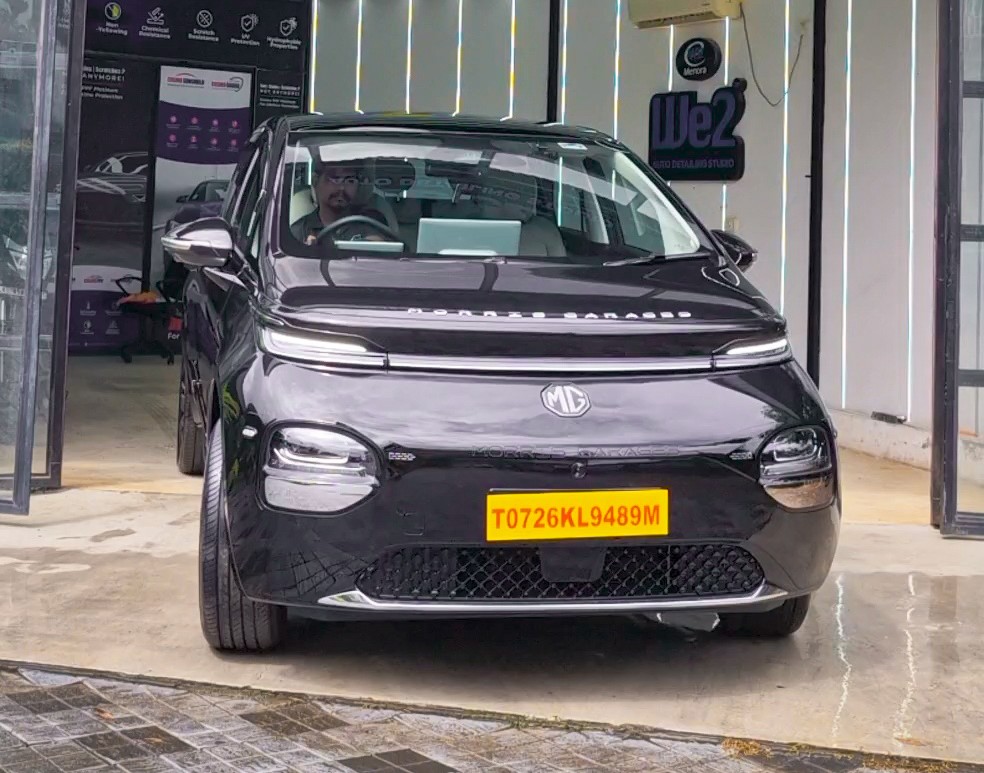
Ceramic coating is a liquid polymer, mostly silicon dioxide (SiO2), that chemically bonds to a car's clear coat once the paint has been properly cleaned and corrected. Unlike wax, it doesn't sit on top as a separate layer that wears off in a few washes — it becomes part of the outermost surface, which is why a well-applied coating holds up for years rather than weeks.
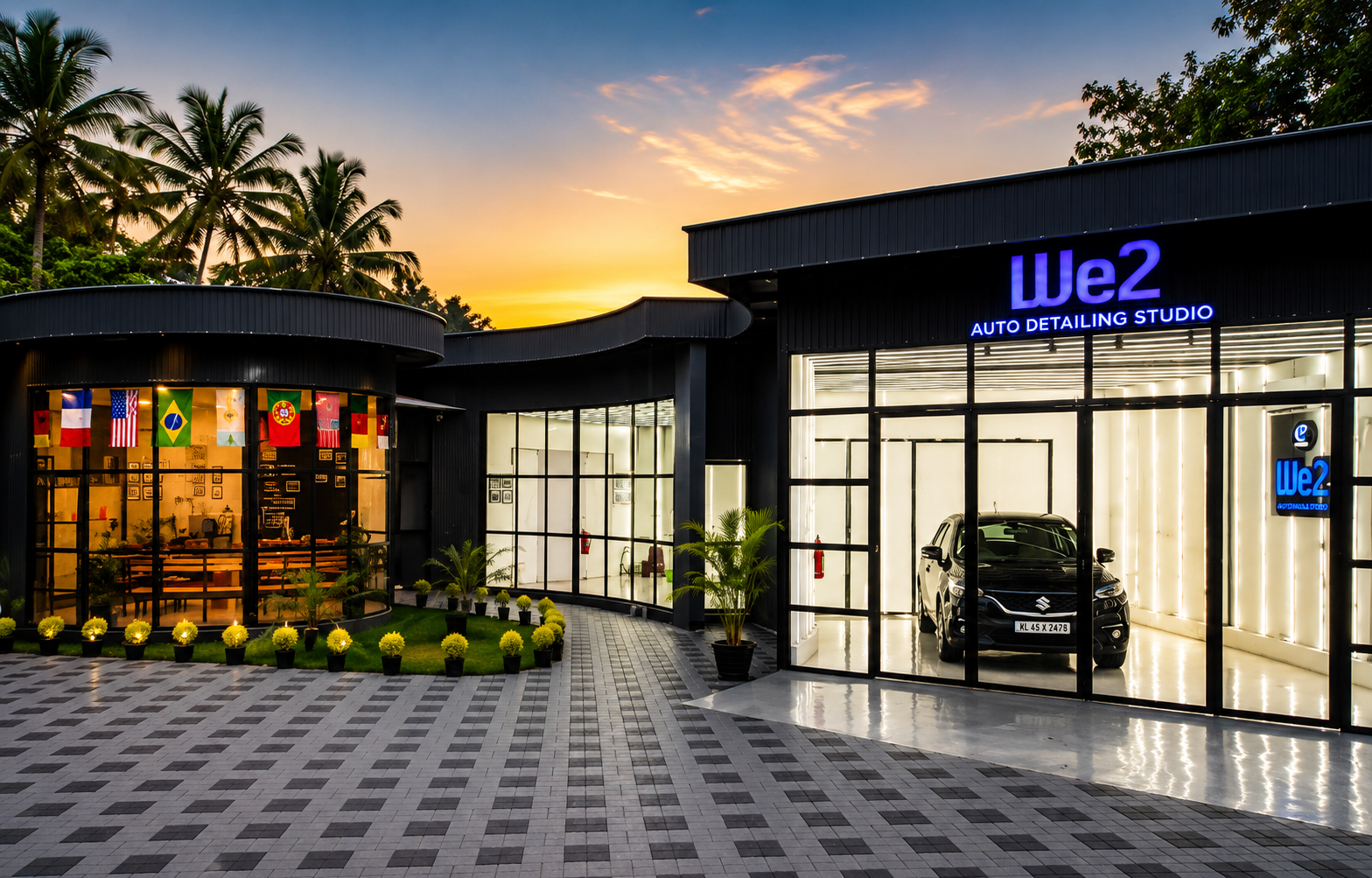
Menora We2 applies ceramic coating at both studios, Irinjalakuda and Thrissur, and offers a free, no-obligation paint inspection before recommending any package. Coating is often booked together with a full car detailing service, especially on cars that need more than light correction before anything is applied.
What Is Ceramic Coating and How Does It Work?
Once cured, the coating creates a hard, glass-like layer bonded to the clear coat. Because it's chemically bonded rather than just sitting on the surface, it doesn't wash off the way wax does, and it resists the oxidation that gradually dulls unprotected paint. It also makes the surface hydrophobic — water beads and rolls off rather than sitting and drying into spots — which is part of why coated cars are noticeably faster to wash.
It's worth being clear about what this doesn't mean: a ceramic coating is a chemical and UV barrier, not a physical shield. It will not stop a stone chip, a car park scrape, or a scratch from a careless wash — those still require paint correction or, for high-impact areas, paint protection film.
Why Ceramic Coating Matters More in Thrissur District's Climate
A few things about the local climate make protective coating more relevant here than in a drier, cooler place. Long, heavy monsoon exposure means paint spends extended periods wet and then drying under strong sun — that cycle is harder on an unprotected clear coat than steady, moderate weather. Bird droppings and tree sap are common under Thrissur District's tree cover, and both are acidic enough to etch unprotected paint if left sitting for an extended period in peak summer heat. Hard water is another factor — groundwater used in some domestic and car-wash setups around Thrissur and Irinjalakuda carries enough dissolved mineral content to leave visible spotting if it's left to dry on the surface.
A ceramic coating doesn't eliminate any of these risks entirely, but it changes what they land on: contaminants sit on top of the coating rather than bonding into the paint underneath, which makes them meaningfully easier to rinse off before they cause lasting damage.
Ceramic Coating vs. Wax, Graphene, and PPF
Wax and sealants sit on the surface rather than bonding to it. They give some short-term shine and light protection, but they break down with heat and washing and typically need reapplying every few weeks to months.
Ceramic coating bonds to the clear coat and holds up significantly longer than wax under normal driving and washing conditions — realistically measured in years rather than weeks, though how many years depends on the specific product, how well the car is maintained, and how it's parked and driven.
Graphene coating builds on the same bonding principle with a different base material, generally with better heat handling. For most everyday cars, standard ceramic coating already covers the practical need; graphene is worth discussing if heat exposure or maximum durability is a specific priority for your car.
Paint protection film is a physical film, not a chemical coating — it's the right answer for stone-chip and scrape protection on high-impact panels like the bonnet and mirrors, and is often combined with ceramic coating rather than used instead of it: PPF on the impact zones, ceramic coating over the rest of the car.
None of these is a scratch-proof or damage-proof solution. Each addresses a different kind of risk, and the right combination depends on how and where the car is actually driven.
What You Actually Get From a Ceramic-Coated Car
A finish that stays glossier for longer. Unprotected clear coat gradually dulls through everyday micro-oxidation; a coating slows that process.
Faster, easier washing. Because contaminants sit on the coating rather than bonding to the paint, a routine wash takes less time and effort.
A chemical buffer. Acidic contaminants — bird droppings, tree sap, some industrial fallout — contact the coating first rather than reaching bare paint directly.
A cleaner story at resale. Being able to show a car has had professional paint correction and a documented coating application is a reasonable, genuine selling point, separate from any specific warranty claim.
What Ceramic Coating Can't Do
It's not a substitute for paint correction if the paint already has swirl marks or defects — coating over uncorrected paint just seals those defects in rather than fixing them. It won't prevent a scratch, a stone chip, or a dent, and it isn't a permanent, maintenance-free solution — it still needs periodic care to perform as intended. If your priority is chip protection specifically, PPF on the vulnerable panels is the more direct answer.
Our Application Process
Every job starts with an inspection under strong lighting, so we can see the paint's actual condition — including a paint thickness check on cars where correction is being considered, since knowing how much clear coat is left affects how aggressively we can safely polish.
From there: a two-stage decontamination wash (a touchless foam pre-wash followed by an iron-remover treatment and clay bar pass) lifts embedded contaminants a normal wash won't reach. Paint correction follows, scaled to what the car actually needs — a light, single-stage polish for a car with minor swirl marks, or a more involved multi-stage process for older paint with deeper defects or oxidation. Different manufacturers' clear coats respond differently under a polisher, so the approach is adjusted car to car rather than applied identically across every vehicle.
Before coating, every panel is wiped down with an alcohol-based prep solution to remove polishing oils — skipping this step is one of the most common reasons a coating fails to bond properly. The coating itself is applied panel by panel in a controlled bay, then left to cure (accelerated with curing lamps where the schedule allows) before a final multi-angle inspection under proper lighting.
Ceramic Coating Options at Menora We2
We work with three ceramic coating brands, so the recommendation can be matched to your car and what you actually need from it, rather than fitting every vehicle into the same product.
System X Ceramic Coating
Menora We2 offers System X across four segments, positioned by how much protection you want and for how long:
System X Segment
Positioning / Protection Period
Crystal
Entry-level protection
Pro
4 years
Diamond
6 years
Max
8 years
Crystal is the accessible starting point for owners who want a genuine step up from wax without committing to a top-tier product. Pro and Diamond suit owners planning to keep the car for several years. Max is the longest-protection option, generally the right fit for new or higher-value cars where the owner wants to commit to one coating for the long haul. The exact protection terms and any applicable maintenance requirements are explained clearly before booking.
Garware Ceramic Coating
Garware's ceramic coating is a 9H-hardness product with strong hydrophobic performance — the manufacturer rates it at a 112–120° water contact angle, which in practical terms means water beads and rolls off the surface rather than sitting and drying on it. It finishes with a high-gloss result and carries high chemical resistance, which is useful against the kind of airborne and waterborne contamination Thrissur District's climate produces. Garware backs this product with a 3-year manufacturer warranty.
As with any ceramic coating, "9H hardness" describes resistance to fine marring under normal conditions — it isn't a claim that the paint becomes scratch-proof, stone-chip-proof, or dent-proof. Physical impact protection is a separate job, covered by paint protection film, not by any ceramic coating.
Cosmo Guard Ceramic Coating
Cosmo Guard is Cosmo's ceramic coating line, also rated at 9H hardness, with a mirror-like gloss finish and strong hydrophobic, UV, and oxidation resistance. Cosmo positions it as an all-weather product and, when professionally applied, describes it as offering scratch and swirl resistance. As with Garware, that describes resistance to fine marring under normal conditions rather than immunity from scratches, chips, or dents.
Cosmo's official materials don't publish a specific warranty period for Cosmo Guard. Rather than quote a figure the manufacturer hasn't stated, we'll confirm exactly what's currently offered at the time of booking.
Quick reference:
Brand
Menora We2 Options
Verified Warranty / Protection Information
System X
Crystal / Pro / Diamond / Max
Crystal: entry-level protection; Pro: 4-year protection period; Diamond: 6-year protection period; Max: 8-year protection period (protection periods — not stated as a formal manufacturer warranty)
Garware
Ceramic Coating
3-year manufacturer warranty
Cosmo
Cosmo Guard
No specific warranty period published by the manufacturer — confirmed at the time of booking
Why Menora We2 Offers Three Brands
Cars arrive in different condition, get driven and parked differently, and get maintained with different levels of consistency — a daily driver parked outdoors for years has different needs than a new car kept mostly under cover. Offering System X, Garware, and Cosmo means the recommendation can actually match your car rather than defaulting everyone to the same product. None of the three is a universal "best" option — the right one depends on your specific car and priorities, which is what the paint inspection below is for.
Aftercare: Keeping the Coating Working
Use a pH-neutral automotive shampoo. Household dish soap and general detergents are alkaline and will degrade the hydrophobic topcoat over time.
Stick to the two-bucket method — one bucket of soapy water, one of plain rinse water — to avoid dragging grit back across the coated surface.
Dry with a clean, high-GSM microfibre towel or a car blower rather than a reused cloth, which can hold abrasive particles.
During peak summer months, if the car is parked outdoors under trees, rinse the bonnet and roof with clean water every couple of days even between full washes — dry bird droppings on a hot surface can still mark a coating if left too long.
Bring the car back for a decontamination wash and booster treatment roughly once a year. This lifts the road fallout that builds up on the coating over time and keeps its hydrophobic performance consistent.
Free Paint Inspection
Before recommending any coating, we check the paint's actual condition under proper lighting — scratches, swirl marks, oxidation, water spotting, embedded contamination, and any leftover defects from previous polishing all affect what a car actually needs. This tells us whether paint correction is required first, how much preparation that involves, which coating option genuinely fits, and whether what you're expecting from a coating is realistic for your car's current condition.
This isn't a sales formality — it's the only way to give an accurate recommendation, since two cars of the same age and model can need very different preparation depending on how they've been washed and parked. We offer this assessment free and without obligation at both the Irinjalakuda and Thrissur studios. If the interior needs attention as well, we can look at that in the same visit — see our interior cleaning service.
Why Choose Menora We2 Auto Detailing Studio
Every technician at Menora We2 works here directly and was trained in-house — the studio doesn't subcontract coating work out. We work in a controlled bay environment with managed temperature and humidity, which matters for how well a coating cures and bonds. Before recommending a tier, we talk through what your car and driving conditions actually call for, rather than defaulting to the most expensive option.
What is ceramic coating? A liquid polymer, mainly silicon dioxide, that chemically bonds to a car's clear coat after correction. It creates a hard, hydrophobic layer that protects the paint's gloss and makes routine washing faster and easier.
Which ceramic coating brands do you offer? Three: System X (across four protection segments — Crystal, Pro, Diamond, and Max), Garware Ceramic Coating, and Cosmo Guard. Which one fits your car comes out of a free paint inspection rather than a fixed recommendation.
What's the difference between the System X Crystal, Pro, Diamond, and Max segments? They're positioned by protection period: Crystal is the entry-level option, Pro offers a 4-year protection period, Diamond offers 6 years, and Max offers 8 years. The right one depends on how long you plan to keep the car and how much protection you want to commit to.
Does Garware ceramic coating come with a warranty? Yes — Garware backs its ceramic coating with a 3-year manufacturer warranty, alongside 9H hardness and strong hydrophobic performance.
What is Cosmo Guard? Cosmo's ceramic coating line — 9H hardness, a mirror-like gloss finish, and UV, oxidation, and weather resistance. Cosmo's official materials don't publish a specific warranty period for it, so we'll confirm what's currently offered at the time of booking.
Do I need paint correction before ceramic coating? If the paint has swirl marks, light scratches, or oxidation, yes — coating over uncorrected paint just seals those defects in rather than fixing them. We check this during the free inspection and recommend correction only where the paint actually needs it.
Is ceramic coating scratch-proof? No. It resists fine marring and everyday wear better than bare paint, but it won't stop a stone chip, a deep scratch, or a dent. For physical impact protection, paint protection film is the right tool.
Is ceramic coating better than PPF? They're not really substitutes — ceramic coating is a chemical and UV protectant, PPF is a physical film for impact-prone panels. Many owners combine both: PPF on the bonnet and mirrors, ceramic coating over the rest of the car.
How do I choose the right ceramic coating for my car? It depends on your car's current paint condition, how long you plan to keep it, and how it's parked and driven. That's exactly what the free paint inspection is for — we'll walk you through which brand and segment genuinely fits before you decide.
What's the difference between ceramic coating and wax? Wax sits on top of the paint and breaks down with heat and washing, usually needing reapplication every few weeks. Ceramic coating chemically bonds to the clear coat and lasts substantially longer under normal conditions.
How much maintenance does a ceramic-coated car actually need? Less than an uncoated car, but not none. Regular pH-neutral washing, prompt attention to bird droppings and sap, and an annual decontamination and booster visit keep the coating performing as intended.
Can a new car be ceramic coated? Yes — new paint still benefits from correction and protection, and coating early means less accumulated contamination and swirl marks to deal with down the line.
Talk to the Studio & Book Online
If you're unsure what your car actually needs, you can contact the studio and discuss the vehicle's condition before choosing a service — or bring it in for an inspection at either location.