Paint correction is the process of machine-polishing a car's clear coat to remove swirl marks, holograms, and light oxidation — not cover them up, but actually remove them from the surface. It's different from waxing or applying a sealant, which sit on top of the paint as a temporary layer without addressing what's underneath: those defects stay there, just less visible for a few weeks until the layer wears off. Correction removes the defect itself, and unlike a wax layer, that improvement doesn't fade or wash away on its own.
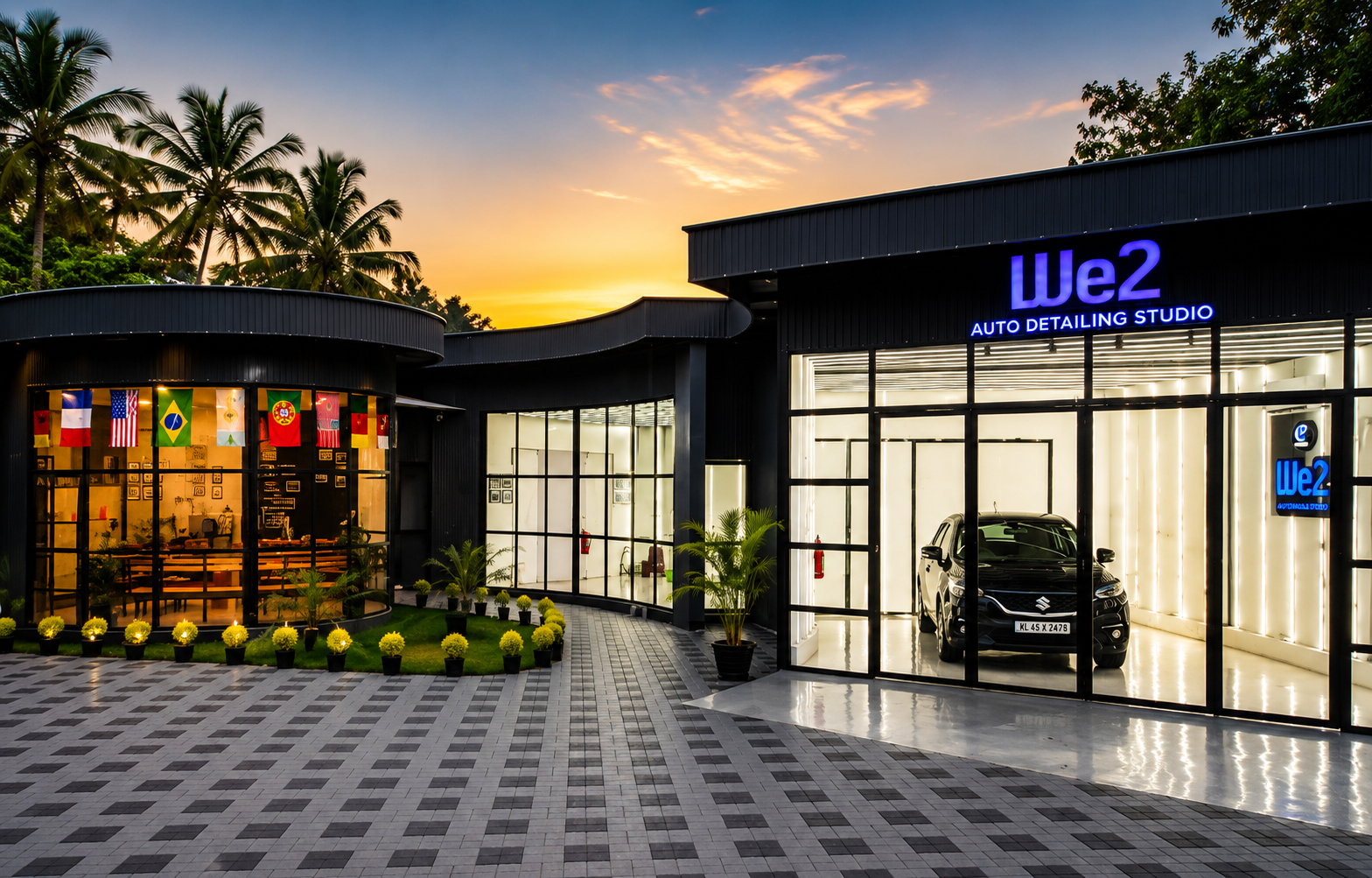
Menora We2 offers single-stage and multi-stage paint correction at both studios, Irinjalakuda and Thrissur, with a free paint inspection under proper lighting before recommending which one your car actually needs.
What Is Paint Correction?
Swirl marks and light scratches are often invisible in ordinary daylight or shade, which is exactly why they build up unnoticed — most cars pick them up gradually from repeated washing, especially with improper technique or contaminated wash water. Correction uses machine polishing to remove a controlled, microscopic amount of clear coat, working the defect out rather than hiding it. How much correction a car needs depends on its specific paint hardness and the severity of the defects, not a fixed routine — a single-stage polish with a medium-cut compound handles lighter defects, while a two-stage process (a heavier cutting stage followed by a refining stage) is for more significant swirling, holograms, or oxidation.
What Is Paint Correction?
Your car's clear coat is the transparent outermost layer that gives paint its gloss and depth. Swirl marks, fine scratches, holograms, water spot etching, and light oxidation all live within this layer. Paint correction uses machine polishing to remove a microscopic, controlled amount of clear coat — levelling the surface below the depth of the defects. The damage is not filled or hidden. It is physically removed.
This is different from waxing or applying a sealant, which deposit a soft temporary layer over defects without removing them. Paint correction produces a permanent result — the defects are gone until new damage is introduced.
It is also the essential preparation step before any ceramic or graphene coating. A coating seals the surface permanently. Any swirl marks or holograms present at application are locked in for the full warranty period. Correction before coating is what determines whether a coated car looks exceptional or merely protected.
Why Kerala Paint Deteriorates Faster
A few climate and road factors accelerate this here more than in a drier, cooler place. Fine red dust common on Thrissur District roads is genuinely abrasive, and when it's dragged across the paint during washing — especially with reused cloths or unfiltered wash water — it causes exactly the kind of fine scratching correction is meant to fix. Long monsoon stretches add contamination and humidity cycles on top of that, and consistent UV exposure gradually oxidizes unprotected paint, dulling its clarity over time.
What Paint Correction Can't Do
Correction addresses swirl marks, holograms, and light-to-moderate oxidation — it's not a repair service. It won't fix a dent, and it won't fix a scratch that's gone all the way through the clear coat into the base colour underneath; that needs bodywork or a touch-up first. It's also not unlimited: a car's clear coat is only so thick, and there's a real ceiling on how many times it can be safely corrected before there's not enough clear coat left to work with. We check this with a paint thickness gauge during the inspection so we're not guessing.
Correction as Prep for Coating
If you're planning ceramic or graphene coating, correction isn't optional — it's the step that determines whether the coated result looks genuinely clear or just protected. A coating protects the surface condition present when it is applied: any swirl marks or holograms already present remain underneath the coating, since the coating itself does not remove defects. Correcting the paint first is what makes the difference between a coated car that looks exceptional and one that's just glossy with the same defects sealed underneath.
Our Process
Every job starts with an inspection under LED lighting and a paint thickness check with a digital gauge, since knowing how much clear coat is available affects how aggressively we can safely polish. From there: a foam pre-wash, a chemical iron remover, and a clay bar pass lift embedded contamination the wash alone wouldn't catch. The car is wiped down with an IPA solution to strip any remaining oils before polishing begins, and machine polishing follows — single-stage or two-stage depending on what the inspection found. A final wipe-down and inspection under the same lighting confirms the result before the car goes back to you.
Free Paint Inspection
The scope of work depends on the vehicle's size, the severity of the defects, and how many correction stages are actually needed. We offer a free paint inspection under proper lighting at both the Irinjalakuda and Thrissur studios, so you know exactly what your car's paint needs before deciding on anything.
Why Choose Menora We2 Auto Detailing Studio
We check paint thickness before recommending how aggressive a correction should be, rather than running the same process on every car regardless of condition. If you're planning ceramic or graphene coating or PPF afterward, correction is available as the prep stage, or as part of a full car detailing visit.
What is paint correction? Machine polishing that removes swirl marks, holograms, and light oxidation from the clear coat, rather than covering them up the way wax or sealant does.
Will it remove my swirl marks permanently? It removes the swirl marks that are there now — that improvement doesn't fade or wash off the way a wax layer does. New swirl marks can still form later from washing and driving, the same way the original ones did, so it's not a one-time fix against future marks.
What's the difference between single-stage and multi-stage correction? Single-stage uses a medium-cut compound for lighter defects. Multi-stage adds a heavier cutting pass followed by a refining stage for more significant swirling, holograms, or oxidation. Which one your car needs depends on its paint condition, not a fixed routine.
Do I need paint correction before ceramic or graphene coating? Yes, if the paint has swirl marks or other visible defects. A coating protects the surface condition present when it is applied; it does not remove existing imperfections. Correcting the paint first is what determines whether a coated car looks genuinely clear or simply has its existing condition protected.
How many times can my car's paint be corrected? It depends on how much clear coat is left — there's a real limit, since each correction removes a small, controlled amount. We check this with a paint thickness gauge during the inspection rather than guessing.
Is paint correction safe for the clear coat? Yes, when done correctly — it removes a controlled, microscopic amount of clear coat, and we check thickness beforehand so the process matches what your car's paint can safely handle.
Does paint correction fix scratches that go through the clear coat? No — correction works on the clear coat layer. A scratch that's gone through into the base colour needs bodywork or a touch-up first.
Can correction be combined with other services? Yes — it's the standard prep step before ceramic or graphene coating or PPF, and it's also available as part of a full car detailing visit.
Book Your Free Paint Inspection
If your car's paint has lost its clarity or you're planning to add a coating, bring it in for a free inspection under proper lighting at either studio.
Irinjalakuda: Thekkekkara Road, near Metro Health Care Hospital, Irinjalakuda, Kerala 680121 — +91 83048 02244 Thrissur: Bypass Road, near Plakkat Tyres, Indira Nagar, Mannuthy, Thrissur, Kerala 680751 — +91 94465 70800
Open Monday to Saturday, 9:30 AM–6:30 PM. Closed on Sundays.