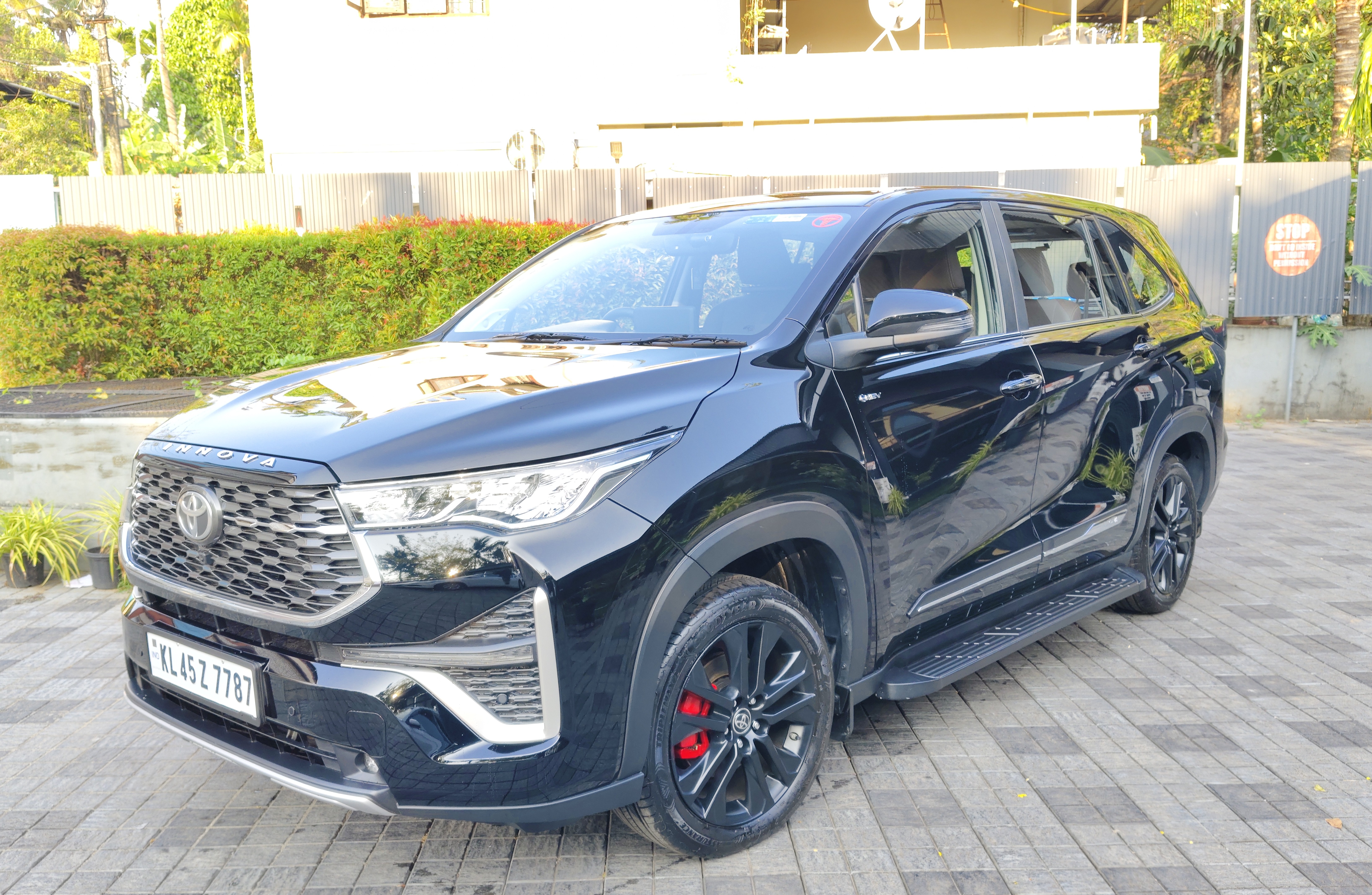
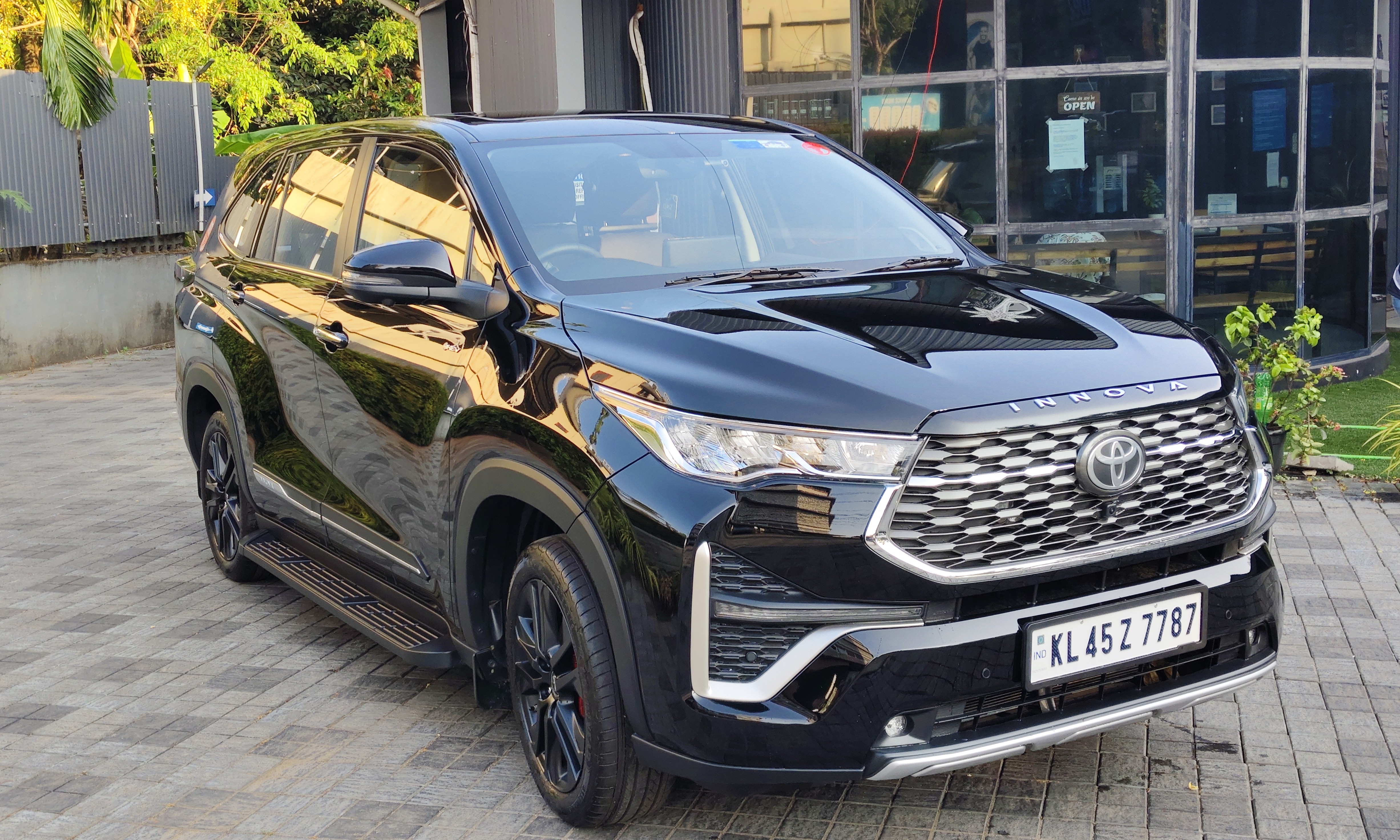
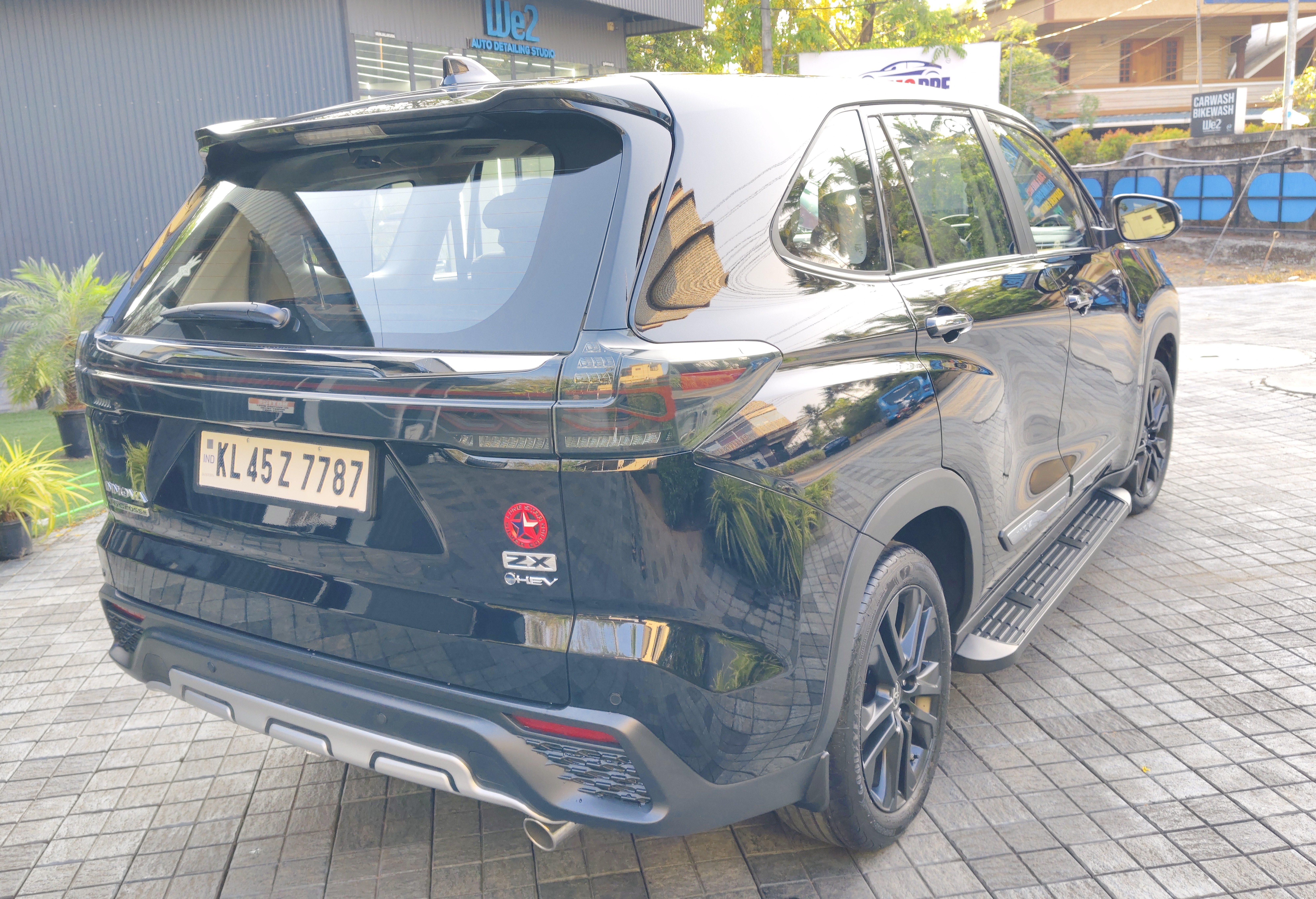
Paint protection film (PPF) is a clear, thermoplastic polyurethane (TPU) film applied directly over a car's painted surface, typically 6–8 mil thick. Unlike ceramic or graphene coating, which protect chemically, PPF is a physical layer — it absorbs stone chips, gravel strikes, and minor abrasion before they reach the paint underneath.
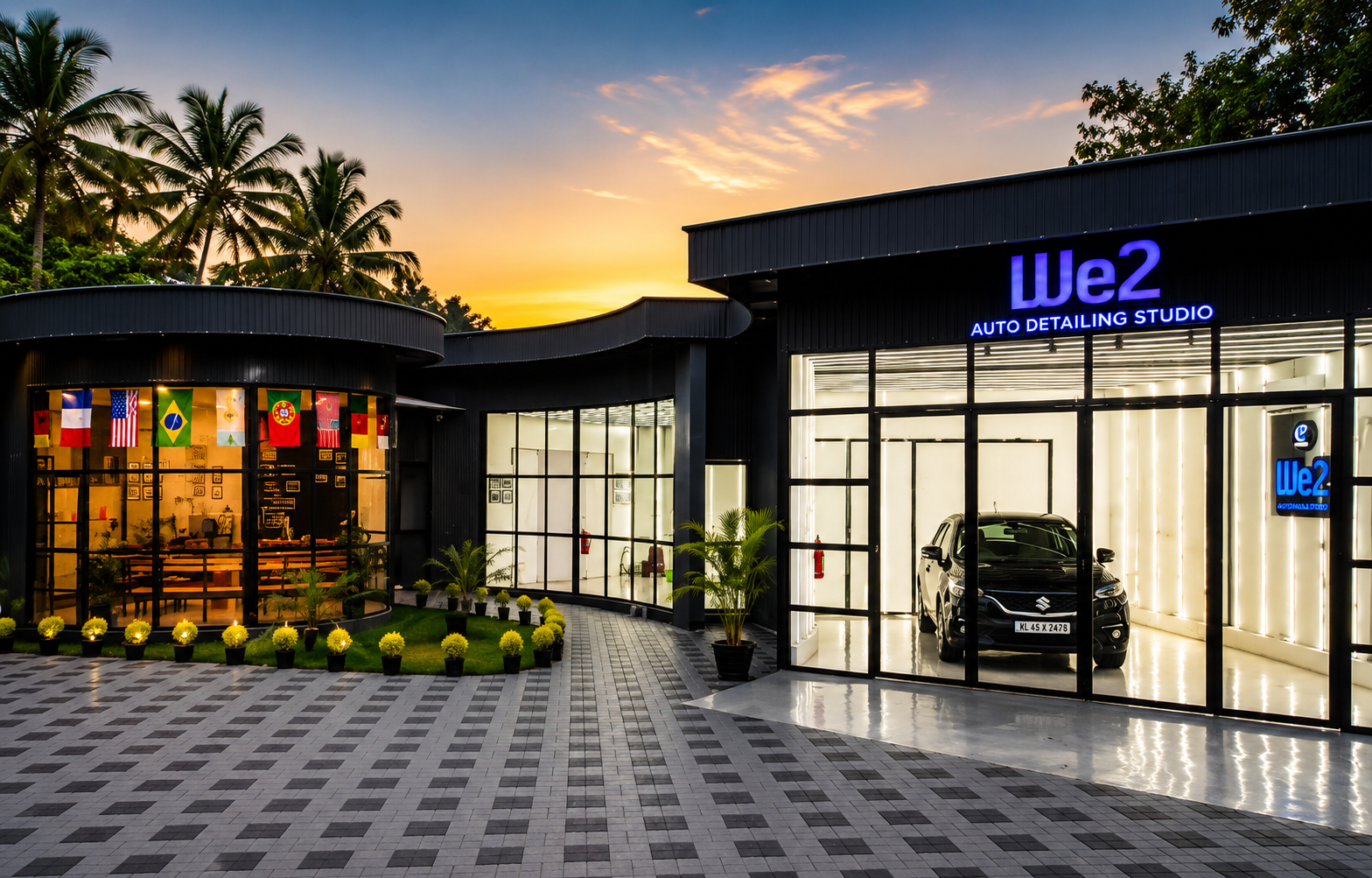
Menora We2 installs PPF at both studios, Irinjalakuda and Thrissur, and offers a free paint inspection before recommending which panels genuinely need coverage. PPF is often installed alongside a full car detailing service, particularly on new or recently corrected cars.
What Is Paint Protection Film and How Does It Work?
The film is cut and fitted to the exact contours of each panel, then heat-set and edge-tucked so it sits flush against the paint rather than sitting as a visible layer. Most PPF today includes a self-healing topcoat — fine surface scratches and light swirl marks in the film itself soften and disappear when exposed to heat, whether from direct sunlight or warm water, because the topcoat temporarily reflows at that temperature.
It's worth being precise about what this protects: PPF is an impact and abrasion barrier, not a coating that improves gloss or adds hydrophobic properties the way ceramic coating or graphene coating do — the two are often combined rather than treated as alternatives: PPF on the panels that take physical impact, coating over the rest of the car for chemical and UV protection.
Why PPF Matters on Thrissur District Roads
A few road realities here make PPF more relevant than it might be elsewhere. Ongoing road construction and resurfacing work kicks up loose stone and gravel that other vehicles throw up at speed — this is one of the most common causes of fresh stone chips on the bonnet and front bumper. Narrow roads and tight parking, especially in busier stretches of Irinjalakuda and Thrissur, mean more scrapes from close-quarters manoeuvring than a car would pick up on wider roads. Monsoon debris — grit, small stones, and organic matter washed onto the road — adds another source of abrasion during the wetter months.
None of this is unique to this district, but the combination of road conditions and parking density means the panels most exposed to impact — bonnet, front bumper, mirror caps, and leading edges — tend to show chip damage sooner here than on a car driven mostly on open highway. For more on protecting a car through the year here, see protecting your car through Kerala's seasons.
What PPF Delivers
Impact absorption on high-risk panels. The film takes the physical hit from stone chips, gravel strikes, and minor scuffs, rather than the paint underneath.
Self-healing surface clarity. Light scratches and swirl marks in the film soften out with heat exposure, keeping the surface looking clear rather than accumulating fine damage over time.
Factory paint preserved underneath. Because the film sits over the original paint rather than replacing or altering it, the factory finish stays intact — a genuine point in favour of resale condition.
What PPF Can't Do
PPF absorbs a meaningful amount of impact, but it isn't invincible. It doesn't make a car damage-proof, dent-proof, accident-proof, or completely scratch-proof — a hard enough stone strike, a real scrape, or a collision can still mark or cut through the film, and in some cases transfer damage to the paint or panel underneath. It isn't a substitute for careful driving and parking. It also isn't a chemical protectant: for UV resistance, gloss, and easier washing, that's what ceramic or graphene coating adds, which is why the two are frequently installed together rather than as either/or choices.
Our PPF Installation Process
Every installation starts with a surface inspection, since PPF should go on paint that's already in good condition — if there's existing correction, contamination or defects, we point that out and address it first with a decontamination wash and clay bar treatment rather than sealing problems under the film.
From there, the film is precision-cut to each panel's exact shape, fitted, and worked into position before edge tucking and heat setting lock it flush against the paint. The car gets a final inspection before handover to check for lifting edges, trapped debris, or fitment issues.
PPF Aftercare
Avoid washing the car or exposing it to rain for 48–72 hours after installation, while the film fully cures.
Use a pH-neutral shampoo and a microfibre wash mitt, ideally in the shade.
Avoid automatic brush car washes — the brushes can lift film edges over time.
If using a pressure washer, keep the nozzle at least 30 cm from the film's edges.
Remove bird droppings and tree sap promptly; left too long, they can still mark the film surface.
Direct sunlight or a warm water rinse will help trigger the self-healing response on fine surface marks.
PPF Brands Available at Menora We2
We install six PPF brands rather than one, so the film can be matched to the vehicle, the panels being protected, and what you actually want from it — finish, self-healing behaviour, and warranty length all vary meaningfully between products.
Cosmo PPF — Two tiers: Cosmo PPF Gold, a 7.5mil self-healing film with a published 5-year non-yellowing warranty, and Cosmo PPF Platinum, an 8.5mil film with self-healing, hydrophobic, and non-yellowing properties backed by a lifetime warranty.
Avery Dennison PPF — Supreme Defense Gloss and PrismaPro carry a 10-year manufacturer warranty; Supreme Defense Matte, Supreme Defense Gloss Lite, and Neo carry a 7-year warranty. Both require professional installation on unmodified factory paint, and Avery Dennison's own terms note coverage can run shorter in high-UV regions.
Garware PPF — Garware sells several tiers. Two we can confirm directly: Protect PPF carries a 3-year e-warranty, and Titanium PPF carries a lifetime e-warranty for the first owner. Garware's own documentation notes that exact terms can vary by environmental conditions and are confirmed through the local distributor — we'll confirm the specific figure for whichever Garware film fits your car.
Ultraguard PPF — The premium TPU Supreme Shield and TPU Pro Satin films carry a full 10-year warranty. Ultraguard's other lines (clear gloss, matte, colour, and textured finishes) carry shorter warranties that vary by product, spanning roughly 3 to 10 years across the range.
ALP PPF — ALP's film range includes self-healing and UV-resistant technology. Specific warranty terms for ALP films should be confirmed for the selected film at the time of booking.
RODIM PPF (BASF RODIM) — Several grades, including R-STAR, R1, R2, R2 Matt, R2 Black, and R3 Pro. RODIM's own documentation states warranty coverage across the range runs from roughly 5 to 10 years depending on the film chosen; the R1 grade specifically carries a 7-year warranty. We'll confirm the exact figure for whichever RODIM grade suits your car.
Quick reference:
Brand
Product / Film
Key Verified Features
Manufacturer Warranty
Cosmo
PPF Gold / PPF Platinum
Self-healing, hydrophobic (Platinum), non-yellowing, high gloss
TPU Supreme Shield / TPU Pro Satin (and other tiers)
Self-healing, non-yellowing, TPU construction
Supreme Shield & Pro Satin: 10-year warranty; other tiers vary — confirm at booking
ALP
Selected ALP film
Self-healing, UV-resistant
Confirm at the time of booking
RODIM
R-STAR / R1 / R2 / R2 Matt / R3 Pro
Self-healing, high optical clarity, UV blocking
Range of 5–10 years depending on film; R1 specifically 7 years — confirm exact grade
None of these six is universally "the best" — the right one depends on your car, the panels being covered, the finish you want, and how long you want the warranty to run. That's exactly what the inspection below is for.
Free Paint Inspection
PPF cost depends on which panels are covered, the film brand and grade selected, how complex the car's body panels are to fit, and whether paint correction is needed before installation — it isn't something we can quote without seeing the car. The free, no-obligation inspection at either studio covers your car's current paint condition, which panels genuinely need coverage, whether full-body or partial coverage fits how the car is driven and parked, whether paint correction is needed first, and which film and finish are realistic for your car.
Why Choose Menora We2 Auto Detailing Studio
Where applicable, manufacturer warranty documentation is provided with the selected film and installation. The surface inspection before fitting also ensures that film doesn't go over paint that needs correction first. We work through which panels actually make sense for your car and driving conditions, rather than defaulting to a full-body wrap regardless of need.
What is paint protection film? A clear TPU film, usually 6–8 mil thick, applied over a car's paint to absorb physical impacts like stone chips and gravel strikes before they reach the paint underneath.
Is PPF worth it for a car in Thrissur District? For panels that take the most impact — bonnet, front bumper, mirror caps — yes, particularly given local road construction debris and narrow-road parking scrapes. Full coverage isn't necessary for every car; the inspection helps decide which panels are actually worth it for how you drive and park.
Which PPF brands do you offer? Six: Cosmo, Avery Dennison, Garware, Ultraguard, ALP, and RODIM. Which one we recommend depends on your car, the panels being covered, and the finish and warranty length you want.
Which PPF brand is best? There isn't a single best brand — each film has different strengths in areas such as finish, self-healing behaviour and warranty coverage. We'll go through the realistic options for your car during the free inspection rather than default to one brand.
What's the difference between PPF and ceramic coating? PPF is a physical film that absorbs impact damage. Ceramic coating is a chemical layer that protects against UV, oxidation, and contamination, and adds gloss and easier washing. They solve different problems and are often combined rather than chosen as alternatives.
Does PPF prevent all paint damage? No. It significantly reduces damage from stone chips and minor abrasion, but a hard enough impact can still mark the film or, in some cases, the paint beneath it. It's protection, not immunity.
Does PPF turn yellow or peel over time? Quality film from the brands we install includes anti-yellowing or non-yellowing properties and should stay clear well within its warranty period. Correct installation — including edge tucking — is also what prevents peeling at the edges. We'll go through the specific film's expected performance during your inspection.
Does PPF self-heal? The PPF films we offer include self-healing options. Fine surface scratches in a self-healing film can soften and disappear with heat from direct sunlight or warm water. Deeper cuts or heavy damage will not self-heal.
How long does PPF last? It depends on the brand and film grade. Published manufacturer warranties across the range we offer run from around 3 years up to lifetime coverage on the longest tiers — we'll confirm the specific figure for whichever film suits your car.
Which parts of a car benefit most from PPF? The panels that take the most impact: bonnet, front bumper, mirror caps, and leading edges. These are the areas most likely to show stone chip damage first, which is why partial coverage on high-risk panels is a common, cost-effective choice rather than full-body coverage.
Does PPF affect the car's factory paint? No — it sits over the original paint rather than altering it, which is part of why a documented PPF installation can be a genuine point in favour of a car's condition at resale.
Do I need paint correction before PPF? If the paint has swirl marks or contamination, yes — installing film over unaddressed defects seals them in rather than fixing them. We check this during the free inspection.
Should I choose full-body PPF or partial coverage? Partial coverage on high-impact panels covers the areas most likely to take damage at a lower cost than full-body PPF. Full-body coverage makes sense if you want the whole car protected long-term, particularly for resale condition. We'll talk through which fits your situation rather than assume full-body is always the answer.
Talk to the Studio & Book Online
If you're unsure what your car actually needs, you can contact the studio and discuss the vehicle's condition before choosing a service — or bring it in for an inspection at either location.