
Introduction
Every car owner's relationship with paint protection tends to follow the same rough arc. It starts with just washing the car when it looks dirty. At some point, someone points out a scratch or a dull patch that wasn't there a year ago, and a new question creeps in: is there something more I should be doing? From there, it's a slow walk through wax, then sealants, then ceramic coating, then PPF, often with more confusion picked up along the way than clarity.
This guide is built to shortcut that entire journey. Instead of scattered answers pulled from different forums and shop counters, this is the complete path laid out in order, starting from the absolute basics of what your car's paint actually is, through every stage of protection and detailing available today, all the way to the advanced decisions serious car owners eventually face: ceramic vs graphene, PPF vs coating, and how to actually maintain any of it long-term.
We've built this specifically around what car owners across Kerala, and Thrissur in particular, actually deal with: relentless monsoons, tropical UV exposure, humidity that never really goes away, and roads that mix highway stone-chip risk with narrow, hedge-lined lanes. Generic advice written for a dry, temperate climate doesn't hold up here, so we haven't leaned on it.
Think of this as the resource you'd want if you sat down with someone who's spent years working on cars in exactly these conditions and asked them to explain the whole picture, start to finish, without selling you anything you don't actually need.
Quick Answer
Car protection exists on a spectrum: routine washing keeps a car clean, paint correction restores damaged paint, and protective treatments (wax, sealant, ceramic or graphene coating, and PPF) preserve that condition going forward. Wax and sealant are short-term and low-cost; ceramic and graphene coatings offer years of chemical protection and easier maintenance; PPF is the only option that physically absorbs stone chips and scratches. Most well-protected cars use a combination, not just one product.
Table of Contents
Chapter 1: The Foundation
- Understanding Your Car's Paint
- Why Protection Matters More in Kerala Than Most Places
Chapter 2: The Starting Point — Washing 3. Car Washing Done Right 4. Common Washing Mistakes That Cause Damage
Chapter 3: Restoration — Paint Correction 5. What Paint Correction Actually Does 6. When Your Car Actually Needs It
Chapter 4: The Protection Spectrum 7. Wax and Sealant: The Entry Point 8. Ceramic Coating: The Modern Standard 9. Graphene Coating: The Advanced Option 10. Paint Protection Film (PPF): Physical Defense 11. Comparison Table: Every Protection Option Side by Side
Chapter 5: Beyond the Paint 12. Interior Detailing and Why It's Often Ignored 13. Windshield Protection and Window Films
Chapter 6: Making the Right Choice 14. Decision Framework: Building Your Car's Protection Plan 15. Can You Combine Everything?
Chapter 7: Keeping It All Working 16. Long-Term Maintenance Across Every Protection Type 17. Common Mistakes That Undo Good Protection
Chapter 8: The Kerala Context 18. Kerala and Thrissur-Specific Considerations
Chapter 9: Reference 19. Myths vs Facts 20. Quick Glossary 21. Frequently Asked Questions 22. Final Thoughts 23. Call to Action
Chapter 1: The Foundation
1. Understanding Your Car's Paint
Every decision in this guide rests on one basic fact: your car's paint is a system, not a single surface. It's typically built in layers, an e-coat or primer applied to bare metal for corrosion resistance, a basecoat carrying the actual color, and a clear coat on top providing gloss and the first real line of defense against the outside world.
Everything discussed in this guide, from washing technique to ceramic coating to PPF, interacts with that clear coat layer. Wax and sealant sit temporarily on top of it. Ceramic and graphene coatings chemically bond to it. PPF sits above it as a separate, physical layer. Paint correction works by polishing a microscopic amount of it away to remove imperfections. Nothing here replaces your factory paint; every product and process either protects it, restores it, or adds a layer above it.
Understanding this one concept early makes almost every later decision in this guide easier to reason through.
2. Why Protection Matters More in Kerala Than Most Places
Car paint anywhere in the world deals with sun, dust, and general wear. Kerala adds several factors that make protection a genuinely more urgent conversation than it might be elsewhere:
- Extended, heavy monsoons that keep paint under sustained moisture exposure for months
- High year-round humidity, even outside monsoon season, which accelerates oxidation on unprotected paint
- Intense tropical UV exposure between rain showers, a major driver of fading and clear coat degradation
- Mixed road conditions, from highway stretches with real stone-chip risk to narrow, hedge-lined residential lanes prone to fine scratching
- Coastal humidity influence, which reaches even inland districts like Thrissur to some degree
None of this means Kerala car owners need every product in this guide. It means the decisions matter more here, and generic advice written for drier, milder climates tends to underserve car owners dealing with these specific conditions.
Chapter 2: The Starting Point — Washing
3. Car Washing Done Right
Every protection journey starts with washing, and it's also where a surprising amount of long-term paint damage actually originates. A proper wash follows a sequence: pre-rinse to loosen surface dust, a foam or contact wash using a two-bucket method (one bucket for soapy water, one for rinsing the wash mitt), separate tools for wheels versus paint, an undercarriage rinse, and drying with clean microfiber towels rather than air-drying in direct sun.
This sequence isn't fussy detailing theory, it's the difference between removing dirt safely and grinding it into the clear coat with every wash. Our car and bike wash service follows this full process rather than a rushed version of it.
4. Common Washing Mistakes That Cause Damage
- Using a single bucket for the entire car, reapplying dirty water across every panel
- Reusing the same sponge or towel on wheels and paint, transferring abrasive brake dust
- Skipping the pre-rinse and scrubbing directly on dry, dusty paint
- Air-drying in direct sunlight, causing water spotting
- Using dish soap or household detergents, which strip wax, sealant, or coating far faster than proper car shampoo
- Relying on automated brush washes, which reuse bristles across many vehicles and are a leading cause of fine swirl marks
These mistakes compound silently. A car washed incorrectly for a year can accumulate more visible swirl marks than a car washed correctly for three, which is exactly why washing technique deserves attention before any protective product enters the picture.
Chapter 3: Restoration — Paint Correction
5. What Paint Correction Actually Does
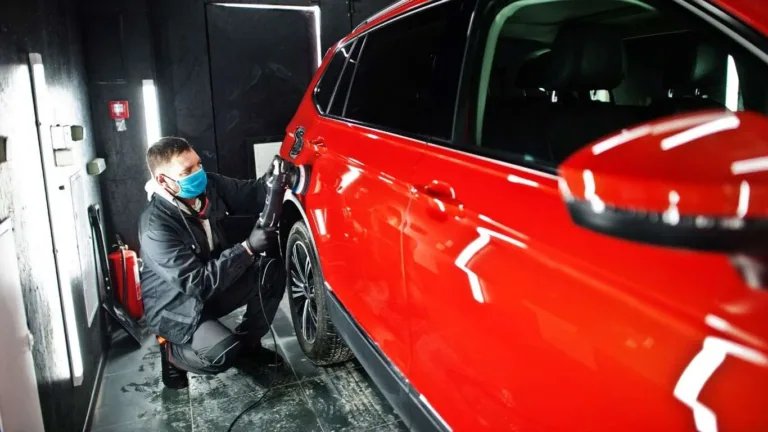
Paint correction uses controlled machine polishing to remove or significantly reduce swirl marks, light scratches, water spot etching, and oxidation from the clear coat. It works by leveling out the surface, polishing away a microscopic layer of clear coat to reveal a smoother, glossier finish underneath.
It's a restorative process, not a protective one on its own. Correction doesn't add anything to the paint, it fixes existing condition. This is exactly why it matters so much before applying any coating: a coating applied over uncorrected paint locks every existing imperfection in permanently underneath a hard layer that's difficult to remove afterward.
6. When Your Car Actually Needs It
Paint correction is generally worth considering when you notice swirl marks visible under direct sunlight, a dull or hazy finish that doesn't respond to washing alone, water spot etching from mineral deposits, or light scratches from improper washing or general use. Even relatively new cars can benefit from a light correction before coating, since dealership handling and transport often introduce fine swirl marks before a car ever reaches its first owner.
Our car detailing service includes proper correction work as a core stage, not an optional upsell tacked onto a basic wash.
Chapter 4: The Protection Spectrum
This is the part of the journey where most confusion happens, because there isn't one "best" protective product, there's a spectrum, and where your car sits on it depends on your budget, priorities, and how you actually use the vehicle.
7. Wax and Sealant: The Entry Point
Traditional carnauba wax sits on top of the paint without chemically bonding to it, offering a warm, deep shine that typically lasts weeks to about two months, especially in a hot, humid climate. Paint sealant is a synthetic step up, a polymer product that bonds more effectively than wax but still falls well short of ceramic coating's durability, generally lasting 3 to 6 months.
Both are reasonable entry points for owners not ready to invest in longer-term coating, but both require frequent reapplication to stay effective, which becomes a genuine time cost over a year of ownership.
8. Ceramic Coating: The Modern Standard
Ceramic coating is a liquid polymer, typically based on silicon dioxide (SiO2), that chemically bonds to the clear coat, forming a hard, glass-like layer. It creates a hydrophobic surface that causes water to bead and roll off, adds noticeable gloss and depth, and makes routine washing significantly easier, all while offering UV resistance that slows long-term fading and oxidation.
Professionally applied, multi-layer ceramic coating generally lasts 2 to 5 years depending on product tier and maintenance, a dramatic step up from wax or sealant. What it doesn't do is stop physical damage; a stone chip or a scratch from a branch goes straight through a ceramic coating just as easily as it would through bare paint.
9. Graphene Coating: The Advanced Option
Graphene coating builds on the same ceramic coating foundation, incorporating graphene, a highly conductive carbon material, into the formula. It offers the same core benefits as standard ceramic coating, gloss, hydrophobic performance, easier maintenance, with the added advantage of improved heat dissipation due to graphene's thermal conductivity properties, along with generally enhanced durability in many formulas.
It's not a separate technology from ceramic coating so much as an evolution within the same category. For Kerala car owners parking frequently in direct tropical sun, especially with darker-colored vehicles that absorb more heat, graphene coating can be a genuinely meaningful upgrade over standard ceramic formulas.
10. Paint Protection Film (PPF): Physical Defense
PPF is a fundamentally different category of protection. Instead of a liquid chemical treatment, it's a thick, physical thermoplastic urethane (TPU) film, typically 150 to 200 microns, applied directly over painted panels. Where ceramic and graphene coatings protect the finish, PPF protects the paint itself, absorbing stone chip impacts and resisting scratches that no liquid coating could stop.
Quality PPF includes a self-healing top layer that allows light scratches and swirl marks in the film to smooth out with heat exposure. It's the more significant investment of the two categories, both in material cost and skilled installation labor, but it's the only option genuinely built to intercept physical damage before it reaches your paint.
11. Comparison Table: Every Protection Option Side by Side
| Protection Type | Bonding | Typical Lifespan | Stops Physical Damage | Adds Gloss | Ease of Maintenance |
|---|---|---|---|---|---|
| Carnauba wax | Sits on surface | Weeks to ~2 months | No | Moderate | Frequent reapplication needed |
| Paint sealant | Light chemical bond | 3–6 months | No | Moderate | Regular reapplication needed |
| Ceramic coating | Strong chemical bond | 2–5 years | No | High | Significantly easier |
| Graphene coating | Strong chemical bond | Generally 3–5 years, formula-dependent | No | High | Significantly easier |
| PPF | Physical film layer | 5–10 years, film-dependent | Yes | Moderate (finish-dependent) | Easy, benefits from a ceramic topcoat |
| PPF + Ceramic/Graphene topcoat | Physical + chemical | Combines both lifespans | Yes | High | Easiest of all combinations |
Chapter 5: Beyond the Paint
12. Interior Detailing and Why It's Often Ignored
A huge amount of car protection conversation focuses entirely on exterior paint, while interior condition quietly affects daily comfort, cabin air quality, and resale value just as much. Proper interior detailing includes deep vacuuming that reaches under seats and into footwells, material-specific upholstery treatment for fabric, leather, or leatherette, dashboard and door panel conditioning, AC vent cleaning, and interior glass detailing.
In Kerala's humidity, interior care carries extra weight, since musty odors and mildew risk build up faster in a consistently humid cabin than in drier climates. Our interior detailing work treats this as a full stage of the process, not an afterthought.
13. Windshield Protection and Window Films
Windshield protection and window films round out a car's full protection picture, addressing areas that paint-focused products don't touch at all. Windshield protection treatments help resist chipping and improve visibility during heavy rain, genuinely relevant during Kerala's monsoon months, while window films manage heat and glare from Kerala's intense sun, contributing to a cooler cabin and reduced interior fading over time.
These are often the most overlooked parts of a car's protection plan, despite addressing some of the most frequently experienced daily frustrations, glare while driving into low sun, rain visibility, and heat buildup in a parked car.
Chapter 6: Making the Right Choice
14. Decision Framework: Building Your Car's Protection Plan
Rather than asking "what's the best product," a more useful question is "what does my specific car and driving situation actually need." Here's a practical way to think through it:
If your car is older or hasn't been protected before: Start with a proper wash assessment and paint correction before considering any coating. Applying a coating over neglected paint locks in existing damage.
If your priority is shine and easier maintenance, and your driving is mostly city or residential: Ceramic coating is a strong, cost-effective starting point.
If you park frequently in direct sun and plan to keep the car long-term: Graphene coating's improved heat dissipation makes it a worthwhile upgrade consideration.
If you regularly drive highways or narrow, hedge-lined lanes and worry about chips and scratches: PPF on high-impact panels (bonnet, bumper, mirrors, fenders) addresses a risk no liquid coating can.
If your budget allows for the most complete protection: Combining PPF on high-impact areas with a full ceramic or graphene topcoat across the car covers both physical and chemical protection categories at once.
If your interior sees heavy daily use or the car sits outdoors most of the time: Don't overlook interior detailing and window film alongside exterior protection; a car protected outside but neglected inside is only half protected.
15. Can You Combine Everything?
Yes, and for owners serious about long-term condition, this is genuinely the most complete approach available. A common, sensible combination looks like this: paint correction first to address any existing imperfections, PPF applied to the highest-impact panels for physical protection, a ceramic or graphene coating applied over the entire car (including over the film) for gloss and hydrophobic performance, proper interior detailing to address cabin condition, and window film for heat and glare management.
No single product in this guide does everything. The most protected cars we see are the ones where owners understood that early and built a layered plan instead of expecting one product to cover every risk.
Chapter 7: Keeping It All Working
16. Long-Term Maintenance Across Every Protection Type
For washed but otherwise untreated paint: Consistent, correct washing technique alone meaningfully slows the accumulation of swirl marks and grime buildup over time.
For waxed or sealed cars: Plan on reapplication every few weeks to a few months, since neither product bonds long-term.
For ceramic or graphene coated cars: Use pH-neutral shampoo, hand wash rather than automated brushes, dry with microfiber towels, and apply maintenance boosters periodically to refresh hydrophobic performance between full washes.
For PPF-wrapped cars: Hand wash where possible, especially during the initial curing period, avoid direct high-pressure jets at film edges, and periodically inspect for early signs of lifting.
For interiors: Schedule periodic deep cleaning between routine upkeep, particularly important during and after monsoon months when humidity and trapped moisture accelerate odor buildup.
17. Common Mistakes That Undo Good Protection
Applying any coating over uncorrected or poorly prepped paint
Using harsh detergents or dish soap on coated or wrapped surfaces
Relying on automated brush washes for cars with ceramic coating, graphene coating, or PPF
Assuming any protective product means zero ongoing maintenance is needed
Ignoring less visible areas like door jambs, wheel wells, and the undercarriage
Choosing an installer based purely on price without confirming their actual process
Chapter 8: The Kerala Context
18. Kerala and Thrissur-Specific Considerations
Monsoon-driven demands. Thrissur's extended rainy season makes hydrophobic protection, from ceramic or graphene coating, genuinely useful, reducing water spotting and making washing off accumulated mud and grime considerably easier.
Humidity's effect on interiors. High ambient humidity accelerates musty odors and mildew risk inside cabins, making interior detailing a more frequent necessity here than in drier climates.
UV intensity between rains. Kerala's tropical sun between monsoon showers is intense, reinforcing the value of UV-resistant coatings and window film for both paint and interior material longevity.
Mixed road risk. Highway stretches like NH544 carry real stone-chip risk from truck and bus traffic, while narrow estate roads and residential lanes around Thrissur pose a different, scratch-prone risk from hedges and tight parking. This mixed risk profile is exactly why many Thrissur owners end up considering both PPF and a coating, rather than just one.
Construction dust. Ongoing road work across the district contributes fine dust that settles into paint texture, making proper decontamination during washing and detailing genuinely important, not optional.
Local resale patterns. Cars in Kerala are often kept within families for extended periods or sold locally where paint and interior condition are closely inspected, making long-term preservation, through PPF and consistent care, particularly relevant here.
Chapter 9: Reference
19. Myths vs Facts
Myth: Ceramic coating and PPF do the same job, just with different price tags. Fact: Ceramic coating protects chemically; PPF protects physically. They address different types of damage entirely.
Myth: Once you wax, coat, or wrap your car, no maintenance is needed again. Fact: Every protection option in this guide requires some ongoing maintenance; the frequency and effort just vary significantly by product.
Myth: Graphene coating makes ceramic coating obsolete. Fact: Graphene coating is an evolution within the ceramic coating category, offering incremental improvements, not a replacement that makes standard ceramic coating irrelevant.
Myth: Interior detailing is optional if the exterior looks great. Fact: Interior condition affects daily comfort, air quality, and resale value independently of how well-protected the exterior is.
Myth: You should choose either PPF or ceramic coating, never both. Fact: Combining PPF on high-impact panels with a full ceramic or graphene topcoat is a common, effective layered protection approach.
Myth: A car that's washed regularly doesn't need paint correction. Fact: Regular washing maintains cleanliness, but it doesn't remove existing swirl marks, oxidation, or scratches; only correction addresses those.
20. Quick Glossary
Clear coat — the transparent top layer of automotive paint responsible for gloss and initial environmental protection.
Hydrophobic — a surface property causing water to bead and roll off rather than sheet flat.
Paint correction — a polishing process that removes swirl marks, light scratches, and oxidation from the clear coat.
Decontamination — removing bonded surface contaminants like iron particles or tar, typically via clay bar treatment, before correction or coating.
TPU (thermoplastic urethane) — the flexible, durable material most PPF films are made from.
Self-healing layer — a top coating on quality PPF that softens with heat, allowing light scratches to smooth out.
Maintenance coat / booster — a lighter, partial reapplication used to extend an existing coating's performance without full removal and reapplication.
21. Frequently Asked Questions
1. Where should a car owner actually start on this journey? With an honest assessment of your current paint condition and a proper wash routine; that foundation determines whether correction or protective coating makes sense next.
2. Is ceramic coating necessary, or is regular waxing enough? It depends on your priorities; wax is cheaper but needs frequent reapplication, while ceramic coating offers a longer-lasting, lower-maintenance result for a larger upfront investment.
3. Do I need paint correction before every protective coating? Yes, applying a coating over uncorrected paint locks in existing imperfections permanently, so correction should generally come first.
4. Is PPF worth it if I don't drive on highways often? It still offers protection against scratches from tight parking and narrow lanes, though the value is generally highest for owners with real highway or debris exposure.
5. Can I apply ceramic coating myself instead of going professional? DIY kits exist and offer some protection, but they generally don't match the bonding strength or lifespan of a properly applied professional coating.
6. How often should I wash a car with ceramic coating or PPF? Regular washing, weekly to every couple of weeks depending on conditions, using correct technique and pH-neutral products, keeps either protection type performing well.
7. Does window film actually help with Kerala's heat? Yes, quality window film reduces heat buildup and glare, contributing to a cooler cabin and reduced interior material fading over time.
8. What's the single most overlooked part of car protection? Interior detailing and less visible areas like door jambs, wheel wells, and the undercarriage are consistently the most skipped, despite meaningfully affecting long-term condition.
9. Should every car owner eventually get both ceramic coating and PPF? Not necessarily; it depends on budget and driving conditions, but for owners wanting the most complete protection, combining both is a genuinely sound long-term approach.
10. How do I know if my car actually needs paint correction right now? Visible swirl marks under direct sunlight, a dull or hazy finish, and water spot etching are all practical signs correction is worth considering.
11. Does Kerala's climate change which protection option makes the most sense? Yes, the combination of intense UV, extended monsoons, and high humidity generally makes hydrophobic coatings and proper interior care more consistently valuable here than in drier climates.
12. Is there a "wrong order" to do all of this in? Generally yes; washing and assessment come first, correction next if needed, then protective coatings or film, with interior detailing and window film fitting in based on priority and budget.
22. Final Thoughts
Car protection isn't a single purchase, it's a layered system built up over time, starting with how you wash, moving through restoration when needed, and building toward whatever combination of coating, film, and interior care actually fits your car and how you use it. There's no universal "best" product in this entire guide, only the right combination for your specific situation.
What matters most is understanding what each stage of that journey actually does, so you're building a protection plan based on your car's real condition and your real driving habits, not on whichever product happened to have the most convincing sign outside a shop.
23. Call to Action
Wherever you are on this journey, whether you're due for a proper wash assessment, considering paint correction, weighing ceramic against graphene coating, or exploring PPF for the first time, Menora We2 Auto Detailing Studio in Irinjalakuda and Mannuthy can walk you through what your specific car actually needs. Reach out to start with an honest, in-person assessment rather than guessing your way through it.