Introduction
Once you've decided PPF is worth getting, a second decision shows up almost immediately: premium PPF or a cheaper, locally made alternative. The price gap between the two can be significant, and it's tempting to assume that any clear film doing the same basic job, sitting on top of your paint and taking the hit from stone chips, should perform roughly the same regardless of price.
That assumption is where a lot of disappointed PPF customers end up. Film quality varies substantially between premium and budget options, not just in marketing language, but in actual material composition, clarity, self-healing performance, and how the film ages over years of real driving conditions. This guide breaks down honestly what that price difference actually buys, and where a local or budget option might still make sense.
Quick Answer
Premium PPF generally uses higher-grade TPU film with better clarity, more reliable self-healing performance, and superior yellowing resistance over time, typically backed by more consistent quality control. Local or budget PPF can offer genuine short-term protection at a lower cost, but often shows earlier yellowing, weaker self-healing, and less consistent thickness. The right choice depends on how long you plan to keep the car and how much long-term appearance matters to you.
1. What "Premium" and "Local" Actually Mean in PPF
"Premium" and "local" aren't strict technical categories, they're general terms used across the industry to describe a real difference in film sourcing, manufacturing consistency, and material quality. Premium PPF generally refers to film from established international manufacturers with rigorous quality control, consistent thickness, and well-documented self-healing formulas. Local or budget PPF typically refers to film manufactured with less consistent process control, often at a substantially lower price point.
This doesn't mean every local option is poor quality, or that every premium-labeled film performs exactly as advertised. But as a general pattern across the industry, the price gap between the two categories usually reflects genuine differences in material and manufacturing quality, not just brand markup.
2. Material Differences: What's Actually in the Film
PPF is built from thermoplastic urethane (TPU), but not all TPU formulations are equal. Premium films generally use a higher grade of TPU with tighter manufacturing tolerances, resulting in more consistent thickness across the entire roll. Budget or local films can show more variation in thickness and clarity from batch to batch, which affects both how the film looks once installed and how consistently it performs against impacts.
The adhesive layer matters too. Premium films typically use adhesive formulated for long-term stability, reducing the risk of yellowing or bubbling at the adhesive layer over years. Budget adhesives can be more prone to visible yellowing or edge lifting earlier in the film's life.
3. Self-Healing Performance: Where the Gap Is Most Visible
Self-healing is one of PPF's signature features: light scratches and swirl marks in the film smooth out on their own with heat exposure, whether from sunlight or warm water. This is also one of the areas where premium and budget films diverge most noticeably.
Premium films generally use a more consistent, well-formulated top coat that heals reliably and relatively quickly under normal heat exposure. Budget films may include a self-healing layer in name, but the actual performance can be inconsistent, healing more slowly, incompletely, or not at all for deeper marks that a premium film's top coat would handle more effectively.
4. Clarity and Yellowing Resistance Over Time
A freshly installed budget film can look nearly identical to premium film for the first several months. The real difference tends to show up over time, particularly with UV exposure. Premium films are generally engineered with better UV stabilizers, resisting the yellowing that used to plague older-generation PPF products industry-wide.
Budget films, especially those without strong UV-resistant formulations, are more prone to gradual yellowing, particularly in a climate like Kerala's with intense tropical sun. This yellowing isn't just a color shift, it's often accompanied by reduced clarity, making the film noticeably more visible than it was when freshly installed.
5. Installation Quality Matters as Much as Film Quality
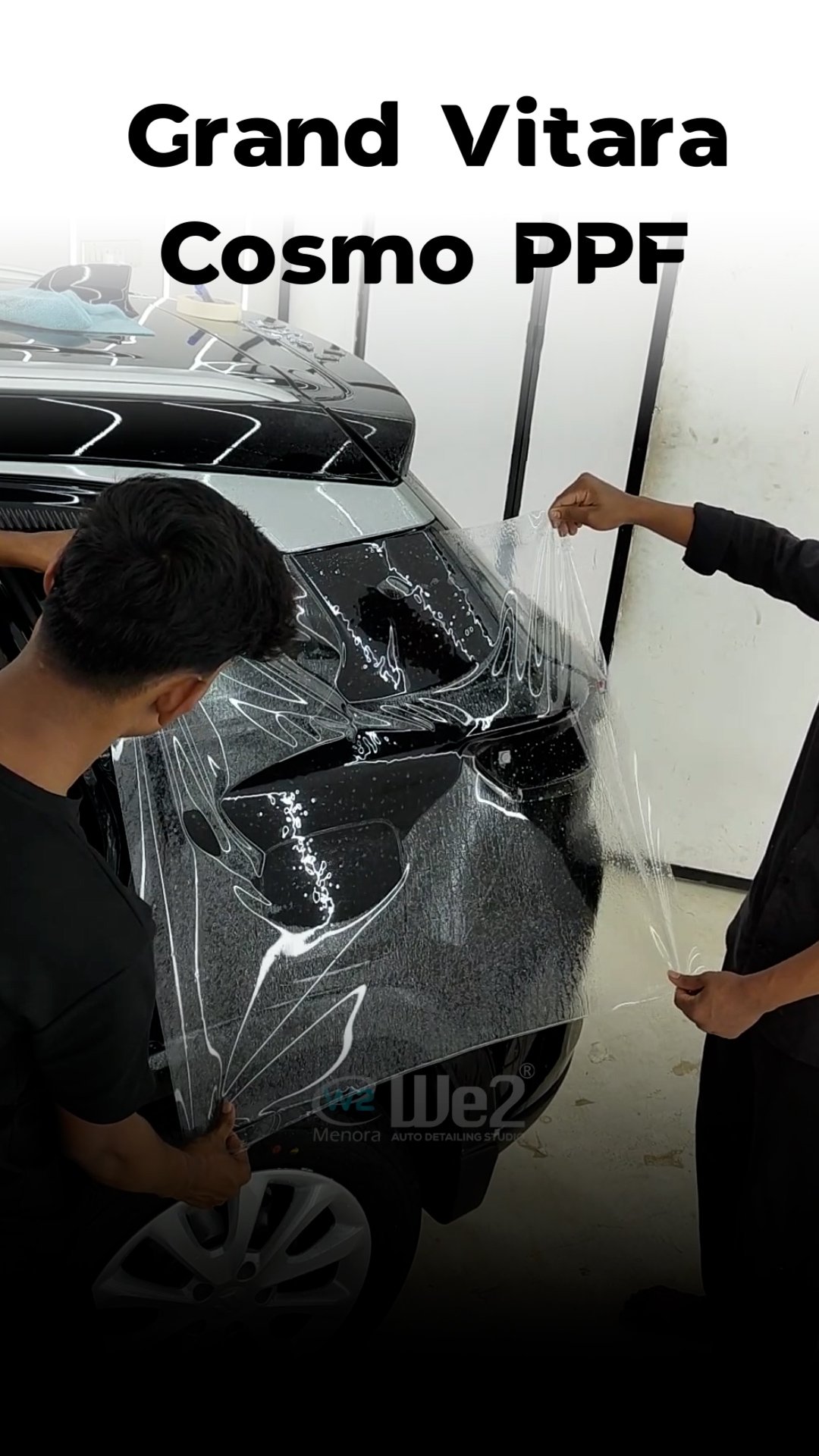
It's worth being honest about something the film-quality conversation sometimes glosses over: even premium film installed poorly will underperform, and even a budget film installed well will look and function better than film quality alone would suggest. Precision cutting, proper stretching around contours, and clean edge wrapping all depend on installer skill, not just the material being applied.
This is exactly why evaluating a shop's installation experience matters as much as the film brand itself. Our PPF service treats both factors, film quality and installation precision, as equally important to the final result.
6. Comparison Table: Premium vs Local PPF
| Factor | Premium PPF | Local / Budget PPF |
|---|---|---|
| Material consistency | High, tight manufacturing tolerances | Variable, can differ batch to batch |
| Clarity | Excellent, stays clear over years | Good initially, can dull over time |
| Self-healing performance | Reliable and consistent | Inconsistent, may not fully heal deeper marks |
| Yellowing resistance | Strong UV stabilization | More prone to yellowing under intense UV |
| Adhesive stability | Formulated for long-term bonding | More variable, higher risk of early lifting |
| Typical lifespan | Longer, often toward the higher end of PPF's range | Shorter, may need earlier replacement |
| Upfront cost | Higher | Lower |
| Best suited for | Owners keeping the car long-term, prioritizing appearance | Owners wanting basic protection at lower upfront cost |
7. When Premium PPF Is Clearly Worth It
If you're keeping the car for many years. Premium film's better yellowing resistance and consistent self-healing performance pay off more clearly the longer the film stays on the car.
If appearance matters as much as protection. Premium film's superior clarity means it stays closer to invisible over time, important for owners who care about maintaining a showroom-like finish.
If you're covering the entire car, not just high-impact panels. Full-body wraps make film quality differences more visible over a larger surface area, making premium film's consistency more valuable.
If you're in an intense UV environment. Kerala's tropical sun accelerates the yellowing and clarity loss that budget films are more prone to, making premium film's UV resistance genuinely more relevant here than in milder climates.
8. When Local or Budget PPF Might Still Make Sense
If your budget is genuinely limited and some protection is better than none. A budget film still provides real physical impact protection compared to no film at all, even if its long-term appearance and self-healing performance fall short of premium options.
If you're planning to sell or replace the car relatively soon. For a shorter ownership window, some of premium film's long-term advantages, like extended yellowing resistance, may matter less in practice.
If you're only protecting a small, high-impact area. A smaller coverage area, like just the front bumper edge, limits how visible any clarity or yellowing differences would become over time.
Even in these cases, it's worth having an honest conversation with your installer about what tradeoffs a budget film specifically involves, rather than assuming it's functionally identical to premium options.
9. Benefits of Choosing Premium PPF
Longer-lasting clarity. Premium film maintains a more consistently invisible, glass-like appearance over years rather than months.
More reliable self-healing. Light scratches and swirl marks in the film heal more consistently, keeping the surface looking fresh for longer.
Better resistance to yellowing. Particularly valuable in Kerala's intense UV conditions, where lower-quality films show discoloration more quickly.
More consistent physical protection. Tighter manufacturing tolerances mean more even thickness across the film, translating to more predictable impact absorption.
Stronger long-term value. While the upfront cost is higher, the extended lifespan and better performance over time often make premium film a better value across a car's full ownership period.
10. Common Mistakes Car Owners Make When Choosing PPF
Assuming all PPF performs identically regardless of price. Material quality, self-healing performance, and yellowing resistance genuinely vary between premium and budget options.
Choosing based on price alone without asking about the specific film. Ask what brand or grade of film is being used rather than assuming "PPF" is a single standardized product.
Ignoring installation quality entirely. Even excellent film performs poorly if installed with visible seams, trapped dust, or improper stretching around contours.
Not considering how long you plan to keep the car. This genuinely affects whether premium film's long-term advantages are worth the additional upfront cost for your specific situation.
Assuming a cheaper film with "self-healing" marketing performs the same as premium film's self-healing layer. The term gets used broadly, but actual healing consistency and effectiveness vary significantly between formulations.
11. Myths vs Facts
Myth: All PPF is essentially the same product with different price tags. Fact: Material composition, manufacturing consistency, self-healing performance, and yellowing resistance all vary meaningfully between premium and budget film.
Myth: Budget PPF offers no real protection compared to premium film. Fact: Budget film still provides genuine physical impact protection; the differences show up more in long-term appearance and self-healing consistency than basic impact resistance.
Myth: You can't tell the difference between premium and budget film until years later. Fact: While yellowing differences take time to show, clarity, thickness consistency, and self-healing responsiveness can often be evaluated fairly soon after installation.
Myth: A skilled installer can make budget film perform exactly like premium film. Fact: Installation skill significantly affects the final result, but it can't fully compensate for underlying material differences in clarity, healing, and UV resistance.
12. How to Actually Evaluate Film Quality Before Committing
Ask specifically what brand or grade of film is being used, not just "PPF" generically
Ask about the manufacturer's stated self-healing performance and how the shop has seen it perform in real conditions
Request to see a sample of the film, checking clarity and thickness consistency directly
Ask how the specific film has performed on previously installed vehicles, particularly ones installed a year or more ago
Confirm whether the film comes with any manufacturer-backed information on yellowing resistance
13. Kerala-Specific Considerations for PPF Choice
Intense tropical UV exposure. Kerala's sun accelerates the yellowing and clarity loss that budget films are more prone to, making premium film's UV resistance a genuinely more relevant factor here than in drier, less sun-intense climates.
Extended monsoon humidity. Adhesive stability matters more in a climate with sustained humidity exposure for months at a time; premium film's more stable adhesive formulation is a meaningful advantage during Kerala's monsoon season.
Highway stone-chip exposure. Regular driving on stretches like NH544 means the film's core impact-absorption performance matters just as much as its appearance, another area where consistent material quality in premium film pays off.
Long-term local resale patterns. Cars in Kerala are often kept within families or sold locally where paint condition is closely inspected, making premium film's longer-lasting clarity more relevant for owners planning to keep the car for years.
14. Maintenance Tips for Both Film Types
Hand wash where possible, especially during the first few weeks after installation while adhesive fully cures
Avoid pointing high-pressure washer jets directly at film edges, regardless of film tier
Periodically inspect edges for early signs of lifting, checking more frequently with budget film given its higher variability
Use natural sunlight or warm water to help activate the self-healing layer on minor marks
Avoid parking under trees dropping sap or sharp debris directly onto film edges
15. Frequently Asked Questions
1. Is premium PPF really worth the extra cost? For owners keeping their car long-term and prioritizing appearance alongside protection, yes, the better clarity, self-healing consistency, and yellowing resistance generally justify the higher upfront cost.
2. Does budget PPF still protect against stone chips? Yes, it still provides genuine physical impact protection, though thickness consistency and long-term appearance tend to be less reliable than premium film.
3. How can I tell if a film is genuinely premium or just marketed that way? Ask specifically about the brand, manufacturer, and stated performance specifications rather than accepting "premium" as a description without detail.
4. Does Kerala's climate make the choice between premium and local PPF more important? Yes, intense UV exposure and extended humidity both affect film performance more noticeably here than in milder, drier climates, making premium film's resistance to these factors more relevant.
5. Can a good installer make budget PPF look as good as premium film? Installation skill improves the result significantly, but it can't fully overcome underlying material differences in clarity and self-healing performance.
6. How long does premium PPF typically last compared to budget film? Premium film generally lasts toward the higher end of PPF's typical five-to-ten-year range, while budget film may need replacement sooner due to earlier yellowing or adhesive issues.
7. Is it worth getting budget PPF just for high-impact panels and premium for the rest? This is a reasonable approach for some owners, though it's worth discussing with your installer, since visible differences between film types can sometimes be noticeable across different panels.
8. Does film thickness alone determine PPF quality? Thickness is one factor, but manufacturing consistency, adhesive quality, and self-healing formulation all contribute to overall performance beyond thickness alone.
9. Will budget PPF definitely yellow faster than premium film? It's more prone to yellowing on average due to typically weaker UV stabilization, though the exact timeline varies by specific product and environmental exposure.
10. Should I prioritize film quality or installer experience when choosing PPF? Both matter significantly; excellent film poorly installed underperforms, and skilled installation can't fully compensate for lower-quality material, so it's worth evaluating both together.
16. Final Thoughts
The difference between premium and local PPF isn't just marketing, it reflects real variation in material consistency, self-healing performance, and long-term clarity, particularly relevant in Kerala's intense UV and humidity conditions. Budget film still offers genuine protection and can make sense for specific situations, shorter ownership windows, tighter budgets, or smaller coverage areas, but premium film generally delivers a more consistent, longer-lasting result for owners planning to keep their car in excellent condition for years.
Whichever tier you choose, installation quality matters just as much as the film itself, making the installer's experience and process worth evaluating as carefully as the film specifications.
17. Call to Action
If you're weighing premium PPF against a more budget-friendly option for your car, get in touch with Menora We2 Auto Detailing Studio in Irinjalakuda or Mannuthy. We'll walk you through the real tradeoffs for your specific car and driving conditions, so you can choose based on what actually fits your budget and long-term plans.