Cloudy or yellowed headlights usually aren't a bulb problem — they're a lens problem. Modern headlight lenses are made from polycarbonate, which is UV-sensitive and protected by a factory coating that can degrade over time. Once that coating fails, UV exposure, monsoon rain, and heat cycling all start attacking the bare plastic underneath, leaving it yellowed, hazy, and less effective at projecting light where it needs to go.
Menora We2 restores headlights at both studios, Irinjalakuda and Thrissur, and provides a free inspection to check whether restoration will genuinely fix a given headlight before recommending it.
Why Headlights Fade in This Climate
A few climate factors make this happen faster here than in cooler, drier conditions. UV intensity in Kerala is genuinely strong, and that's the primary driver of factory-coating breakdown. Monsoon rain carries dissolved atmospheric pollutants that settle into the microscopic pitting left behind once the coating degrades, trapping grime and moisture against the plastic. Heat cycling — bulb heat, ambient daytime temperatures, and monsoon cooling — adds ongoing surface stress on top of the UV damage. None of this is unique to Kerala, but the combination speeds up the timeline noticeably compared to a cooler, less humid climate.
What Restoration Actually Delivers
Heavily oxidized lenses can scatter and reduce the amount of usable light reaching the road, which can affect visibility at night. That makes severe headlight oxidation more than a cosmetic issue. Restoration removes the degraded plastic layer, corrects the lens surface optically, and seals it with a protective coating, returning a full, properly shaped beam instead of a diffused, yellowed glow. Done properly, restoration can significantly improve lens clarity and light projection without replacing the entire headlight assembly.
What Headlight Restoration Can't Do
Restoration works on the lens surface — it won't fix a cracked or physically damaged lens, and it won't help if moisture has already gotten inside the housing itself, which needs a different repair. It's also not a one-time-forever fix: without a proper protective topcoat, oxidation can return within a matter of months, which is the main reason DIY kits often disappoint — they typically skip or under-deliver on that sealing step. A professionally applied coating is what makes the difference between a restoration that holds up and one that clouds over again quickly.
Our Multi-Stage Restoration Process
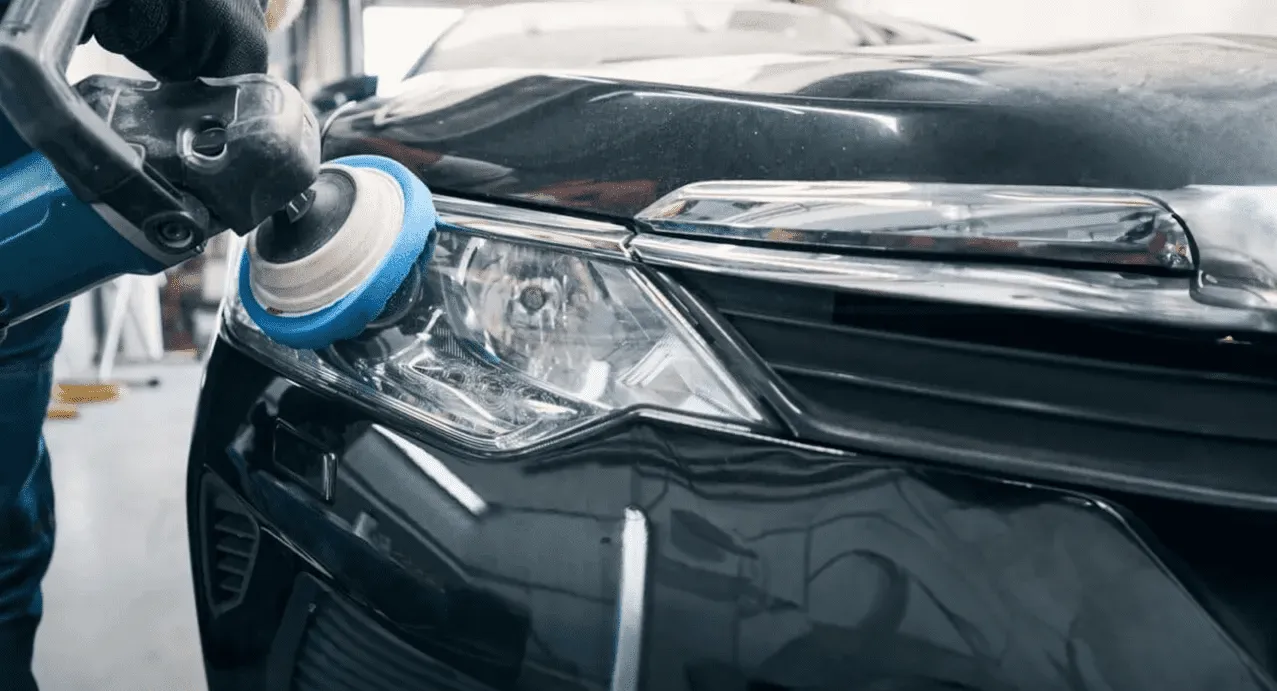
We start by assessing how deep the oxidation actually goes, since that determines how aggressive the process needs to be. Restoration typically works through wet sanding with premium abrasive papers across a grit progression up to around 3000, using variable-speed mini dual-action polishers to keep the process controlled rather than aggressive. From there, compounding and finishing pads refine the surface to full clarity, the lens is wiped down with an IPA prep solution, and a protective coating is applied to seal the finish and block further UV damage.
The protective topcoat we use is the same category of ceramic and graphene coating technology applied to paintwork elsewhere in the studio — chemically bonded, UV-resistant, and hydrophobic — rather than a separate headlight-specific product line. We'll talk through what's realistic for your specific headlights during the inspection rather than state generic figures that may not apply to your car.
Avoid automatic car washes with stiff brushes, which can prematurely wear down the protective coating.
Use a pH-neutral shampoo when washing near the headlights rather than harsh degreasers.
A periodic hydrophobic top-up treatment helps extend the life of the base coating between full restorations.
If you notice yellowing returning early, bring the car back in — catching it early is easier to correct than waiting for it to fully cloud over again.
Free Inspection
Whether a headlight is a good candidate for restoration depends on how deep the oxidation goes and whether the lens itself is cracked or damaged. We provide a free inspection at both the Irinjalakuda and Thrissur studios to check this honestly before recommending restoration — if a headlight needs replacement rather than restoration, we'll tell you that instead of running a process that won't hold up.
Why Choose Menora We2 Auto Detailing Studio
Our technicians work with headlight restoration regularly enough to know how the coating performs through a full Thrissur District year — monsoon humidity through to dry summer heat — and we won't recommend restoration on a lens that's too far gone to genuinely benefit from it. If you're already having other exterior work done, headlight restoration pairs naturally with a full car detailing visit, or with paint correction if the car's paint needs attention at the same time.
FAQs
Why do headlights turn yellow or cloudy? The factory UV coating on polycarbonate lenses breaks down over time. Once it fails, UV exposure, monsoon rain, and heat cycling attack the exposed plastic directly, causing the yellowing and haze.
Is cloudy headlights just a cosmetic issue? No — heavily oxidized lenses can scatter and reduce the amount of usable light reaching the road, which can affect visibility at night. That makes severe oxidation more than a cosmetic issue.
How long does professional headlight restoration last? It depends on how it's maintained and the protective coating applied — a properly sealed restoration holds up significantly longer than an uncoated DIY job, which can start clouding again within months. We'll go through realistic expectations during your inspection.
Is restoration cheaper than replacing the headlight assembly? Generally yes, particularly on cars with integrated LED or matrix headlight units, where full replacement costs considerably more than restoring the existing lens.
Do DIY headlight restoration kits work? They can improve clarity briefly, but most skip or under-deliver on a durable protective topcoat, which is why the haze often returns within a few months. A professional coating step is what makes a restoration actually last.
Does restoration fix a cracked headlight lens? No — restoration addresses surface oxidation and clarity, not physical damage. A cracked lens or one with water intrusion inside the housing needs a different repair or replacement.
What's used to protect the lens after restoration? The same category of ceramic and graphene coating technology used on paintwork — a chemically bonded, UV-resistant, hydrophobic topcoat — rather than a separate headlight-only product.
Can headlight restoration be done alongside other services? Yes — it's commonly paired with a full car detailing visit or paint correction if you're already bringing the car in for other work.
If you're unsure what your car actually needs, you can contact the studio and discuss the vehicle's condition before choosing a service — or bring it in for an inspection at either location.
Chat on WhatsApp: https://wa.me/918304802244
Book Online: https://bookeasy.in/We2
Menora We2 Auto Detailing Studio – Irinjalakuda
Town Hall Rd, Near Marigold Shopping Complex, Irinjalakuda, Thrissur, Kerala – 680121
Phone: +91 83048 02244 | 0480 350 0031