
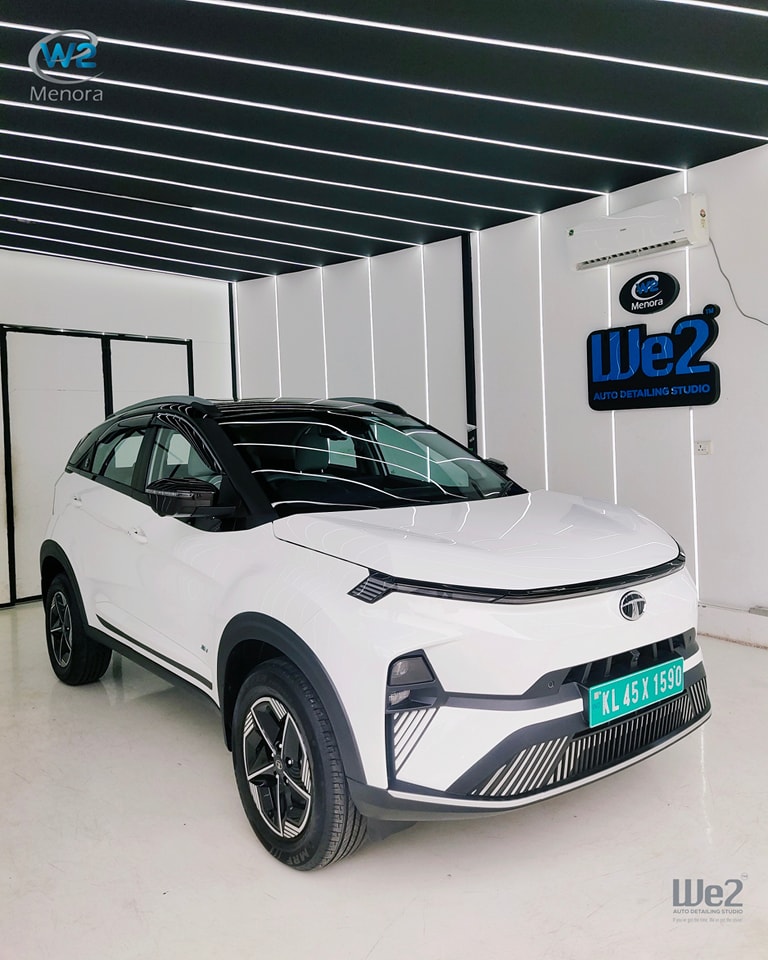
You've just brought home an EV, and the detailer you usually trust for your petrol car tells you it's basically the same job — wash, wax, done. It isn't. Between the sealed battery pack under the floor, the sensor-heavy exteriors, and paint finishes that behave differently under pressure washing, EV detailing in Thrissur needs a slightly different approach, and getting it wrong can mean more than just a bad shine.
What Is EV Detailing?
EV detailing is the process of cleaning, protecting, and maintaining an electric vehicle's exterior and interior using techniques adapted for its specific components — sealed battery housings, exposed sensors and cameras, regenerative braking systems, and often more delicate paint finishes than conventional cars. Unlike a petrol car, an EV has no engine bay, no exhaust residue, and typically produces less brake dust due to regenerative braking, which changes what actually needs cleaning and how often.
The core risk in EV detailing isn't cosmetic — it's technical. High-pressure water near charging ports, battery casing seams, or sensor covers can compromise seals that aren't designed to handle aggressive spray angles the way a traditional undercarriage is. A properly trained EV detailer adjusts water pressure, avoids certain zones entirely, and uses pH-neutral products suited to the often more sensitive clear coats EV manufacturers use to reduce vehicle weight and improve efficiency.
Why Thrissur and Irinjalakuda EVs Need Specialised Detailing
Kerala's monsoon intensity and humidity create a specific challenge for EVs that's easy to overlook — water can pool in trim lines, camera housings, and charging port covers far more easily than owners expect, and repeated exposure without proper sealing checks can lead to long-term issues that aren't always visible until they cause a fault. Combined with the fine laterite dust that settles during Thrissur's dry stretches, sensor covers and charging ports need more careful attention during washing than a standard petrol car's equivalent panels.
EV detailing in Thrissur also has to account for the district's hard borewell water, which can leave mineral deposits on premium paint finishes that are sometimes thinner or more UV-sensitive than traditional coatings. Owners commuting between Irinjalakuda, Chalakudy, and Kunnamkulam on regular routes accumulate road grime and stone-chip exposure just like any other car, but with regenerative braking producing less brake dust, EVs often show cleaner wheels and less undercarriage grime overall — one of the few areas where EV ownership genuinely simplifies detailing rather than complicating it.
Benefits of Proper EV Detailing — What You Actually Gain
Battery and seal protection. Careful, low-pressure washing around battery housing seams and charging ports prevents water intrusion that could otherwise lead to corrosion or electrical faults over time — a risk that simply doesn't exist with a conventional engine bay.
Sensor and camera clarity. EVs rely heavily on cameras and sensors for parking assist and driver aids, and detailing that avoids abrasive contact around these zones keeps them functioning accurately instead of accumulating scratches that affect calibration.
Paint protection suited to EV finishes. Many EV manufacturers use lighter, sometimes more UV-sensitive paint systems to reduce vehicle weight, so a ceramic coating or PPF application done with the right technique protects gloss and finish without stressing a more delicate clear coat.
Cleaner interior air quality. EV owners are often more conscious of cabin environment, and detailing with pH-neutral, low-VOC interior products keeps that consideration intact rather than undoing it with harsh chemical cleaners.
Reduced long-term maintenance cost. Catching a small seal or trim issue during a proper detail is far cheaper than a service visit for water damage traced back to an aggressive wash months earlier.
Preserved resale value. EVs are still a newer segment in the Kerala used-car market, and documented, careful detailing history matters more here — buyers specifically ask about battery and electronics care in a way petrol car buyers rarely do.
EV Detailing vs. Conventional Petrol Car Detailing
| Feature | EV Detailing | Conventional Petrol Detailing |
|---|---|---|
| Engine bay cleaning | Not applicable | Standard part of the service |
| Battery/charging port care | Requires low-pressure, sealed-zone awareness | Not a factor |
| Brake dust on wheels | Typically lower due to regenerative braking | Higher, more frequent wheel cleaning needed |
| Sensor/camera handling | Requires careful, non-abrasive technique | Minimal sensor exposure on most models |
| Paint finish sensitivity | Often thinner, more UV-sensitive coatings | Varies, generally more traditional finishes |
| Product selection | pH-neutral, EV-safe formulations preferred | Standard automotive products typically fine |
The washing and polishing fundamentals carry over from conventional detailing, but the zones that need extra caution are entirely EV-specific. A detailer who treats an EV exactly like a petrol car isn't doing anything catastrophic on a single visit, but the small risks — water near a seal, an abrasive pass near a sensor — compound over repeated services in a way that matters for a vehicle you're likely to keep for years.
How Often Should You Get an EV Detailed?
Most EVs benefit from a full detail every 3 to 4 months, similar to conventional cars, though the specific attention points differ. What changes isn't the frequency so much as what gets checked at each visit — seal integrity, sensor cleanliness, and paint condition matter more consistently than engine bay or exhaust-related cleaning ever did.
In Kerala's climate, the monsoon season is the period to be most attentive, since standing water and humidity around trim lines and charging ports pose more risk during sustained wet weather than during the dry season. Owners who keep their EV mostly garaged can typically stretch detailing intervals slightly longer than those parking outdoors daily in Thrissur or Irinjalakuda's more exposed conditions.
How Much Does EV Detailing Cost in Thrissur?
EV detailing pricing is generally comparable to standard car detailing, with the main cost difference coming from any additional ceramic coating, graphene coating, or PPF layered on top for extra paint protection. Rather than quote a fixed figure here, [INSERT CURRENT VERIFIED PRICE RANGE — e.g. standard EV detail vs detail-plus-coating packages], since coverage and coating choice both move the final number.
The more useful frame is thinking about EV detailing cost against the value of the vehicle itself — EVs typically carry a higher purchase price than comparable petrol cars, and protecting that investment with detailing done by someone who understands the specific risk points is a smaller ongoing cost than dealing with a seal or sensor issue traced back to careless washing.
Why Menora We2 Auto Detailing for EV Detailing?
Every EV that comes through Menora We2 is washed and detailed in a controlled studio environment, with pressure and technique adjusted specifically around battery housing seams, charging ports, and sensor zones rather than treated identically to a petrol car. We also offer ceramic coating and graphene coating application suited to the often thinner, more UV-sensitive paint finishes common on EVs.
If you're unsure whether your current wash routine or detailer is treating your EV appropriately, a free consultation at either our Thrissur bypass studio or our Irinjalakuda studio on Thekkekkara Road is the fastest way to get a clear answer, with customers regularly coming from Chalakudy, Guruvayoor, and Kunnamkulam for the same. The FAQ below covers what EV owners ask us most before booking.
Frequently Asked Questions
Q: Is EV detailing worth it for a daily driver? A: Yes — daily driving means regular exposure to Kerala's monsoon humidity and dust around sensor and charging zones, and consistent, EV-appropriate detailing catches small seal or trim issues before they become expensive problems. The paint protection side also matters more for daily drivers given constant sun and rain exposure.
Q: Can EV detailing be done on a brand-new electric car? A: Yes, and it's often the ideal time — a new EV's paint hasn't yet faced a full monsoon or summer UV season, and applying ceramic coating or PPF early protects a finish that's often more UV-sensitive than traditional paint from day one.
Q: What does EV detailing not protect against? A: Careful detailing reduces the risk of water intrusion or scratching around sensitive zones, but it doesn't replace proper vehicle servicing for battery health or electronic diagnostics — those remain the manufacturer or service center's responsibility, not the detailer's.
Q: Can I wash my EV at a regular automated car wash? A: It's generally best avoided — automated brush washes can apply pressure and brush contact near sensor covers and trim lines that a hand wash with EV-appropriate technique avoids entirely. Hand-washing with a pH-neutral shampoo is the safer routine for most EVs.
Q: Where can I get EV detailing done near Irinjalakuda? A: Menora We2 Auto Detailing Studio's Irinjalakuda location on Thekkekkara Road, near Metro Health Care Hospital, offers EV-appropriate detailing alongside its Thrissur bypass studio near Plakkat Tyres.
EVs don't need more detailing than petrol cars, just detailing done with a different set of risks in mind — and getting that wrong quietly costs more than getting it right ever would. If your EV has been through even one Kerala monsoon without detailing tailored to its sealed components, it's worth a proper check now rather than after an issue shows up. Book a free consultation at Menora We2 Auto Detailing Studio in Thrissur or Irinjalakuda — also serving Chalakudy, Chavakkad, Guruvayoor, Kodungallur, Kunnamkulam, and Wadakkanchery — through our contact page or by visiting either studio directly.
- ic