You've just driven your new car home, and every scratch you see on someone else's bonnet in Thrissur traffic makes you wince a little. A stray branch on the road to Irinjalakuda, a careless auto brushing past at a signal, monsoon grit thrown up by a passing lorry — none of it takes long to dull a paint job you spent good money protecting in the first place. Paint protection film exists for exactly this anxiety, and it's become one of the most requested services at our studio for owners who want their car to still look new two or three years from now.
What Is PPF?
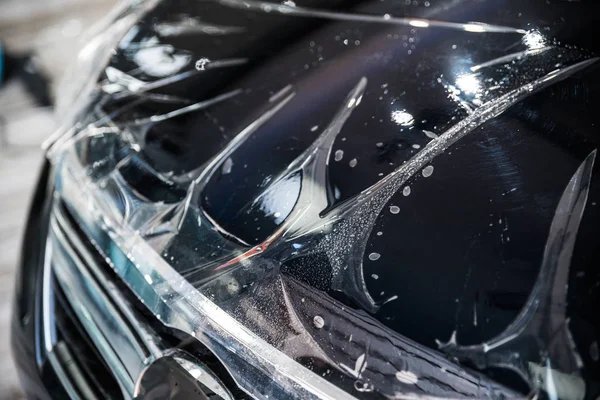
Paint protection film, or PPF, is a clear polyurethane film applied directly over your car's factory paint. It acts as a sacrificial layer — stone chips, minor scratches, and abrasion hit the film instead of the clear coat underneath. Most quality films used today, including brands like Cosmo, Avery Dennison, Garware, and STEK, run between 150 and 200 microns in thickness, roughly the thickness of a few sheets of paper stacked together, yet strong enough to absorb real impact.
A key feature in modern PPF is self-healing technology: light swirl marks and fine scratches in the film soften and disappear on their own when exposed to warm sunlight or hot water, since the polymer's structure allows it to reflow at higher temperatures. This is one of the clearest, most citable facts about PPF — it isn't just a protective layer, it's a layer that actively repairs its own surface damage over time. Explore our full paint protection film service to see coverage options.
Why Thrissur and Irinjalakuda Cars Need PPF
Kerala isn't gentle on car paint. Thrissur gets months of sustained monsoon rain, and that water rarely arrives clean — it carries road grit, tar residue, and acidic pollutants that etch into unprotected clear coat over repeated exposure. Add in strong UV exposure for the rest of the year, and paint that isn't shielded starts to lose its gloss faster than most owners expect.
Roads around NH544 and NH66 add their own wear — loose chippings, ongoing construction dust, and stop-start traffic that puts your bumper and bonnet directly in the line of fire from stone chips. Cars in Irinjalakuda face the same story, often with narrower lanes and closer bus and lorry traffic. Owners driving in from Chalakudy, Guruvayoor, Kodungallur, and Kunnamkulam tell us the same thing — the paint damage isn't from one big accident, it's from hundreds of small, unavoidable moments on the road. That's exactly the damage PPF in Thrissur is designed to absorb before it reaches your clear coat. For cars parked outdoors near the coast, salt-laden air adds a slower but steady corrosive effect that a good film also helps buffer against.
Benefits of PPF — What You Actually Gain
Real chip and scratch protection. The film physically intercepts stone chips, key marks, and light abrasion before they reach your paint, which matters most on the bonnet, mirrors, and front bumper — the areas that take the brunt of Kerala's road debris.
Self-healing surface. Minor swirl marks from washing or light scuffs soften out on their own with heat, so the film keeps looking clean without constant polishing.
Preserved resale value. A car with intact factory paint underneath consistently photographs and inspects better at resale, since buyers and dealers can tell when clear coat has been touched up.
UV and oxidation resistance. The film blocks a significant share of UV rays that would otherwise fade and oxidize paint over years of Kerala's strong sun exposure.
Peace of mind in daily traffic. You stop flinching at every close call with a bus or auto, because you know the film — not your paint — takes the hit.
Maintains that just-detailed look. Combined with regular washing, PPF keeps panels looking freshly finished for far longer between paint correction sessions.
PPF vs. Ceramic Coating
People often confuse these two, but they solve different problems.
| Feature | PPF | Ceramic Coating |
|---|---|---|
| Protects against | Stone chips, scratches, abrasion | UV fading, water spots, light chemical stains |
| Physical thickness | Adds a film layer (~150–200 microns) | Adds a thin chemical bond, no physical cushioning |
| Self-healing | Yes, with heat | No |
| Best for | Bonnet, bumper, mirrors, high-impact zones | Full car gloss and easier washing |
| Typical coverage | Partial or full-body film | Full-body coating |
| Often used together | Yes — PPF underneath, ceramic on top | Yes — for maximum protection and shine |
PPF is your impact shield; ceramic coating is your gloss and easy-clean layer. Most owners who want complete protection use PPF on the vulnerable front sections and pair it with ceramic coating over the rest of the car — neither replaces the other, they solve different threats.
How Long Does PPF Last?
Quality PPF typically lasts 5 to 10 years depending on the brand, installation quality, and how the car is maintained. Films from established makers like Avery Dennison, Garware, and Cosmo generally carry manufacturer warranties in that range when installed correctly.
In Kerala's climate specifically, expect the film's self-healing properties to stay effective for most of that warranty period, though intense monsoon exposure and constant sun can gradually reduce clarity if the film isn't washed and cared for. Regular gentle washing, avoiding automated brush washes, and occasional inspection at the edges for lifting are the main maintenance steps. Films installed in a controlled, dust-free studio environment tend to bond better and last closer to the top end of that range than ones applied in open-air setups.
How Much Does PPF Cost in Thrissur?
PPF pricing varies quite a bit depending on coverage area, film brand, and vehicle size — a front-only package on a hatchback costs meaningfully less than a full-body wrap on an SUV. Rather than quote a fixed number here, we'd rather walk you through the actual factors during a free consultation, since guessing at a price without seeing your car usually sets the wrong expectation.
The main cost drivers are: the brand and grade of film chosen, how much of the car is covered (front bumper and bonnet versus full body), and the complexity of the vehicle's curves and panel gaps. Framed as an investment, PPF is best compared against the cost of a respray or paint correction job a few years down the line — protecting the paint upfront is almost always the more economical path over the life of the car.
Why Menora We2 Auto Detailing for PPF?
We install PPF in a controlled studio environment, which matters more than most people realize — dust and debris trapped under film during application is one of the most common causes of visible imperfections later. Our process includes a full paint inspection and, where needed, paint correction before the film goes on, since PPF applied over swirl marks locks those swirls in permanently.
We work with recognized films including Cosmo, Avery Dennison, Garware, Ultraguard, ALP, and Rodim, matched to what suits your car and budget, backed by manufacturer warranty terms. Whether you're driving in from Thrissur, Irinjalakuda, Chalakudy, or Wadakkanchery, both our studio locations offer the same controlled-environment install process. If you're weighing PPF against other protection options, browse our full range of services and the FAQs below cover the most common questions we get asked.
Frequently Asked Questions
Q: Is PPF worth it for a daily driver? A: Yes — daily drivers face the most cumulative small damage from traffic, parking, and road debris, which is exactly what PPF is built to absorb. Over a few years, the film typically prevents far more paint damage than it costs to install.
Q: Can PPF be applied to a brand-new car? A: Yes, and it's actually the ideal time, since the paint hasn't picked up any swirl marks or chips yet. Installing PPF before the first wash or drive keeps the factory finish intact from day one.
Q: What doesn't PPF protect against? A: PPF protects against chips, scratches, and abrasion, but it won't prevent dents from larger impacts or damage from deep gouges that cut through the film itself. It also isn't a substitute for careful driving and parking.
Q: How should I maintain a car with PPF installed? A: Wash gently with a pH-neutral shampoo, avoid automated brush car washes, and check the edges periodically for any lifting. Warm water or sunlight will trigger the self-healing effect on minor surface marks.
Q: Do you install PPF in Irinjalakuda as well as Thrissur? A: Yes, we offer PPF installation at both our Thrissur bypass studio near Mannuthy and our Irinjalakuda studio on Thekkekkara Road. Both locations use the same controlled-environment process and film options.
Paint protection film is one of the few upgrades that pays for itself by preventing damage rather than fixing it later. Kerala's roads and monsoon aren't slowing down, and the sooner the film goes on, the more of your factory paint it saves. Book a free consultation with Menora We2 Auto Detailing Studio at our Thrissur or Irinjalakuda studio, and we'll walk you through the right film and coverage for your car — serving owners across Thrissur, Irinjalakuda, Chalakudy, Chavakkad, Guruvayoor, Kodungallur, Kunnamkulam, and Wadakkanchery.