Ceramic Coating in Thrissur – Long-Term Gloss and Paint Protection for Cars and Bikes
During last year's monsoon, a customer from Kuriachira brought his two-year-old Hyundai Venue to our Mannuthy studio and asked a question we hear almost every week: why does my white car look grey no matter how often I wash it? Under the studio lights the answer was obvious. Years of hard borewell water, road grime, and acid rain residue had etched a dull film into the clear coat, and every roadside pressure wash had added its own layer of swirl marks. We spent two days machine-polishing the paint back to life and sealed it with a ceramic coating. He came back during Vishu this year for a maintenance wash, and the car still beads water like it did on delivery day. That, in one story, is what ceramic coating in Thrissur is really for: not a miracle shield, but a way to lock in corrected, glossy paint and keep Kerala's climate from slowly eating it.
At Menora WE2 Auto Detailing Studio, we apply ceramic and graphene coatings on cars, SUVs, luxury vehicles, and motorcycles at our Thrissur (Mannuthy) and Irinjalakuda studios. This page explains what a ceramic coating actually is and what it is not, why vehicles in this climate benefit from it, how professional application differs from the spray bottles sold online, and how to decide between ceramic coating, graphene coating, and paint protection film for your vehicle.
What Is Ceramic Coating?
A ceramic coating is a liquid polymer, based on silicon dioxide (SiO2), that is applied by hand to a vehicle's paint and chemically bonds with the factory clear coat. Once cured, it forms a hard, transparent, glass-like layer that becomes part of the surface rather than sitting on top of it the way wax does. Wax washes away in weeks; a properly applied professional ceramic coating stays bonded for years.
That bonded layer changes how the paint behaves in daily life. The surface becomes intensely hydrophobic, so rainwater and wash water gather into beads and roll off, carrying dust with them instead of drying into spots. Dirt, bird droppings, tree sap, and road grime struggle to grip the slick surface, which means washing takes half the effort and the paint spends far less time in contact with contaminants that etch it. The coating also adds a deep, wet-look gloss that makes even ordinary factory paint look richer than it did in the showroom, and it blocks a significant amount of UV radiation, slowing the oxidation and fading that Kerala's sun inflicts on unprotected paint.
One thing we tell every customer plainly, because honest expectations make happy customers: a ceramic coating is measured in microns. It resists chemical attack, light wash marring, and weathering extremely well, but it is not armour. It will not stop a stone chip on the highway or a scratch from a scooter handlebar. For physical impact protection, the correct product is paint protection film, which we also install, and further down this page we explain exactly when each one makes sense.
Why Ceramic Coating Makes Sense in Thrissur's Climate
Paint in Kerala fights a war on several fronts at once. From February to May, the sun is relentless, and unprotected clear coat oxidises steadily; reds fade, blacks go grey, and whites turn chalky. A ceramic layer takes that UV assault first and keeps the pigment underneath stable for years longer.
Then comes the monsoon, and with it months of the exact conditions that destroy paint fastest: constant moisture, acidic runoff dripping from roadside trees, mud sprayed on the Mannuthy bypass and the highway stretches towards Chalakudy and Kodungallur, and grime that sits on the panels for days because nobody washes a car in pouring rain. On coated paint, most of this rinses off with the next downpour instead of bonding to the surface.
Hard water deserves special mention because it quietly ruins more paint in Thrissur district than stone chips ever will. Well and borewell water across the district is heavily mineralised, and every bucket wash with it leaves calcium deposits that bake into the clear coat under the afternoon sun, producing the stubborn white water spots so many owners mistake for permanent damage. On a hydrophobic ceramic surface, water sheets off before it can dry in place, and the spots that do form sit on the coating rather than in your paint, wiping away during a normal wash. Add bird droppings under the rain trees around Swaraj Round and Chembukkavu, tar from freshly patched roads, and construction dust around Puzhakkal and Amala Nagar, and the case for a sacrificial chemical barrier over your paint largely makes itself.
Car Ceramic Coating in Thrissur – What We Do and For Whom
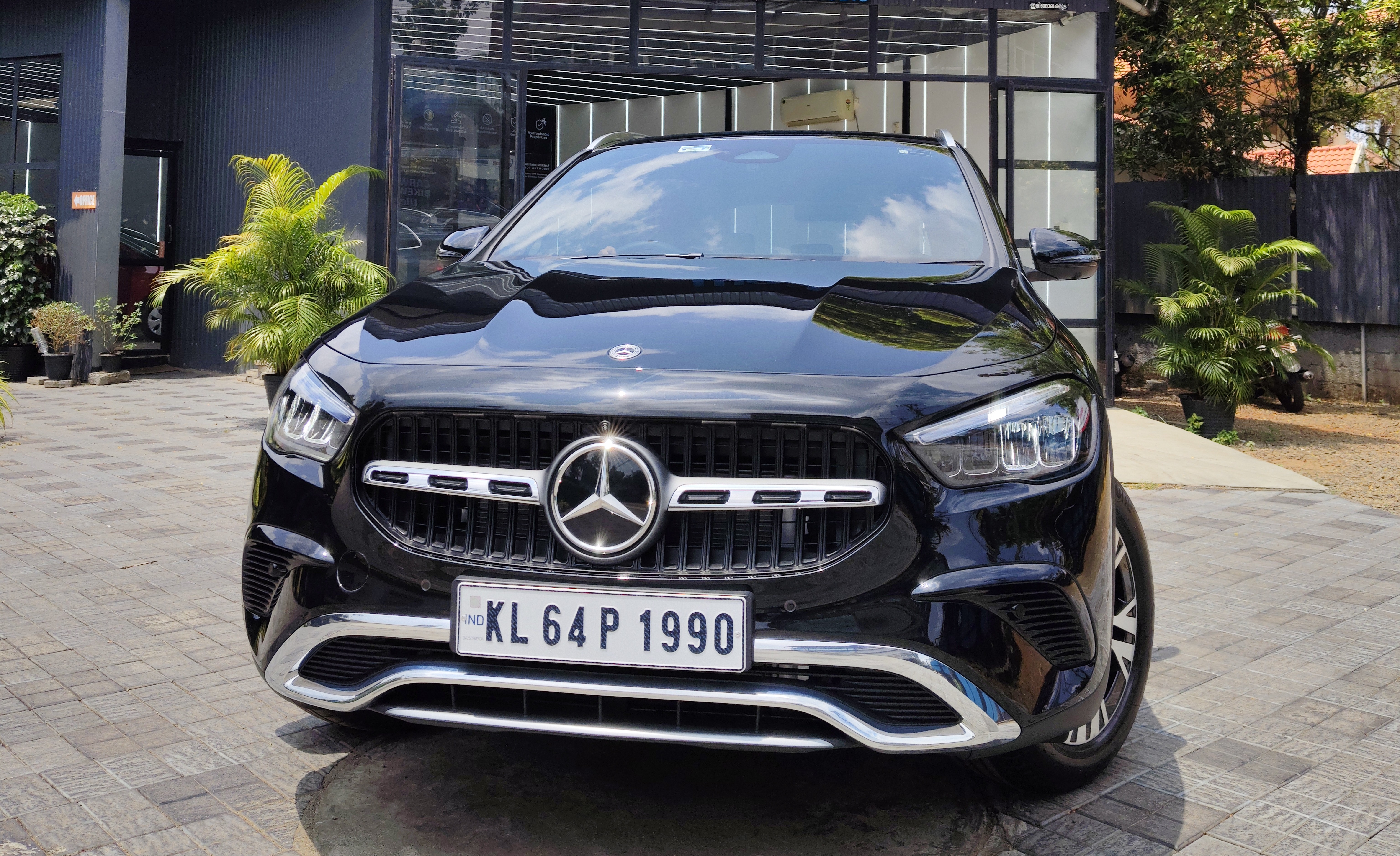
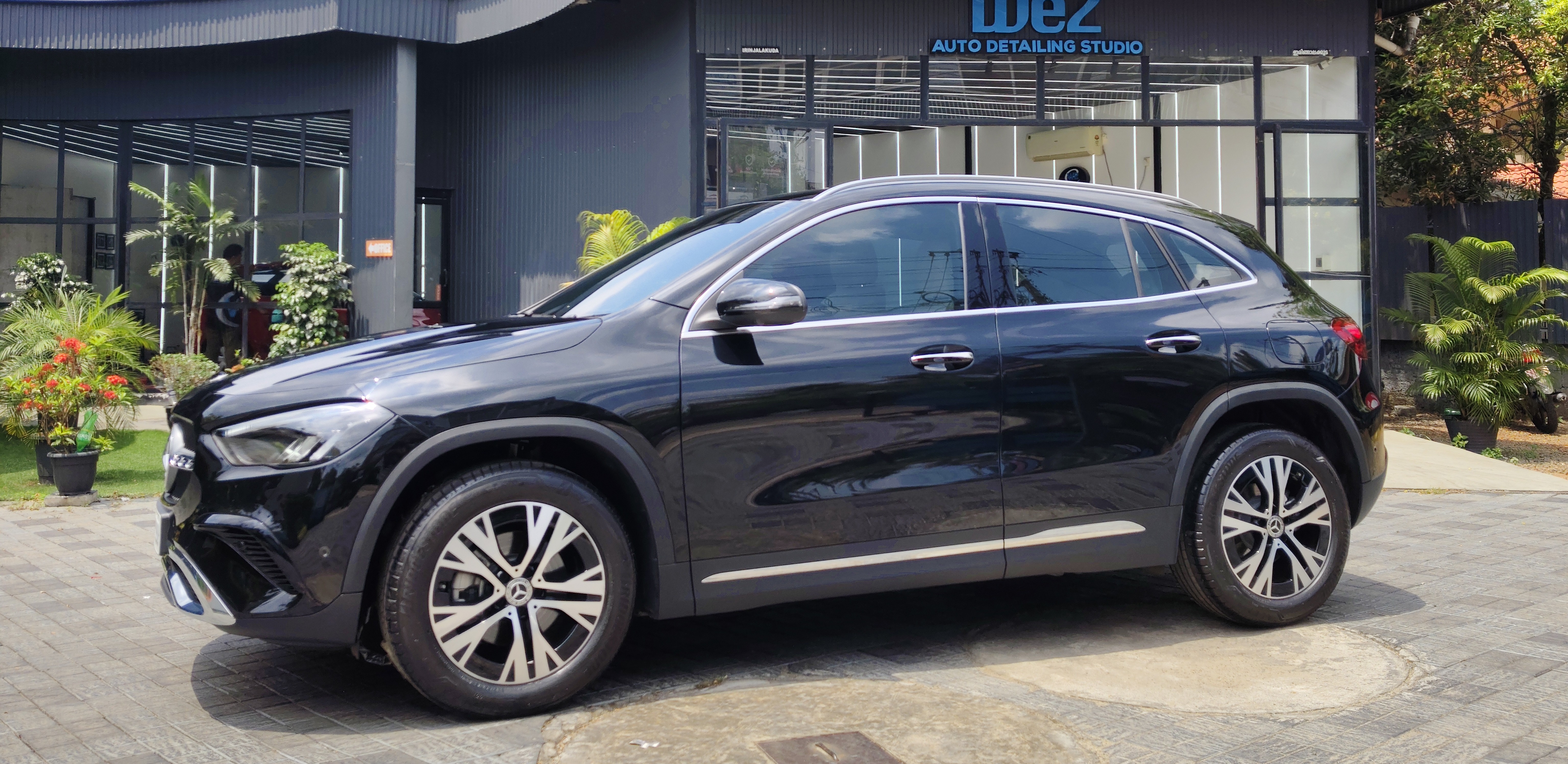
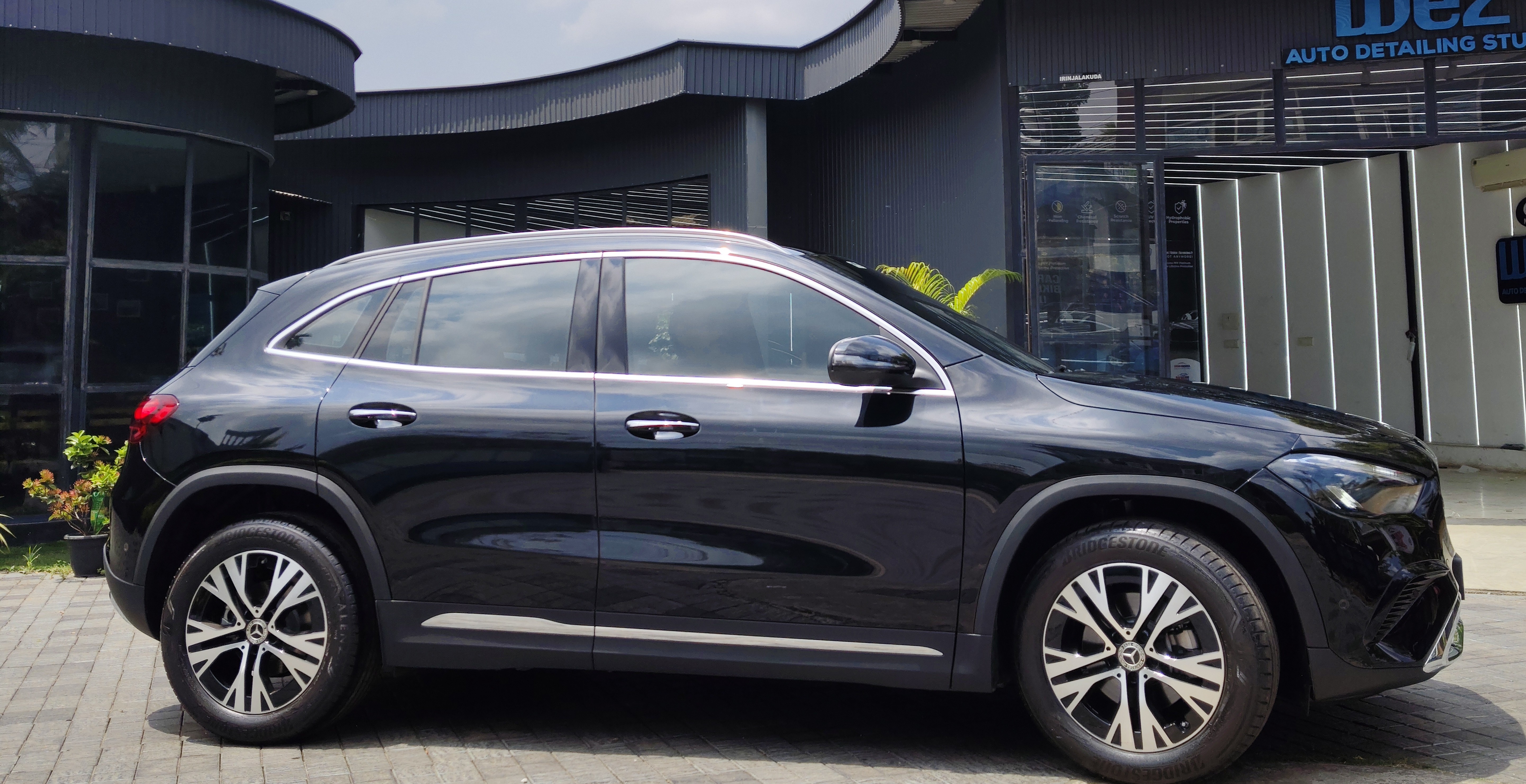
Car ceramic coating in Thrissur has moved well beyond the luxury segment. We certainly coat our share of premium German and Japanese vehicles, whose owners want the factory finish preserved and know a respray hurts resale value. But the majority of vehicles in our bays today are new family cars and SUVs, Cretas, Seltoses, Nexons, XUV700s, Innovas, and a growing number of electric vehicles whose owners plan long ownership periods and want the paint to survive them. New cars are ideal candidates because the paint needs only light preparation before coating, locking in delivery-day condition.
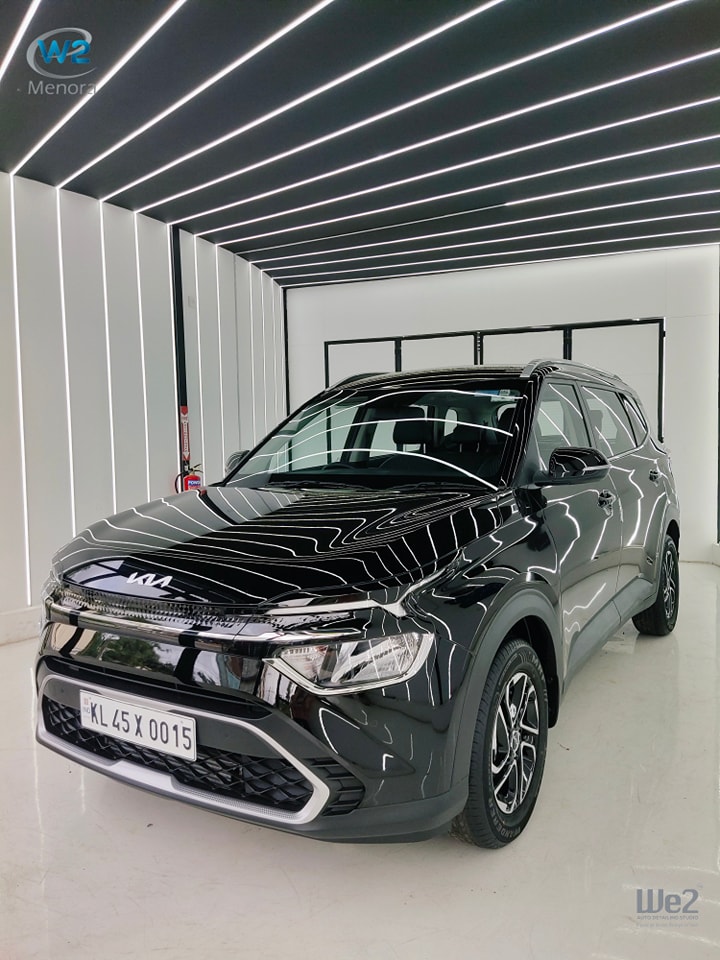
Older cars benefit just as much, but they need honesty and more work. Coating over swirled, oxidised, water-spotted paint seals the damage under a glossy layer, which is why paint correction comes first at our studio. Depending on the paint's condition, that means one or more stages of machine polishing to remove swirl marks, light scratches, water spot etching, and oxidation, restoring genuine depth and clarity before a single drop of coating touches the car. The transformation on a neglected three-year-old car is often dramatic enough that customers photograph the halfway line across the bonnet. The coating then preserves that corrected finish instead of a flawed one.
SUV and MUV owners should note one practical point: larger vehicles have more paint, higher panels that catch more sun, and often see more highway running. The coating benefits scale accordingly, and for highway-driven vehicles we frequently recommend combining ceramic coating on the body with paint protection film on the impact-prone front end.
Bike Ceramic Coating in Thrissur – Tanks, Fairings, and Daily Riders
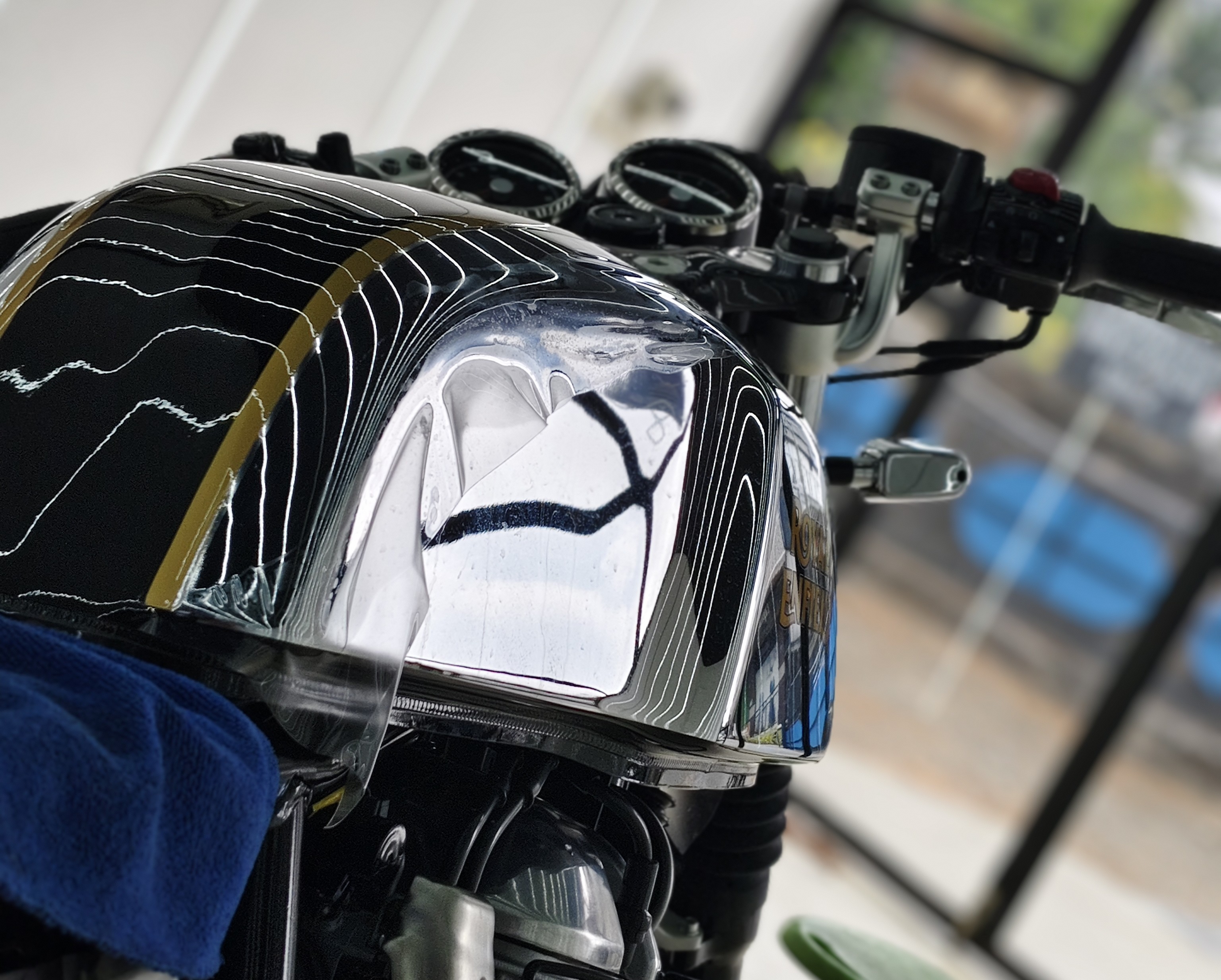
Bike ceramic coating in Thrissur has grown quickly, and for good reason. A motorcycle's paint lives outdoors more than most cars', parked in office lots and roadside stands under direct sun and sudden rain. Tanks lose their gloss to sun and polishing swirls, exhaust sections stain, and matte finishes on modern KTMs and Royal Enfields become patchy when cleaned with the wrong products.
We coat everything from daily-ridden commuters to Royal Enfields, Triumphs, and litre-class superbikes. The coating goes on the tank, fairings, mudguards, and painted panels, and dedicated formulations are used for matte paint so the finish stays uniformly satin instead of turning glossy in patches. Beyond gloss and UV protection, the practical daily benefit riders notice most is how easily the bike cleans up: dust and light mud rinse off with plain water, chain lube fling wipes off the swingarm and rear panels without scrubbing, and water spots stop forming after every drizzle. For riders who wash their own bikes on Sunday mornings, that alone justifies the coating.
What Does 9H Hardness Actually Mean?
Almost every ceramic coating on the market advertises 9H hardness, and the term deserves a plain-language explanation because it is widely misunderstood. The H scale comes from the pencil hardness test used in the coatings industry: a 9H coating resists scratching from a 9H graphite pencil, the hardest in the standard set. It does not mean the coating approaches the hardness of real ceramic tile or glass, and it certainly does not make paint scratch-proof. What it honestly indicates is that the cured coating is harder than your clear coat, so the light marring that daily washing inflicts happens in the sacrificial coating layer first rather than in your paint. Marketing that promises a scratch-proof car from a bottle is overselling; a coating that takes the daily abuse your clear coat used to take is the real, and genuinely valuable, benefit.
Ceramic Coating vs Graphene Coating – What We Recommend
We install both, so we have no reason to push one over the other. Graphene coating is best understood as the next evolution of ceramic technology: an SiO2-based coating infused with graphene, a carbon material that improves the coating's flexibility, thermal behaviour, and water behaviour. In daily use, the differences customers actually notice are three. Graphene-infused coatings tend to resist water spotting better, because the surface disperses heat rather than letting water beads act like tiny magnifying lenses in the sun, a meaningful advantage with Thrissur's hard water. They produce a slightly darker, sharper gloss that suits deep colours especially well. And the better graphene formulations carry longer durability ratings than mid-grade ceramics.
Conventional ceramic coating remains an excellent product and the sensible choice for many owners, particularly on newer vehicles with lighter budgets. Our honest guidance runs roughly like this: for a vehicle you plan to keep long-term, that lives outdoors, or that gets washed with well water, the graphene upgrade earns its premium; for a garage-kept car on a tighter budget, a quality ceramic coating properly applied over corrected paint will still outperform any coating poorly applied, whatever its label says. The preparation and application matter more than the chemistry on the bottle.
Ceramic Coating vs PPF vs Wax – Choosing the Right Protection
These three products are compared constantly, and the confusion is understandable because all three are sold as paint protection. Wax is the traditional option: affordable, warm-looking, and gone within four to eight weeks in our climate. It remains a fine choice as a top-up gloss product, and we offer premium waxing as a service, but as long-term protection it simply does not last.
Ceramic and graphene coatings are chemical protection: years of bonded UV resistance, chemical resistance, hydrophobic behaviour, and gloss, with easy maintenance as the daily dividend. Paint protection film is physical protection: a thick transparent TPU layer that absorbs stone chips, scratches, and scuffs that would go straight through any coating. The two solve different problems, which is why our most common recommendation for highway-driven and premium vehicles is a combination: PPF on the full front end where stones strike, and ceramic or graphene coating over the remaining panels, sometimes with a coating layer applied over the film itself for uniform slickness. If your driving is mostly city and your concern is gloss, fading, and hard-water spots, a coating alone serves you well. If you run the highway weekly or park where scratches happen, put film where the damage lands. We install both under one roof, so the recommendation you get is based on your usage, not on what the shop happens to sell.
How Ceramic Coating Is Applied at Our Thrissur Studio
The difference between a coating that lasts five years and one that fails in five months is almost entirely in the preparation, which is why professional application takes two to three days rather than an afternoon. The vehicle first receives a full decontamination wash: pH-neutral shampoo, iron remover to dissolve embedded brake dust, tar remover, and a clay bar treatment that pulls bonded contamination out of the paint until the surface is genuinely clean, not just visually clean.
Next, the paint is inspected under studio lighting and corrected. On a new car this may be a single refining polish; on an older or neglected car it can be multi-stage machine correction to remove swirls, scratches, and etching. This stage cannot be skipped, because a coating locks in whatever is underneath it, flaws included. After correction, every panel is wiped down with a panel prep solution that strips polishing oils, leaving bare clear coat for the coating to bond with.
The coating itself is applied panel by panel in a dust-controlled bay, levelled carefully to avoid high spots, and layered according to the package chosen. The vehicle then cures indoors before it meets weather; rushing a freshly coated car into monsoon rain undoes careful work, so we hold the vehicle until the coating has set properly. At handover we walk you around the car under the lights, hand over the warranty card, and explain the simple maintenance routine that keeps the coating performing, including the first-wash timeline and what to avoid.
Caring for a Ceramic Coated Vehicle
A coated car is easy to maintain, which is much of the point, but easy is not the same as nothing. Avoid washing the vehicle for the first week while the coating completes its cure. After that, a wash every one to two weeks with a pH-neutral shampoo and a clean microfibre mitt is the whole routine; the dirt releases so easily that harsh chemicals and hard scrubbing become unnecessary, and both should be avoided because aggressive degreasers and roadside acid washes are among the few things that shorten a coating's life. Skip automatic brush washes, dry the car with a soft microfibre towel rather than letting hard water dry on the surface, and remove bird droppings within a day rather than a week; the coating resists them far better than bare paint, but nothing enjoys prolonged acid contact. We also offer periodic maintenance washes and coating top-ups at both studios, and customers who bring their vehicles in once or twice a year for inspection consistently get the longest life from their coatings.
Ceramic Coating and Resale Value
Used-vehicle buyers in Kerala judge paint first. A five-year-old car whose paint still carries deep gloss, no fading, and no water-spot etching photographs better in listings, inspects better in person, and sells faster at better money than the same model with tired paint. A ceramic coating protects that outcome for years at a fraction of what a respray costs, and unlike a respray, it adds to the car's originality story rather than raising questions about it. For premium and luxury vehicles, where paint condition moves valuation significantly, coating a new vehicle is one of the more sensible ownership decisions available.
What Does Ceramic Coating Cost in Thrissur
Pricing depends on four factors: the size of the vehicle, the condition of the paint and therefore the amount of correction required, the coating chosen (ceramic or graphene, and the grade within each), and the number of layers in the package. A lightly used hatchback with near-new paint and a heavily swirled SUV needing two-stage correction sit at very different price points even with the same coating. Rather than publish figures that go stale, we invite you to call or visit either studio; you will receive a written estimate specifying the correction work, coating grade, number of layers, warranty period, and time required. One caution from experience: quotes dramatically below market level almost always mean skipped paint correction or a diluted product, and a cheap coating over uncorrected paint is money spent sealing in defects.
Why Customers Choose Menora WE2 for Ceramic Coating
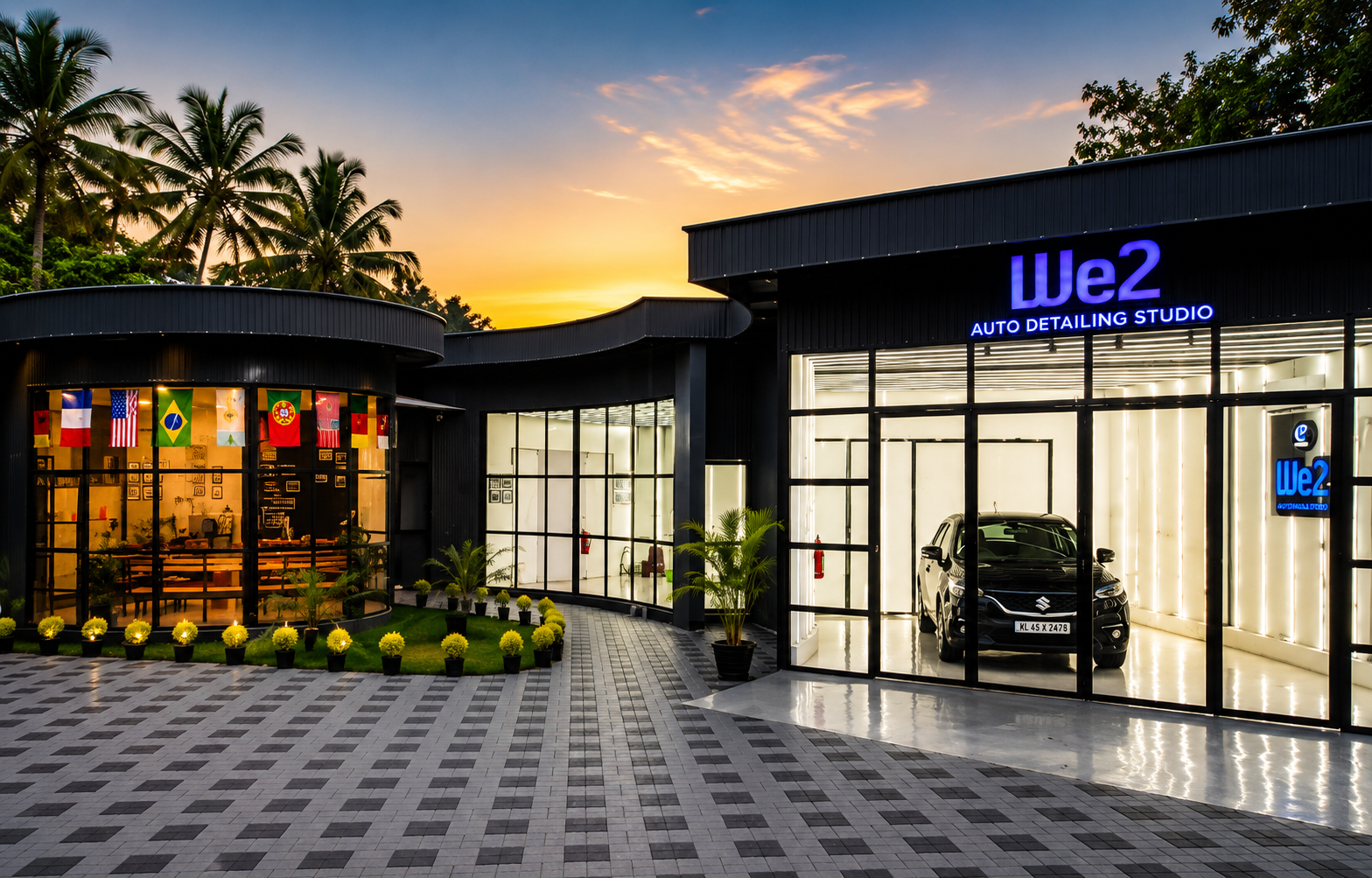
We have been correcting and protecting paint across Thrissur district for years from our studios at Mannuthy (Bypass Road, near Plakkat Tyres) and Irinjalakuda (Thekkekkara Road, near Metro Health Care Hospital). Coatings are not an add-on service here; paint correction, ceramic and graphene coating, and paint protection film are the core of our daily work, which means the person polishing your bonnet has corrected hundreds before it. We coat over properly corrected paint, we use professional-grade products with written warranties, we show you the finished work under studio lighting before you pay, and we stand behind the coating with maintenance support afterwards. The referrals that walk in because a neighbour's car still beads water two monsoons later are the credentials we value most.
Why Customers Choose Menora WE2 for Ceramic Coating
We have been correcting and protecting paint across Thrissur district for years from our studios at Mannuthy (Bypass Road, near Plakkat Tyres) and Irinjalakuda (Thekkekkara Road, near Metro Health Care Hospital). Coatings are not an add-on service here; paint correction, ceramic and graphene coating, and paint protection film are the core of our daily work, which means the person polishing your bonnet has corrected hundreds before it. We coat over properly corrected paint, we use professional-grade products with written warranties, we show you the finished work under studio lighting before you pay, and we stand behind the coating with maintenance support afterwards. The referrals that walk in because a neighbour's car still beads water two monsoons later are the credentials we value most.
Our Mannuthy studio serves customers from across Thrissur city and its neighbourhoods, including Ayyanthole, Punkunnam, East Fort, West Fort, Kuriachira, Koorkenchery, Ollur, Viyyur, Amala Nagar, Puzhakkal, Chembukkavu, Kuttanellur, Nadathara, Veliyannur, and the Swaraj Round, MG Road, Shornur Road, and Kokkala areas. Our Irinjalakuda studio is convenient for customers from Irinjalakuda town, Chalakudy, Kodungallur, and surrounding areas, while vehicle owners from Guruvayur, Chavakkad, and Kunnamkulam visit whichever studio falls on their route. If you are unsure which location suits you, call either number and we will guide
Frequently Asked Questions About Ceramic Coating in Thrissur
How long does ceramic coating last?
A professionally applied ceramic coating lasts between two and five years depending on the grade, and quality graphene coatings carry longer ratings. Actual life depends heavily on how the vehicle lives: outdoor parking, well-water washing, and harsh chemicals shorten it, while sensible washing and periodic maintenance visits extend it. We explain the realistic lifespan and warranty of the specific package you choose before work begins.
Does ceramic coating prevent scratches and stone chips?
No, and any shop that promises this is overselling. A coating resists the fine wash marring and chemical etching that dull paint over time, but it cannot absorb physical impact. Stone chips and genuine scratches require paint protection film, which is a thick transparent TPU layer we also install. Many customers combine film on the front end with coating on the rest of the body.
Is ceramic coating worth it for a regular car, or only luxury vehicles?
If you plan to keep the car several years, park it outdoors, or wash it with hard well water, a coating earns its cost on any vehicle by preventing fading, water-spot etching, and the gradual dulling that otherwise demands a repaint or heavy correction later. On a car you intend to sell within a year or two, we will honestly tell you a simpler option like premium waxing may serve you better.
Can ceramic coating be applied on an old or used car?
Yes, and the results are often more dramatic than on new cars, but the paint must be machine-corrected first. Coating over swirls, oxidation, and water spots permanently seals those defects under a glossy layer. We assess the paint under studio lighting, tell you what correction it needs, and coat only after the finish is restored.
What is the difference between ceramic coating and graphene coating?
Graphene coating is a graphene-infused evolution of SiO2 ceramic technology. In daily use it resists hard-water spotting better, disperses heat rather than letting water beads etch in the sun, produces a slightly sharper gloss, and generally carries longer durability ratings. Conventional ceramic remains excellent value on newer vehicles and lighter budgets. We offer both and recommend based on your water source, parking, and ownership plans.
Can I apply a ceramic coating myself with a kit from online?
Consumer spray coatings can add short-term gloss, but they are chemically lighter products, and no bottle can substitute for the decontamination and machine paint correction that professional preparation involves. A coating bonds to whatever surface it meets; applied over uncorrected paint in a dusty compound, it seals in the defects. If budget is the constraint, a smaller professional package generally outperforms a larger DIY one.
How soon can I wash the car after coating, and how should I wash it?
Avoid washing for the first seven days while the coating cures. Afterwards, wash every one to two weeks with a pH-neutral shampoo, a clean microfibre mitt, and a soft drying towel. Avoid automatic brush washes, harsh degreasers, and roadside acid washes, and do not let hard water dry on the panels. That routine is the whole maintenance requirement.
Does ceramic coating work on bikes and matte finishes?
Yes. We coat tanks, fairings, and painted panels on everything from commuters to superbikes, and we use dedicated matte-specific formulations on matte paint so the finish stays uniformly satin rather than turning glossy in patches. Riders notice the easy cleaning most: dust, light mud, and chain lube fling wipe off without scrubbing.
How long does the application take, and do I need a booking?
Most coating packages take two to three days including paint correction and indoor curing, with heavily swirled vehicles occasionally needing an extra day. We work by appointment so your vehicle gets a dedicated bay, so please call ahead to book a slot at either the Mannuthy or Irinjalakuda studio.
Book Your Ceramic Coating Consultation in Thrissur
The simplest next step is a short visit. Bring your car or bike to either studio, see coated panels in person, have your paint inspected under proper lighting, and take home a written estimate covering correction, coating grade, layers, and warranty. Call our Thrissur (Mannuthy) studio at +91 94465 70800 or our Irinjalakuda studio at +91 83048 02244, message us on WhatsApp, or find directions and service details at we2autodetailing.com. Menora WE2 Auto Detailing Studio – if you've got the time, we've got the shine.